Bergou Attila J, Swartz Sharon M, Vejdani Hamid, Riskin Daniel K, Reimnitz Lauren, Taubin Gabriel, Breuer Kenneth S
School of Engineering, Brown University, Providence, Rhode Island, United States of America.
Department of Ecology and Evolutionary Biology, Brown University, Providence, Rhode Island, United States of America.
PLoS Biol. 2015 Nov 16;13(11):e1002297. doi: 10.1371/journal.pbio.1002297. eCollection 2015.
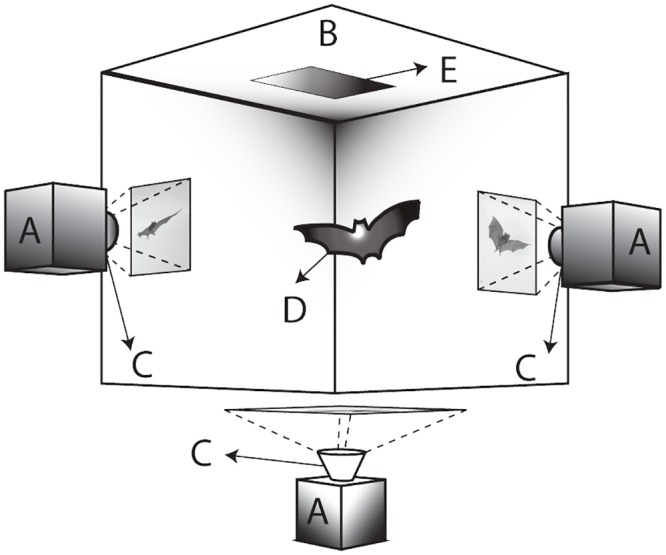
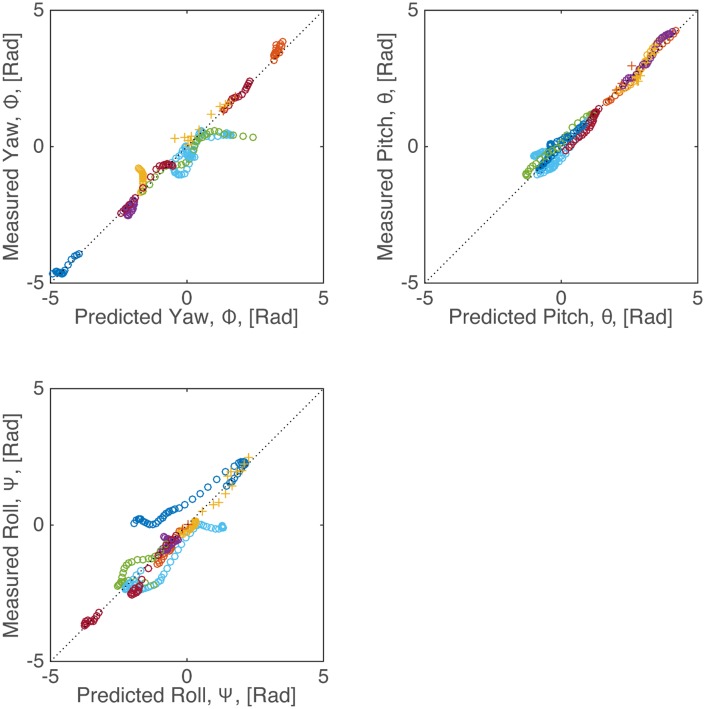
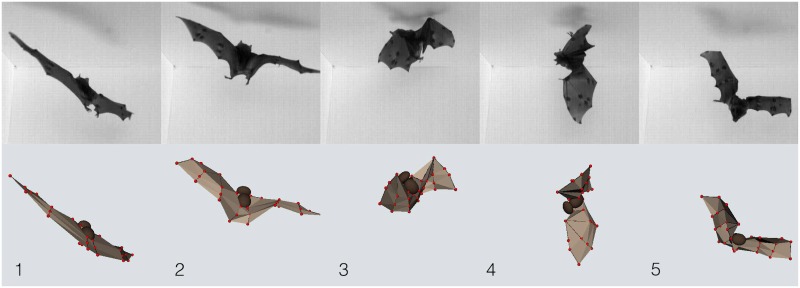
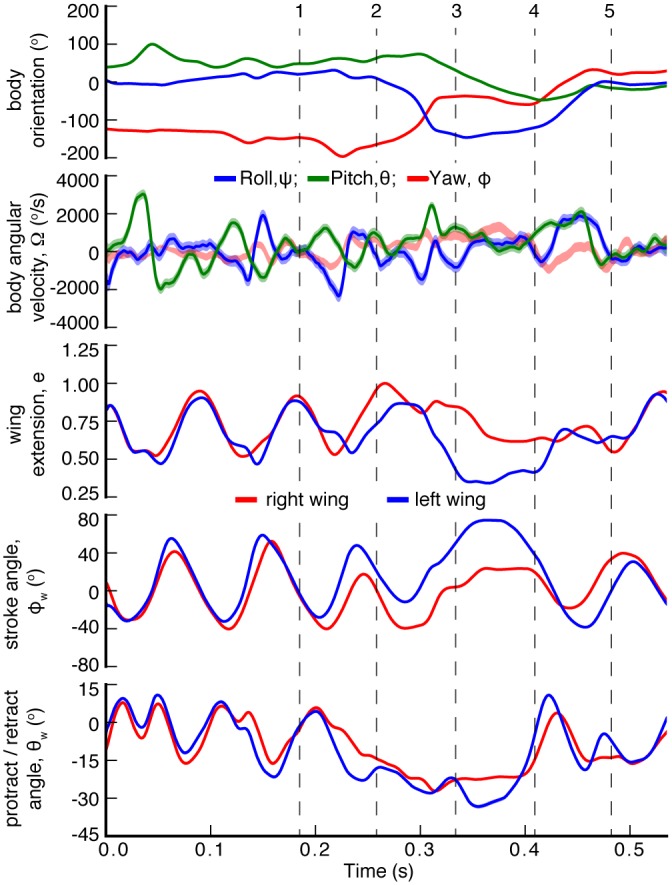
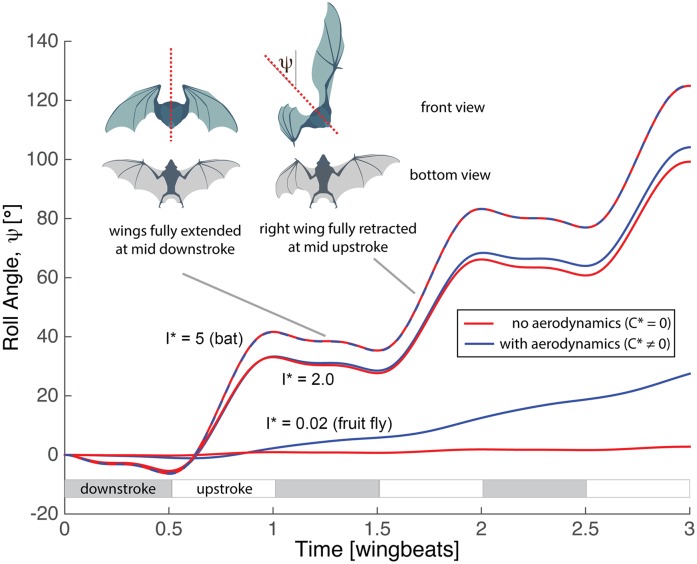
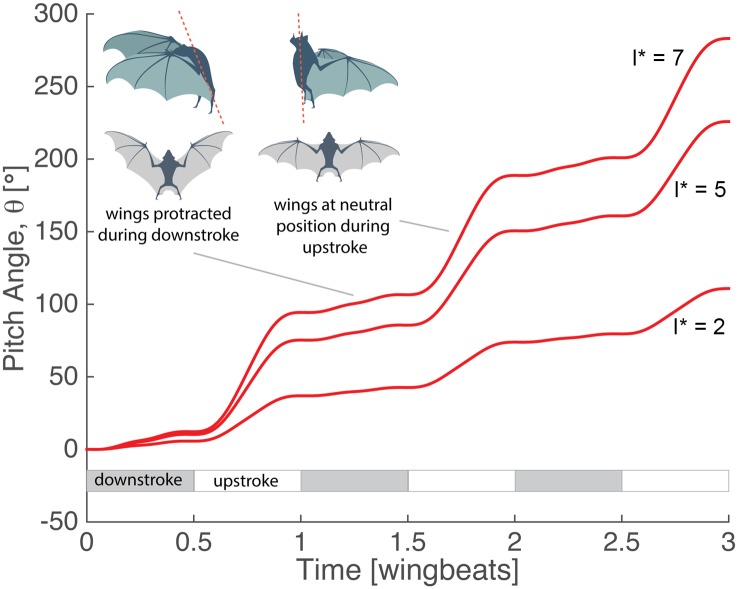
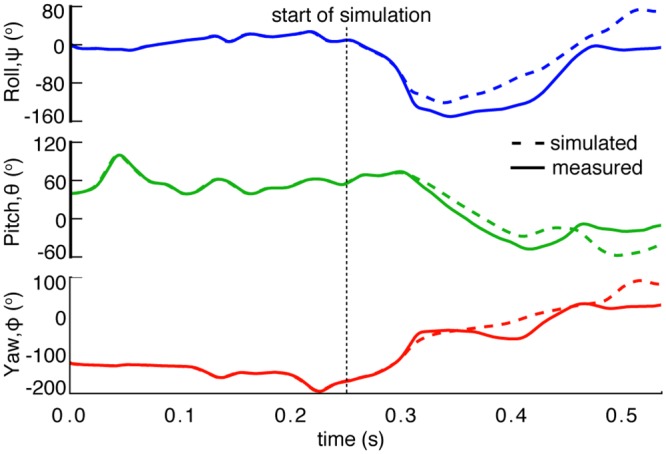
The remarkable maneuverability of flying animals results from precise movements of their highly specialized wings. Bats have evolved an impressive capacity to control their flight, in large part due to their ability to modulate wing shape, area, and angle of attack through many independently controlled joints. Bat wings, however, also contain many bones and relatively large muscles, and thus the ratio of bats' wing mass to their body mass is larger than it is for all other extant flyers. Although the inertia in bat wings would typically be associated with decreased aerial maneuverability, we show that bat maneuvers challenge this notion. We use a model-based tracking algorithm to measure the wing and body kinematics of bats performing complex aerial rotations. Using a minimal model of a bat with only six degrees of kinematic freedom, we show that bats can perform body rolls by selectively retracting one wing during the flapping cycle. We also show that this maneuver does not rely on aerodynamic forces, and furthermore that a fruit fly, with nearly massless wings, would not exhibit this effect. Similar results are shown for a pitching maneuver. Finally, we combine high-resolution kinematics of wing and body movements during landing and falling maneuvers with a 52-degree-of-freedom dynamical model of a bat to show that modulation of wing inertia plays the dominant role in reorienting the bat during landing and falling maneuvers, with minimal contribution from aerodynamic forces. Bats can, therefore, use their wings as multifunctional organs, capable of sophisticated aerodynamic and inertial dynamics not previously observed in other flying animals. This may also have implications for the control of aerial robotic vehicles.
飞行生物卓越的机动性源于其高度特化翅膀的精确运动。蝙蝠进化出了令人赞叹的飞行控制能力,很大程度上是因为它们能够通过许多独立控制的关节来调节翅膀的形状、面积和攻角。然而,蝙蝠的翅膀也包含许多骨骼和相对较大的肌肉,因此蝙蝠翅膀质量与体重的比例比所有其他现存飞行生物都要大。尽管蝙蝠翅膀的惯性通常会与空中机动性降低相关联,但我们的研究表明,蝙蝠的机动飞行挑战了这一观念。我们使用基于模型的跟踪算法来测量蝙蝠在进行复杂空中旋转时翅膀和身体的运动学数据。通过使用一个仅有六个运动自由度的简单蝙蝠模型,我们发现蝙蝠能够在拍打周期中通过选择性地收起一侧翅膀来实现身体翻滚。我们还表明,这种机动并不依赖于空气动力,此外,翅膀几乎没有质量的果蝇不会表现出这种效果。对于俯仰机动也得到了类似的结果。最后,我们将蝙蝠着陆和下落机动过程中翅膀和身体运动的高分辨率运动学数据与一个具有52个自由度的动力学模型相结合,结果表明,在着陆和下落机动过程中,翅膀惯性的调节在使蝙蝠重新定向方面起主导作用,而空气动力的贡献最小。因此,蝙蝠能够将其翅膀用作多功能器官,具备其他飞行生物此前未被观察到的复杂空气动力学和惯性动力学特性。这也可能对空中机器人飞行器的控制具有启示意义。