Ampofo Emmanuel, Später Thomas, Müller Isabelle, Eichler Hermann, Menger Michael D, Laschke Matthias W
Institute for Clinical and Experimental Surgery, Saarland University, 66421 Homburg/Saar, Germany.
Institute for Hemostasiology and Transfusion Medicine, Saarland University, 66421 Homburg/Saar, Germany.
Mar Drugs. 2015 Nov 9;13(11):6774-91. doi: 10.3390/md13116774.
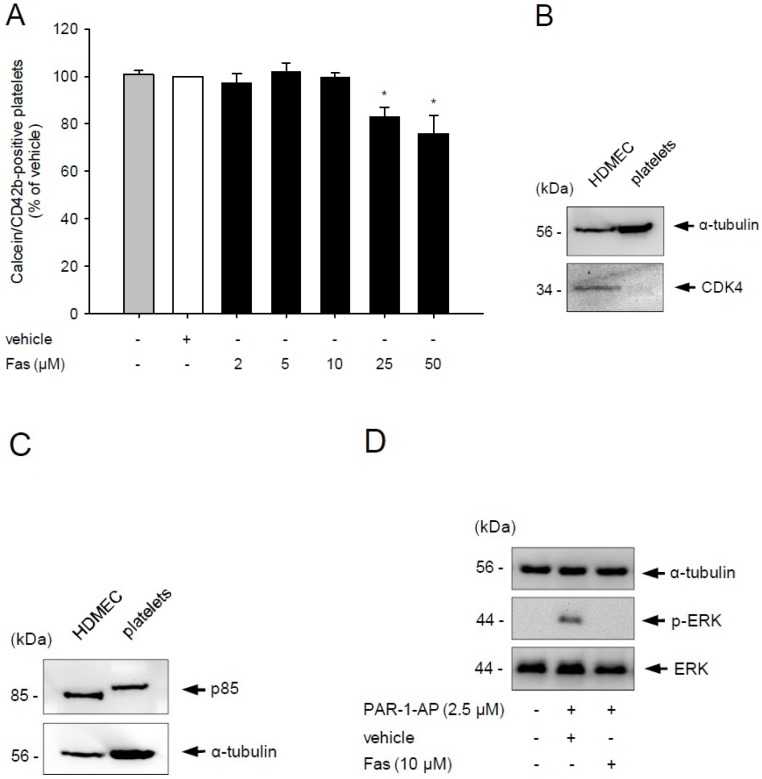
The marine-derived kinase inhibitor fascaplysin down-regulates the PI3K pathway in cancer cells. Since this pathway also plays an essential role in platelet signaling, we herein investigated the effect of fascaplysin on thrombosis.
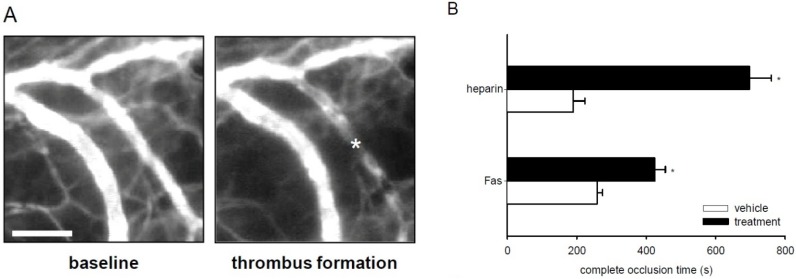
Fascaplysin effects on platelet activation, platelet aggregation and platelet-leukocyte aggregates (PLA) formation were analyzed by flow cytometry. Mouse dorsal skinfold chambers were used to determine in vivo the effect of fascaplysin on photochemically induced thrombus formation and tail-vein bleeding time.
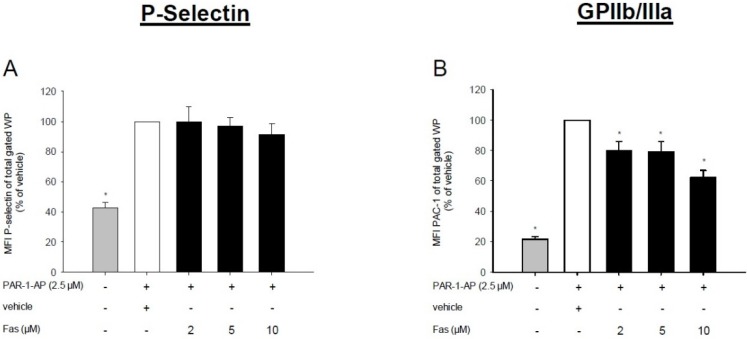
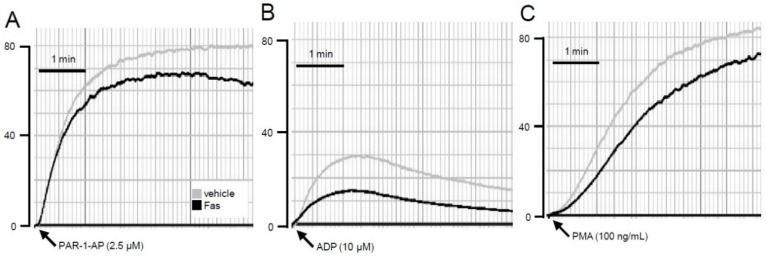
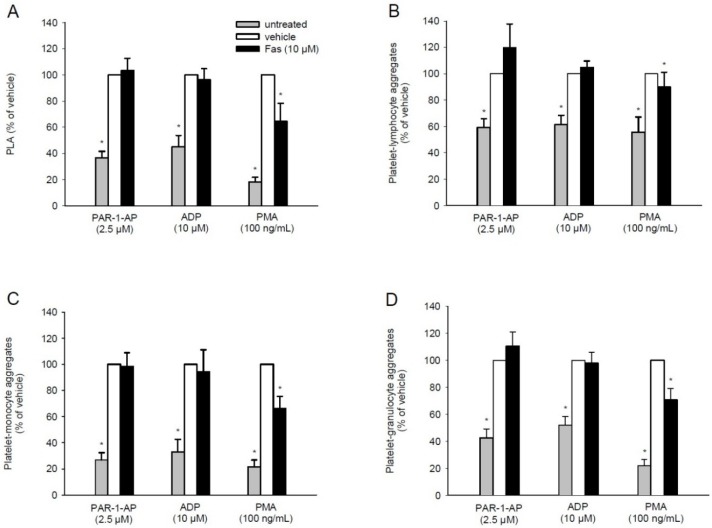
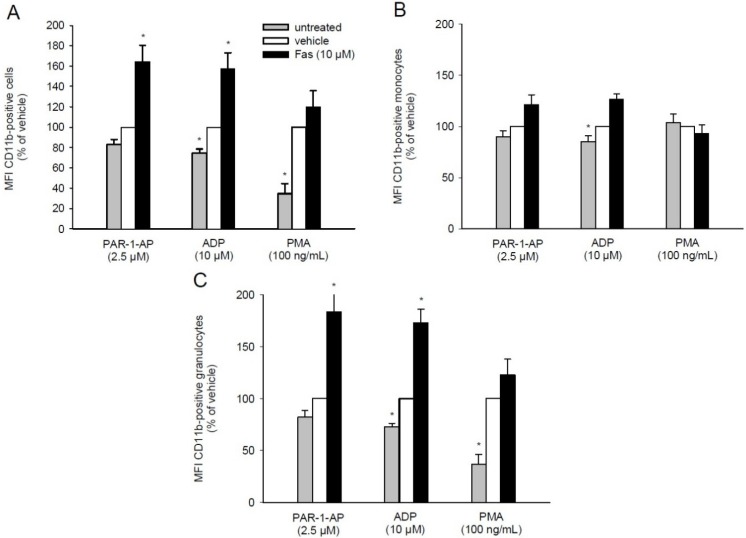
Pre-treatment of platelets with fascaplysin reduced the activation of glycoprotein (GP)IIb/IIIa after protease-activated receptor-1-activating peptide (PAR-1-AP), adenosine diphosphate (ADP) and phorbol-12-myristate-13-acetate (PMA) stimulation, but did not markedly affect the expression of P-selectin. This was associated with a decreased platelet aggregation. Fascaplysin also decreased PLA formation after PMA but not PAR-1-AP and ADP stimulation. This may be explained by an increased expression of CD11b on leukocytes in PAR-1-AP- and ADP-treated whole blood. In the dorsal skinfold chamber model of photochemically induced thrombus formation, fascaplysin-treated mice revealed a significantly extended complete vessel occlusion time when compared to controls. Furthermore, fascaplysin increased the tail-vein bleeding time.
Fascaplysin exerts anti-thrombotic activity, which represents a novel mode of action in the pleiotropic activity spectrum of this compound.
海洋来源的激酶抑制剂海参鞘素可下调癌细胞中的PI3K信号通路。由于该信号通路在血小板信号传导中也起着至关重要的作用,我们在此研究了海参鞘素对血栓形成的影响。
通过流式细胞术分析海参鞘素对血小板活化、血小板聚集和血小板-白细胞聚集体(PLA)形成的影响。使用小鼠背部皮褶小室在体内确定海参鞘素对光化学诱导的血栓形成和尾静脉出血时间的影响。
用海参鞘素预处理血小板可降低蛋白酶激活受体-1激活肽(PAR-1-AP)、二磷酸腺苷(ADP)和佛波醇-12-肉豆蔻酸酯-13-乙酸酯(PMA)刺激后糖蛋白(GP)IIb/IIIa的活化,但对P-选择素的表达没有明显影响。这与血小板聚集减少有关。海参鞘素还可降低PMA刺激后PLA的形成,但对PAR-1-AP和ADP刺激无此作用。这可能是由于PAR-1-AP和ADP处理的全血中白细胞上CD11b表达增加所致。在光化学诱导血栓形成的背部皮褶小室模型中,与对照组相比,用海参鞘素处理的小鼠显示完全血管闭塞时间显著延长。此外,海参鞘素延长了尾静脉出血时间。
海参鞘素具有抗血栓活性,这代表了该化合物多效活性谱中的一种新作用模式。