Tobe Ryuta, Carlson Bradley A, Tsuji Petra A, Lee Byeong Jae, Gladyshev Vadim N, Hatfield Dolph L
Molecular Biology of Selenium Section, Mouse Cancer Genetics Program, National Cancer Institute, National Institutes of Health, Bethesda, MD 20892, USA.
Department of Biological Sciences, Towson University, Towson, MD 21252, USA.
Cancers (Basel). 2015 Nov 10;7(4):2262-76. doi: 10.3390/cancers7040889.
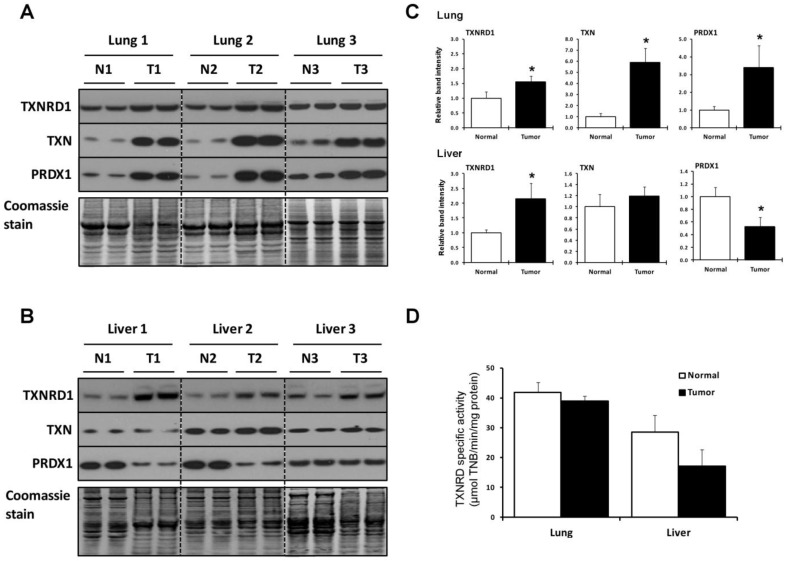
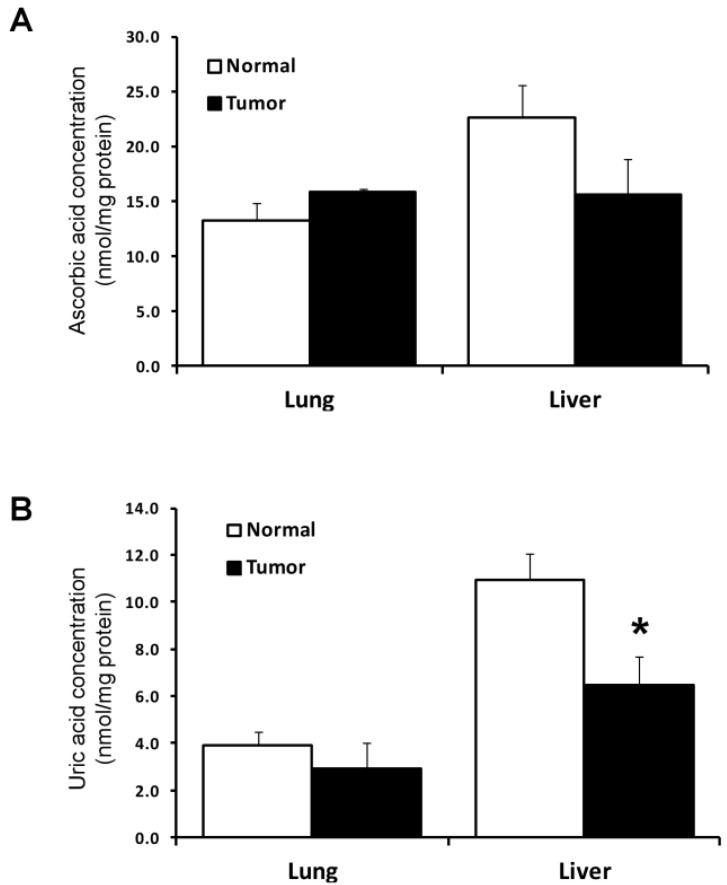
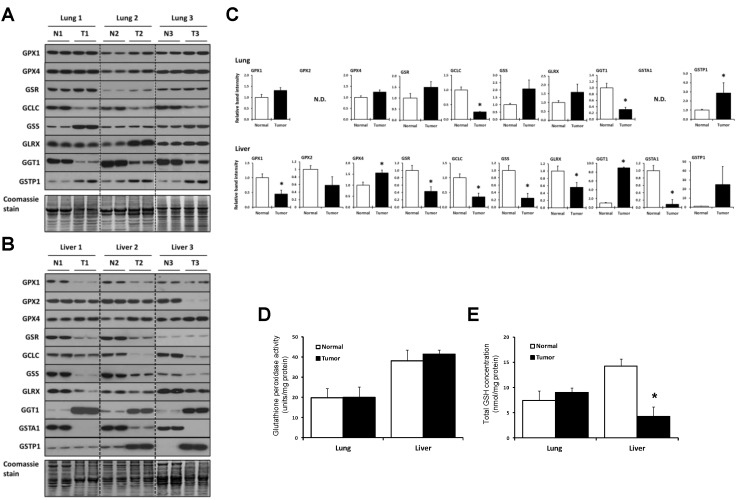
A common characteristic of many cancer cells is that they suffer from oxidative stress. They, therefore, require effective redox regulatory systems to combat the higher levels of reactive oxygen species that accompany accelerated growth compared to the normal cells of origin. An elevated dependence on these systems in cancers suggests that targeting these systems may provide an avenue for retarding the malignancy process. Herein, we examined the redox regulatory systems in human liver and lung cancers by comparing human lung adenocarcinoma and liver carcinoma to their respective surrounding normal tissues. Significant differences were found in the two major redox systems, the thioredoxin and glutathione systems. Thioredoxin reductase 1 levels were elevated in both malignancies, but thioredoxin was highly upregulated in lung tumor and only slightly upregulated in liver tumor, while peroxiredoxin 1 was highly elevated in lung tumor, but downregulated in liver tumor. There were also major differences within the glutathione system between the malignancies and their normal tissues. The data suggest a greater dependence of liver on either the thioredoxin or glutathione system to drive the malignancy, while lung cancer appeared to depend primarily on the thioredoxin system.
许多癌细胞的一个共同特征是它们遭受氧化应激。因此,它们需要有效的氧化还原调节系统来对抗与起源的正常细胞相比伴随加速生长而产生的更高水平的活性氧。癌症中对这些系统的依赖性增加表明,靶向这些系统可能为延缓恶性肿瘤进程提供一条途径。在此,我们通过将人肺腺癌和肝癌与其各自周围的正常组织进行比较,研究了人肝癌和肺癌中的氧化还原调节系统。在两个主要的氧化还原系统,即硫氧还蛋白和谷胱甘肽系统中发现了显著差异。硫氧还蛋白还原酶1水平在两种恶性肿瘤中均升高,但硫氧还蛋白在肺肿瘤中高度上调,而在肝肿瘤中仅略有上调,而过氧化物酶1在肺肿瘤中高度升高,但在肝肿瘤中下调。恶性肿瘤与其正常组织之间的谷胱甘肽系统也存在主要差异。数据表明肝脏对硫氧还蛋白或谷胱甘肽系统驱动恶性肿瘤的依赖性更大,而肺癌似乎主要依赖硫氧还蛋白系统。