Tunç Birkan, Verma Ragini
Center for Biomedical Image Computing and Analytics, University of Pennsylvania, Philadelphia, Pennsylvania, United States of America.
PLoS One. 2015 Nov 16;10(11):e0143133. doi: 10.1371/journal.pone.0143133. eCollection 2015.
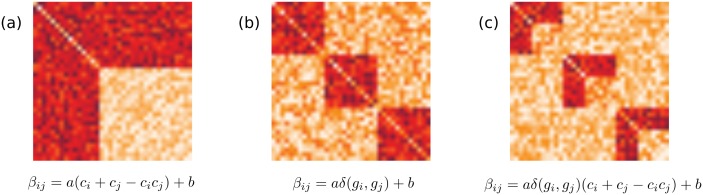
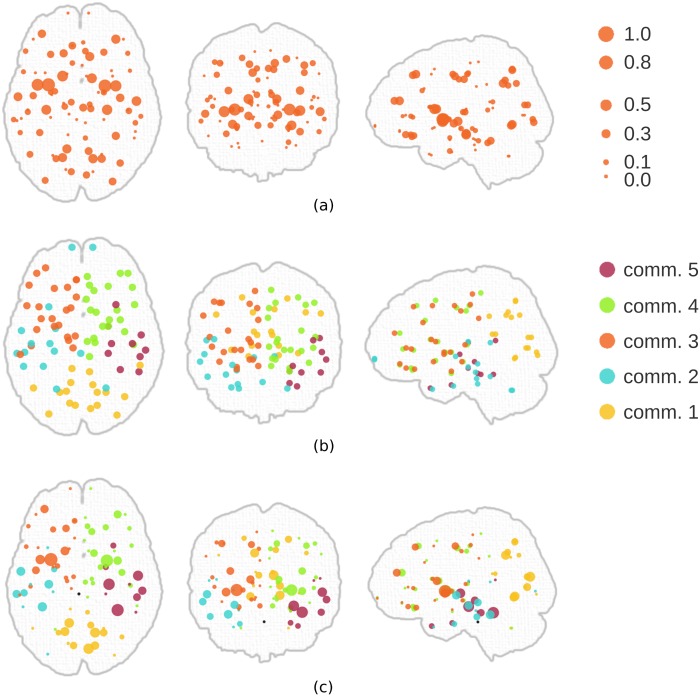
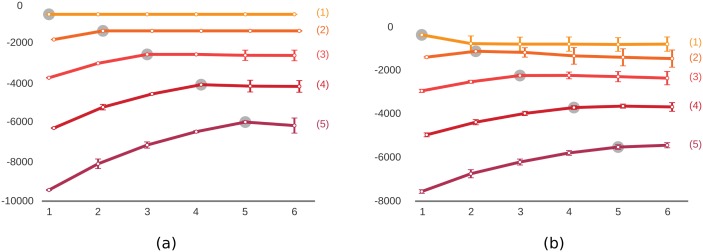
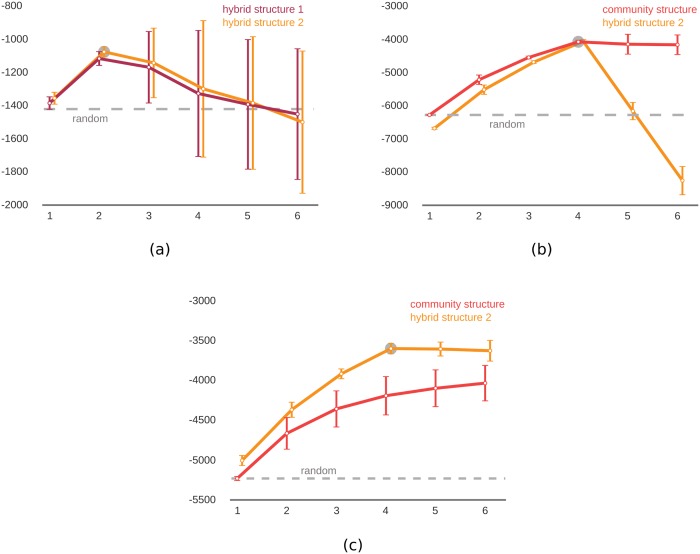
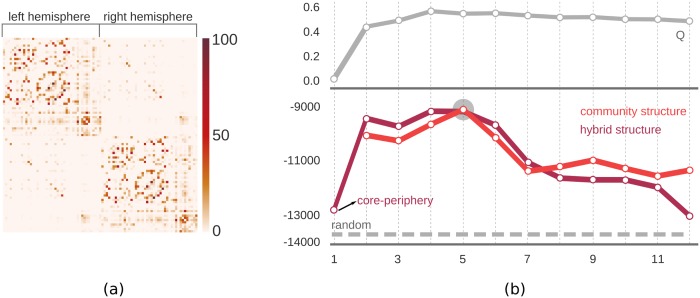
Networks are among the most prevalent formal representations in scientific studies, employed to depict interactions between objects such as molecules, neuronal clusters, or social groups. Studies performed at meso-scale that involve grouping of objects based on their distinctive interaction patterns form one of the main lines of investigation in network science. In a social network, for instance, meso-scale structures can correspond to isolated social groupings or groups of individuals that serve as a communication core. Currently, the research on different meso-scale structures such as community and core-periphery structures has been conducted via independent approaches, which precludes the possibility of an algorithmic design that can handle multiple meso-scale structures and deciding which structure explains the observed data better. In this study, we propose a unified formulation for the algorithmic detection and analysis of different meso-scale structures. This facilitates the investigation of hybrid structures that capture the interplay between multiple meso-scale structures and statistical comparison of competing structures, all of which have been hitherto unavailable. We demonstrate the applicability of the methodology in analyzing the human brain network, by determining the dominant organizational structure (communities) of the brain, as well as its auxiliary characteristics (core-periphery).
网络是科学研究中最普遍的形式表示之一,用于描绘分子、神经元集群或社会群体等对象之间的相互作用。在中尺度上进行的研究,即基于对象独特的相互作用模式对其进行分组,构成了网络科学的主要研究方向之一。例如,在社交网络中,中尺度结构可以对应于孤立的社会群体或作为通信核心的个体群体。目前,对不同中尺度结构(如社区和核心-外围结构)的研究是通过独立的方法进行的,这排除了设计一种能够处理多种中尺度结构并确定哪种结构能更好地解释观测数据的算法的可能性。在本研究中,我们提出了一种用于不同中尺度结构的算法检测和分析的统一公式。这有助于研究捕捉多种中尺度结构之间相互作用的混合结构,以及对相互竞争的结构进行统计比较,而这些都是目前无法实现的。我们通过确定大脑的主导组织结构(社区)及其辅助特征(核心-外围),证明了该方法在分析人类大脑网络中的适用性。