Bai Jinrong, Wu Yanping, Liu Xiaoyan, Zhong Kai, Huang Yina, Gao Hong
Department of Food Science and Technology, College of Light Industry, Textile and Food Engineering, Sichuan University, Chengdu 610065, China.
Department of Public Health, West China Medical School, Sichuan University, Chengdu 610041, China.
Int J Mol Sci. 2015 Nov 13;16(11):27145-55. doi: 10.3390/ijms161126015.
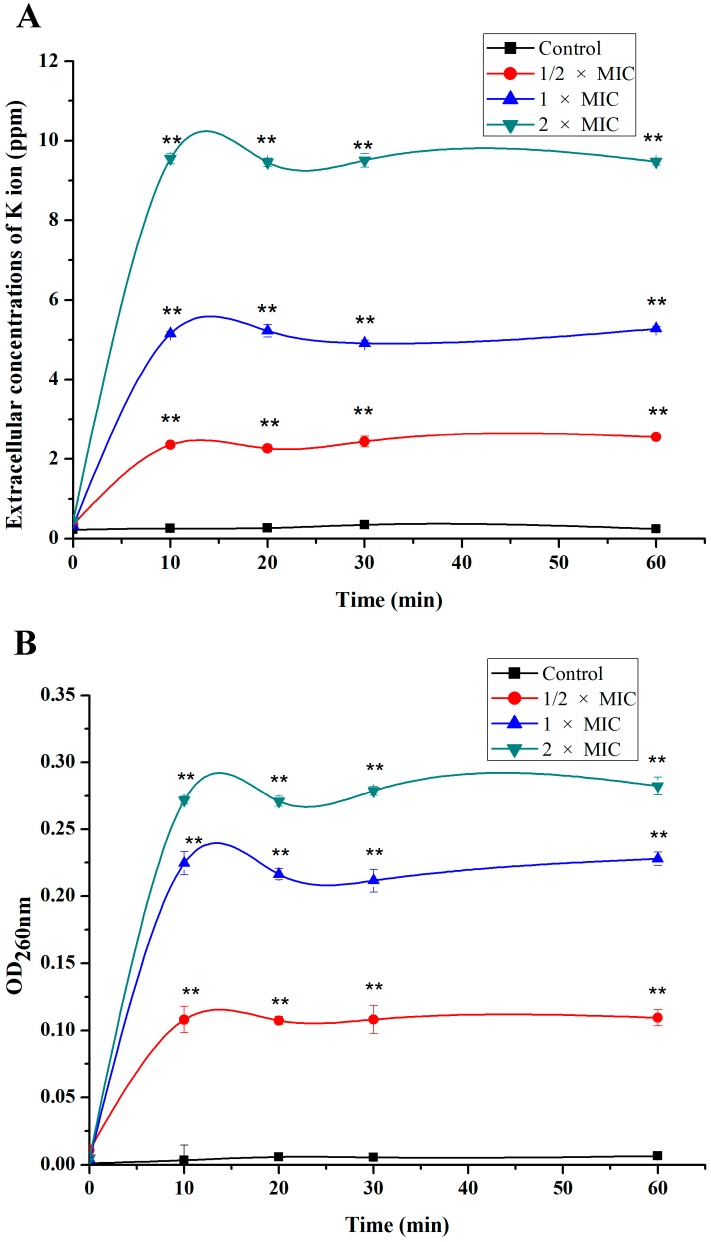
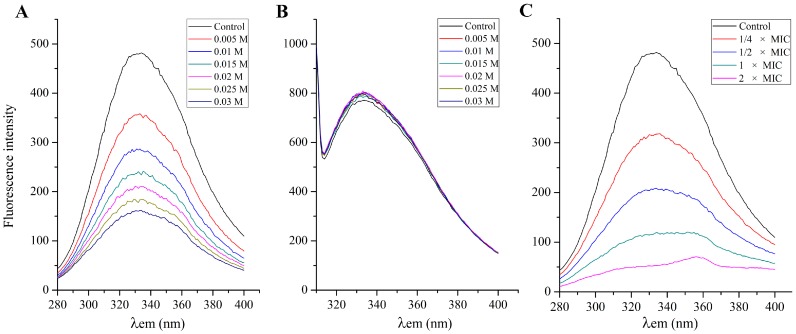
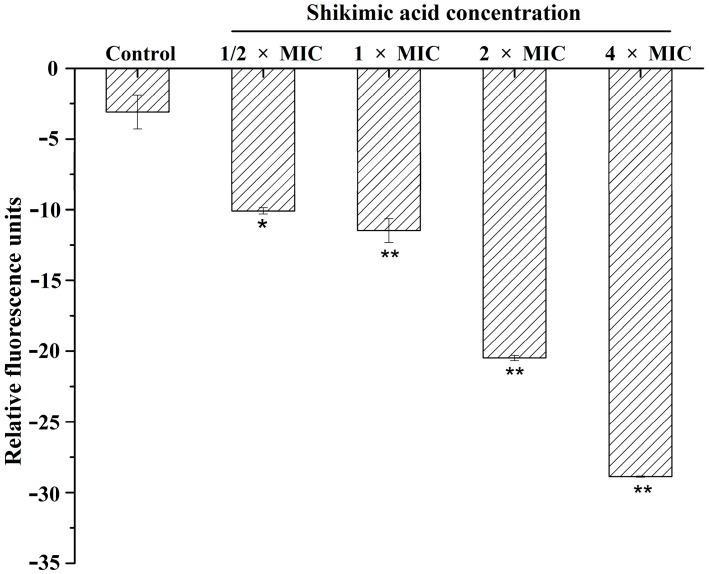
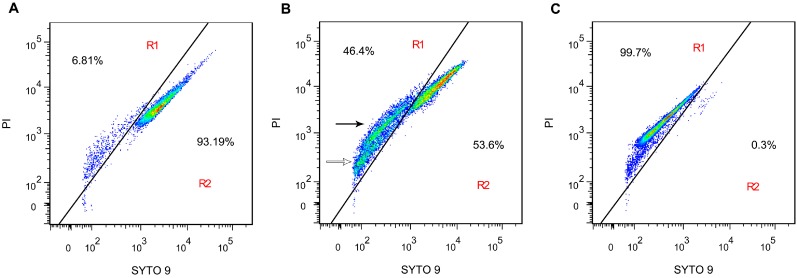
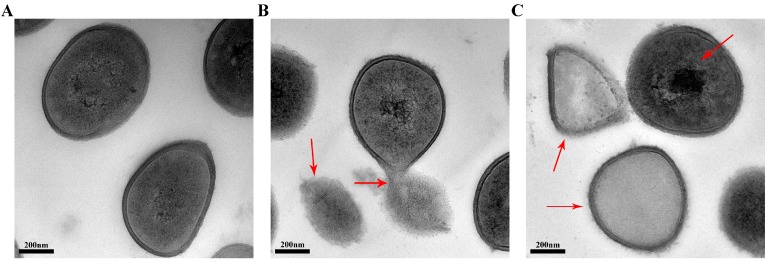
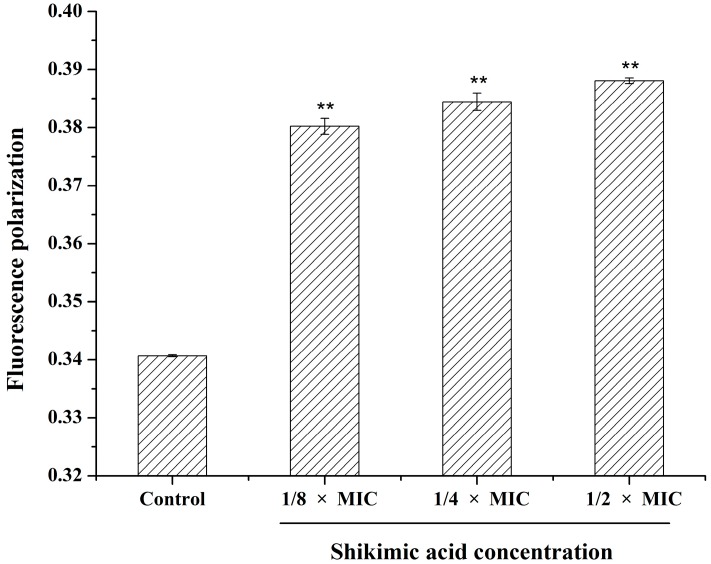
Shikimic acid (SA) has been reported to possess antibacterial activity against Staphylococcus aureus, whereas the mode of action of SA is still elusive. In this study, the antibacterial activity and mechanism of SA toward S. aureus by cell membrane damage was investigated. After SA treatment, massive K+ and nucleotide leakage from S. aureus, and a significant change in the membrane potential was observed, suggesting SA may act on the membrane by destroying the cell membrane permeability. Through transmission electron microscopic observations we further confirmed that SA can disrupt the cell membrane and membrane integrity. Meanwhile, SA was found to be capable of reducing the membrane fluidity of the S. aureus cell. Moreover, the fluorescence experiments indicated that SA could quench fluorescence of Phe residues of the membrane proteins, thus demonstrating that SA can bind to S. aureus membrane proteins. Therefore, these results showed the antibacterial activity of SA against S. aureus could be caused by the interactions of SA with S. aureus membrane proteins and lipids, resulting in causing cell membrane dysfunction and bacterial damage or even death. This study reveals the potential use of SA as an antibacterial agent.
莽草酸(SA)已被报道对金黄色葡萄球菌具有抗菌活性,然而SA的作用方式仍不清楚。在本研究中,研究了SA对金黄色葡萄球菌的抗菌活性及其通过细胞膜损伤的作用机制。SA处理后,观察到金黄色葡萄球菌大量K⁺和核苷酸泄漏,且膜电位发生显著变化,表明SA可能通过破坏细胞膜通透性作用于细胞膜。通过透射电子显微镜观察,我们进一步证实SA可破坏细胞膜及膜完整性。同时,发现SA能够降低金黄色葡萄球菌细胞的膜流动性。此外,荧光实验表明SA可淬灭膜蛋白苯丙氨酸残基的荧光,从而证明SA可与金黄色葡萄球菌膜蛋白结合。因此,这些结果表明SA对金黄色葡萄球菌的抗菌活性可能是由SA与金黄色葡萄球菌膜蛋白和脂质的相互作用引起的,导致细胞膜功能障碍和细菌损伤甚至死亡。本研究揭示了SA作为抗菌剂的潜在用途。