Mu Qing-Jie, Li Hong-Li, Yao Yuan, Liu Shi-Chao, Yin Chong-Gao, Ma Xue-Zhen
Qing Dao University, Qingdao, PR China.
Clinical Department, Weifang Medical University, Weifang, PR China.
PLoS One. 2015 Nov 23;10(11):e0143030. doi: 10.1371/journal.pone.0143030. eCollection 2015.
Chromodomain helicase/ATPase DNA-binding protein 1-like gene (CHD1L), also known as ALC1 (amplified in liver cancer 1 gene), is a new oncogene amplified in many solid tumors. Whether this gene plays a role in invasion and metastasis of breast cancer is unknown.
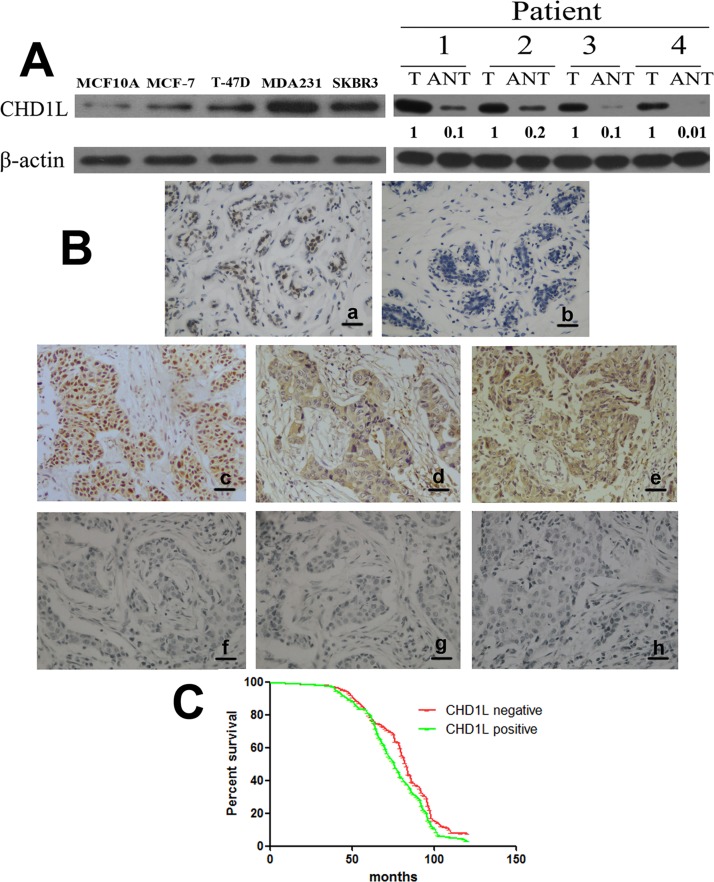
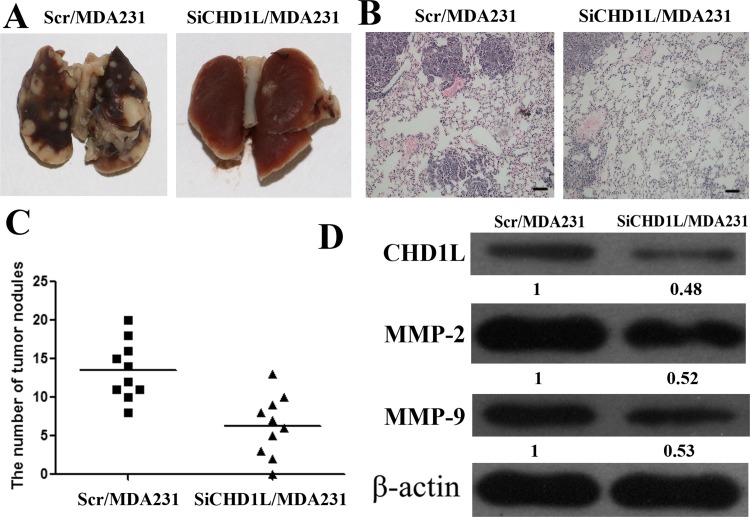
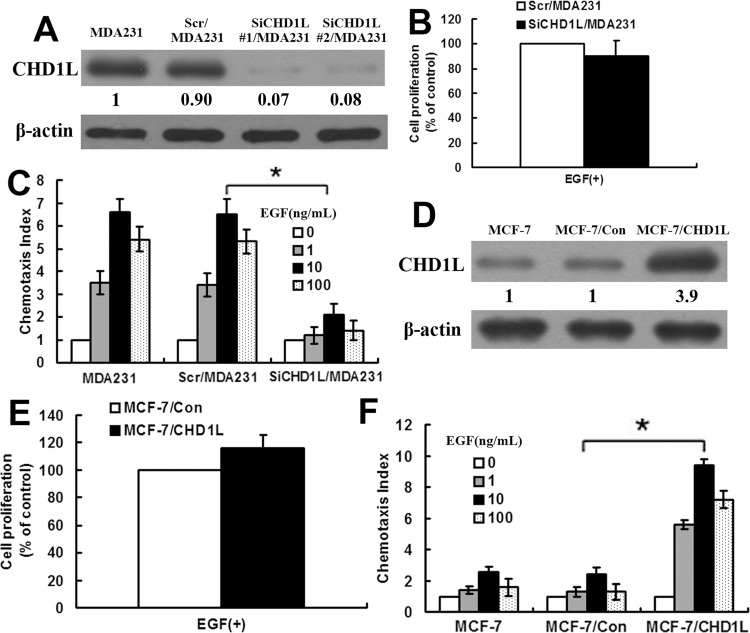
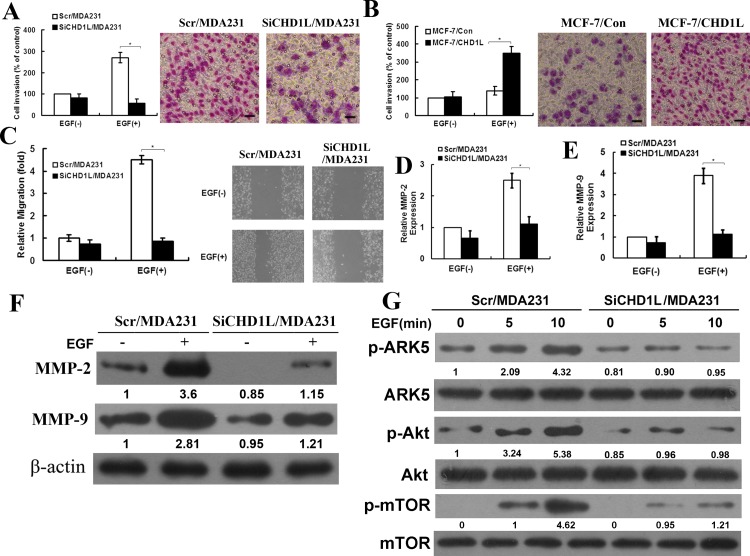
Immunohistochemistry was performed to detect the expression of CHD1L in patients with invasive ductal carcinoma and normal mammary glands. Chemotaxis, wound healing, and Transwell invasion assays were also performed to examine cell migration and invasion. Western blot analysis was conducted to detect the expression of CHD1L, MMP-2, MMP-9, pAkt/Akt, pARK5/ARK5, and pmTOR/mTOR. Moreover, ELISA was carried out to detect the expression levels of MMP-2 and MMP-9. Nude mice xenograft model was used to detect the invasion and metastasis of breast cancer cell lines.
CHD1L overexpression was observed in 112 of 268 patients (41.8%). This overexpression was associated with lymph node metastasis (P = 0.008), tumor differentiation (P = 0.020), distant metastasis (P = 0.026), MMP-2 (P = 0.035), and MMP-9 expression (P = 0.022). In the cell experiment, reduction of CHD1L inhibited the invasion and metastasis of breast cancer cells by mediating MMP-2 and MMP-9 expression. CHD1L knockdown via siRNA suppressed EGF-induced pAkt, pARK5, and pmTOR. This knockdown inhibited the metastasis of breast cancer cells into the lungs of SCID mice.
CHD1L promoted the invasion and metastasis of breast cancer cells via the PI3K/Akt/ARK5/mTOR/MMP signaling pathway. This study identified CHD1L as a potential anti-metastasis target for therapeutic intervention in breast cancer.
染色质结构域解旋酶/ATP酶DNA结合蛋白1样基因(CHD1L),也称为肝癌1号扩增基因(ALC1),是一种在多种实体瘤中扩增的新型癌基因。该基因是否在乳腺癌的侵袭和转移中发挥作用尚不清楚。
采用免疫组织化学法检测浸润性导管癌患者和正常乳腺组织中CHD1L的表达。还进行了趋化性、伤口愈合和Transwell侵袭试验以检测细胞迁移和侵袭。进行蛋白质印迹分析以检测CHD1L、基质金属蛋白酶-2(MMP-2)、基质金属蛋白酶-9(MMP-9)、磷酸化蛋白激酶B(pAkt)/蛋白激酶B(Akt)、磷酸化核糖体蛋白S6激酶5(pARK5)/核糖体蛋白S6激酶5(ARK5)和磷酸化哺乳动物雷帕霉素靶蛋白(pmTOR)/哺乳动物雷帕霉素靶蛋白(mTOR)的表达。此外,采用酶联免疫吸附测定法检测MMP-2和MMP-9的表达水平。利用裸鼠异种移植模型检测乳腺癌细胞系的侵袭和转移。
268例患者中有112例(41.8%)观察到CHD1L过表达。这种过表达与淋巴结转移(P = 0.008)、肿瘤分化(P = 0.020)、远处转移(P = 0.026)、MMP-2(P = 0.035)和MMP-9表达(P = 0.022)相关。在细胞实验中,CHD1L表达降低通过介导MMP-2和MMP-9表达抑制乳腺癌细胞的侵袭和转移。通过小干扰RNA(siRNA)敲低CHD1L可抑制表皮生长因子(EGF)诱导的pAkt、pARK5和pmTOR表达。这种敲低抑制了乳腺癌细胞向重症联合免疫缺陷(SCID)小鼠肺部的转移。
CHD1L通过PI3K/Akt/ARK5/mTOR/MMP信号通路促进乳腺癌细胞的侵袭和转移。本研究确定CHD1L为乳腺癌治疗干预的潜在抗转移靶点。