Cao Baoping, Yang Yunsheng, Pan Yuanming, Jia Yan, Brock Malcolm V, Herman James G, Guo Mingzhou
Department of Gastroenterology and Hepatology, Chinese PLA General Hospital, Beijing 100853, China and College of Medicine, NanKai University, Tianjin 300071, China.
Discov Med. 2013 Oct;16(88):137-47.
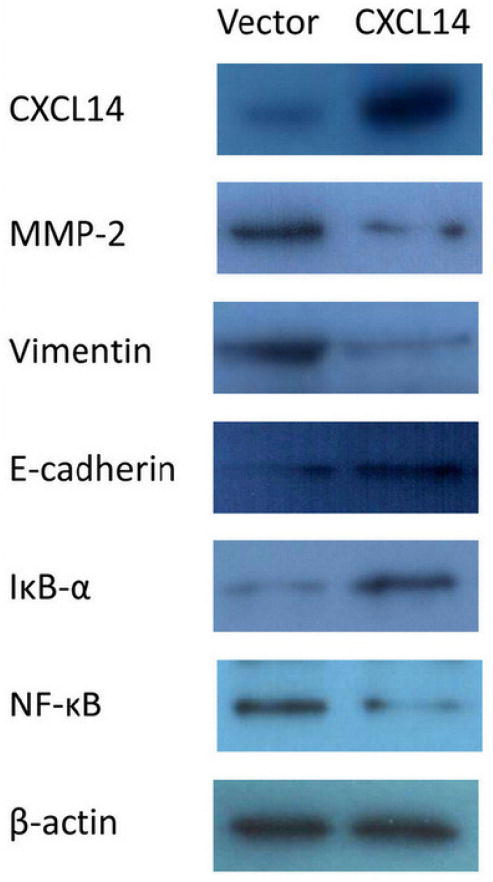
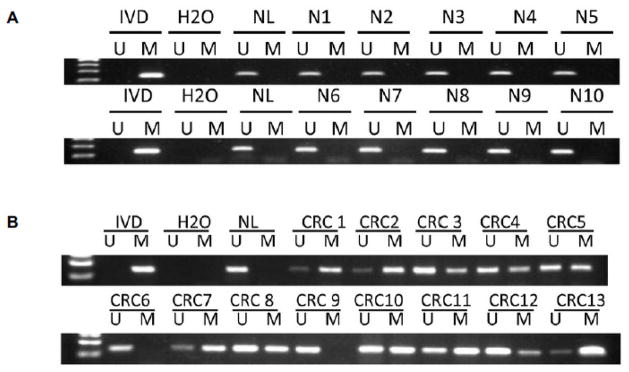
To explore epigenetic regulation and the impact of chemokine CXCL14 on colorectal cancer, 7 colorectal cancer cell lines, 107 cases of primary colorectal cancer, and 10 cases of normal colorectal mucosa were evaluated in this study. Methylation specific PCR (MSP), semi-quantitative reverse-transcription PCR (RT-PCR), cell proliferation assay, colony formation, and transwell assay were performed for the evaluation. Complete methylation and loss of CXCL14 expression were found in 5 colorectal cancer cell lines. Partial methylation and weak expression were found in two cell lines. CXCL14 was methylated in 79.4% (85/107) of primary human colorectal cancer. No methylation was found in 10 cases of normal colorectal mucosa. Restoration of CXCL14 expression was induced by the 5-aza-2'-deoxycytidine (DAC) treatment. The cell viability was reduced and colony formation was inhibited by restoration of CXCL14 expression in HCT116 cells, a colorectal cancer cell line. The number of invasive and migration cells was reduced by CXCL14. The expression of MMP-2, Vimentin, and NF-κB was suppressed, and the expression of E-cadherin and IκB-α was induced by CXCL14. In conclusion, CXCL14 is frequently methylated in human colorectal cancer and promoter region hypermethylation silenced CXCL14 expression in colorectal cancer cells. Restoration of CXCL14 expression suppressed colorectal cancer proliferation. CXCL14 inhibits colorectal cancer migration, invasion, and epithelial-to-mesenchymal transition (EMT) by suppressing NF-κB signaling.
为了探究表观遗传调控以及趋化因子CXCL14对结直肠癌的影响,本研究评估了7种结直肠癌细胞系、107例原发性结直肠癌以及10例正常结直肠黏膜。采用甲基化特异性PCR(MSP)、半定量逆转录PCR(RT-PCR)、细胞增殖试验、集落形成试验和transwell试验进行评估。在5种结直肠癌细胞系中发现CXCL14完全甲基化且表达缺失。在另外两种细胞系中发现部分甲基化和弱表达。在79.4%(85/107)的原发性人类结直肠癌中CXCL14发生甲基化。在10例正常结直肠黏膜中未发现甲基化。5-氮杂-2'-脱氧胞苷(DAC)处理可诱导CXCL14表达恢复。在结直肠癌细胞系HCT116中,CXCL14表达恢复可降低细胞活力并抑制集落形成。CXCL14可减少侵袭和迁移细胞的数量。CXCL14可抑制MMP-2、波形蛋白和NF-κB的表达,并诱导E-钙黏蛋白和IκB-α的表达。总之,CXCL14在人类结直肠癌中频繁发生甲基化,启动子区域高甲基化使结直肠癌细胞中CXCL14表达沉默。CXCL14表达恢复可抑制结直肠癌增殖。CXCL14通过抑制NF-κB信号传导抑制结直肠癌的迁移、侵袭和上皮-间质转化(EMT)。