Dai Haiping, Ehrentraut Stefan, Nagel Stefan, Eberth Sonja, Pommerenke Claudia, Dirks Wilhelm G, Geffers Robert, Kalavalapalli Srilaxmi, Kaufmann Maren, Meyer Corrina, Faehnrich Silke, Chen Suning, Drexler Hans G, MacLeod Roderick A F
Leibniz Institute DSMZ, German Collection of Microorganisms and Cell Cultures, Braunschweig, Germany.
Jiangsu Institute of Hematology, the First Affiliated Hospital of Soochow University, Suzhou, Jiangsu Province, China.
PLoS One. 2015 Nov 23;10(11):e0139663. doi: 10.1371/journal.pone.0139663. eCollection 2015.
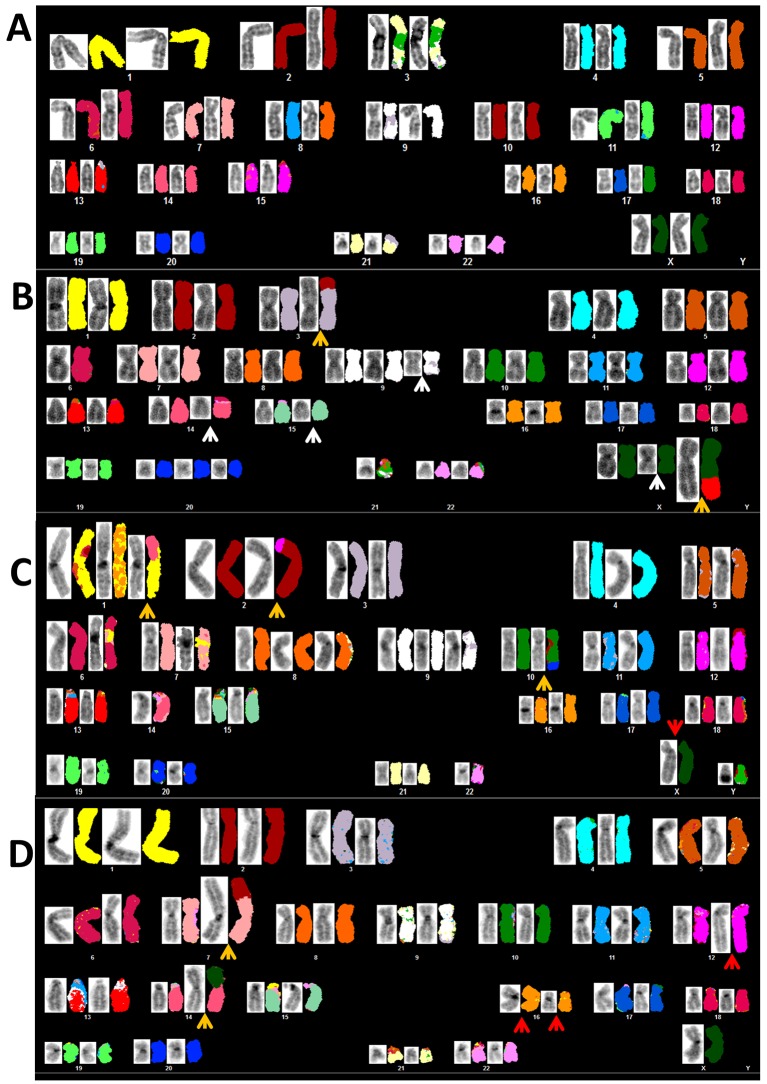
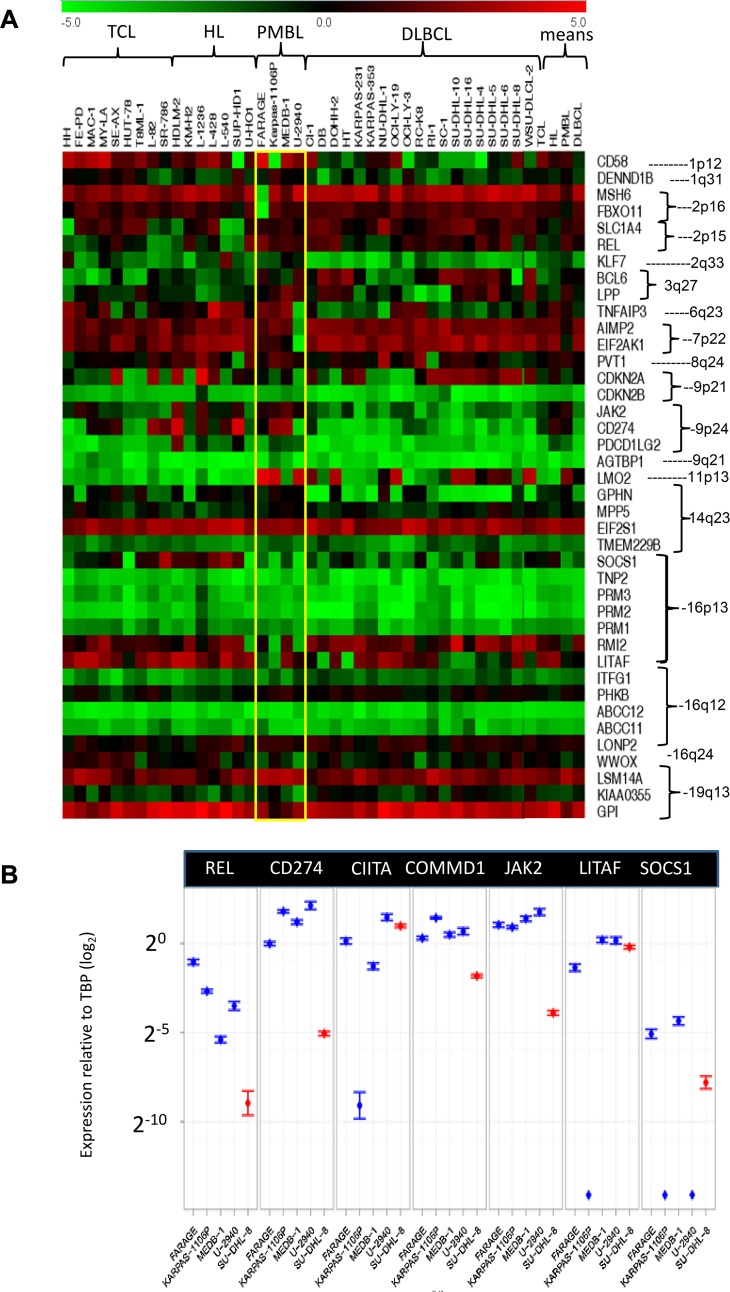
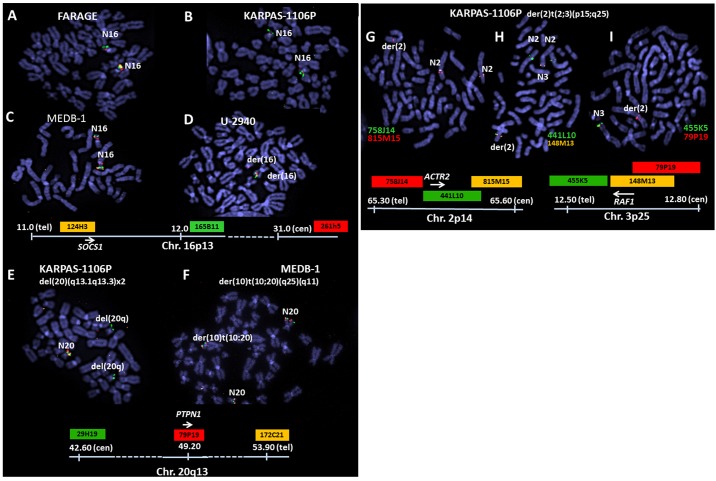
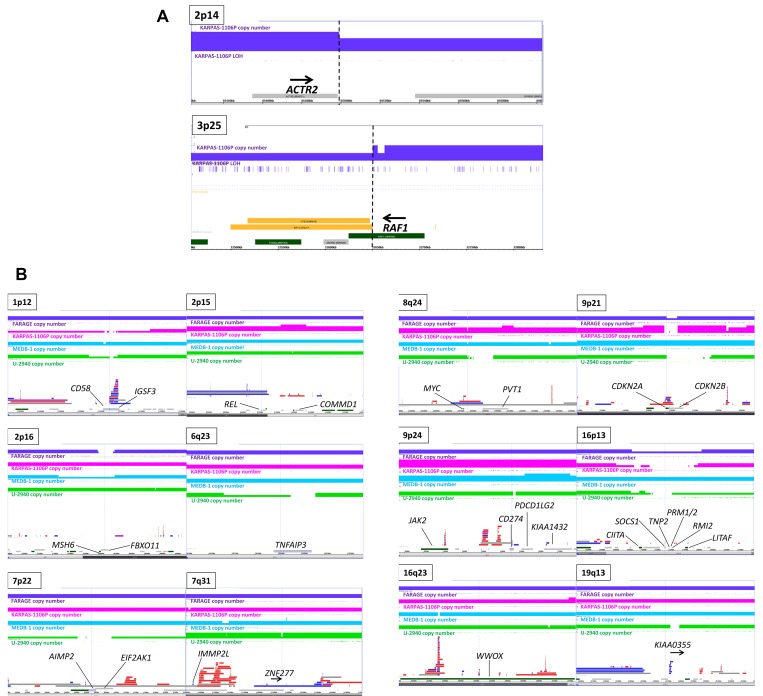
Primary mediastinal B-Cell lymphoma (PMBL) is a recently defined entity comprising ~2-10% non-Hodgkin lymphomas (NHL). Unlike most NHL subtypes, PMBL lacks recurrent gene rearrangements to serve as biomarkers or betray target genes. While druggable, late chemotherapeutic complications warrant the search for new targets and models. Well characterized tumor cell lines provide unlimited material to serve as preclinical resources for verifiable analyses directed at the discovery of new biomarkers and pathological targets using high throughput microarray technologies. The same cells may then be used to seek intelligent therapies directed at clinically validated targets. Four cell lines have emerged as potential PMBL models: FARAGE, KARPAS-1106P, MEDB-1 and U-2940. Transcriptionally, PMBL cell lines cluster near c(lassical)-HL and B-NHL examples showing they are related but separate entities. Here we document genomic alterations therein, by cytogenetics and high density oligonucleotide/SNP microarrays and parse their impact by integrated global expression profiling. PMBL cell lines were distinguished by moderate chromosome rearrangement levels undercutting cHL, while lacking oncogene translocations seen in B-NHL. In total 61 deletions were shared by two or more cell lines, together with 12 amplifications (≥4x) and 72 homozygous regions. Integrated genomic and transcriptional profiling showed deletions to be the most important class of chromosome rearrangement. Lesions were mapped to several loci associated with PMBL, e.g. 2p15 (REL/COMMD1), 9p24 (JAK2, CD274), 16p13 (SOCS1, LITAF, CIITA); plus new or tenuously associated loci: 2p16 (MSH6), 6q23 (TNFAIP3), 9p22 (CDKN2A/B), 20p12 (PTPN1). Discrete homozygous regions sometimes substituted focal deletions accompanied by gene silencing implying a role for epigenetic or mutational inactivation. Genomic amplifications increasing gene expression or gene-activating rearrangements were respectively rare or absent. Our findings highlight biallelic deletions as a major class of chromosomal lesion in PMBL cell lines, while endorsing the latter as preclinical models for hunting and testing new biomarkers and actionable targets.
原发性纵隔B细胞淋巴瘤(PMBL)是一种最近定义的实体,约占非霍奇金淋巴瘤(NHL)的2%-10%。与大多数NHL亚型不同,PMBL缺乏作为生物标志物或揭示靶基因的复发性基因重排。虽然可以进行药物治疗,但化疗的晚期并发症促使人们寻找新的靶点和模型。特征明确的肿瘤细胞系提供了无限的材料,可作为临床前资源,用于使用高通量微阵列技术发现新生物标志物和病理靶点的可验证分析。然后可以使用相同的细胞来寻找针对临床验证靶点的智能疗法。四种细胞系已成为潜在的PMBL模型:FARAGE、KARPAS-1106P、MEDB-1和U-2940。在转录水平上,PMBL细胞系聚集在经典型霍奇金淋巴瘤(c-HL)和B-NHL样本附近,表明它们是相关但独立的实体。在这里,我们通过细胞遗传学和高密度寡核苷酸/SNP微阵列记录了其中的基因组改变,并通过整合的全局表达谱分析它们的影响。PMBL细胞系的特征是染色体重排水平中等,低于c-HL,同时缺乏B-NHL中可见的致癌基因易位。共有61个缺失被两个或更多细胞系共享,还有12个扩增(≥4倍)和72个纯合区域。整合的基因组和转录谱分析表明,缺失是最重要的染色体重排类型。病变定位于几个与PMBL相关的位点,例如2p15(REL/COMMD1)、9p24(JAK2、CD274)、16p13(SOCS1、LITAF、CIITA);以及新的或关联较弱的位点:2p16(MSH6)、6q23(TNFAIP3)、9p22(CDKN2A/B)、20p12(PTPN1)。离散的纯合区域有时替代了伴有基因沉默的局灶性缺失,这意味着表观遗传或突变失活起了作用。增加基因表达的基因组扩增或基因激活重排分别很少见或不存在。我们的研究结果突出了双等位基因缺失是PMBL细胞系中主要的染色体病变类型,同时认可后者作为寻找和测试新生物标志物及可操作靶点的临床前模型。