Tang Yufan, Zhang Chong, Cao Songxiao, Wang Xiao, Qi Hongyan
Key Laboratory of Protected Horticulture of Ministry of Education and Liaoning Province, College of Horticulture, Shenyang Agricultural University, Shenyang City, Liaoning Province, People's Republic of China.
PLoS One. 2015 Nov 24;10(11):e0143567. doi: 10.1371/journal.pone.0143567. eCollection 2015.
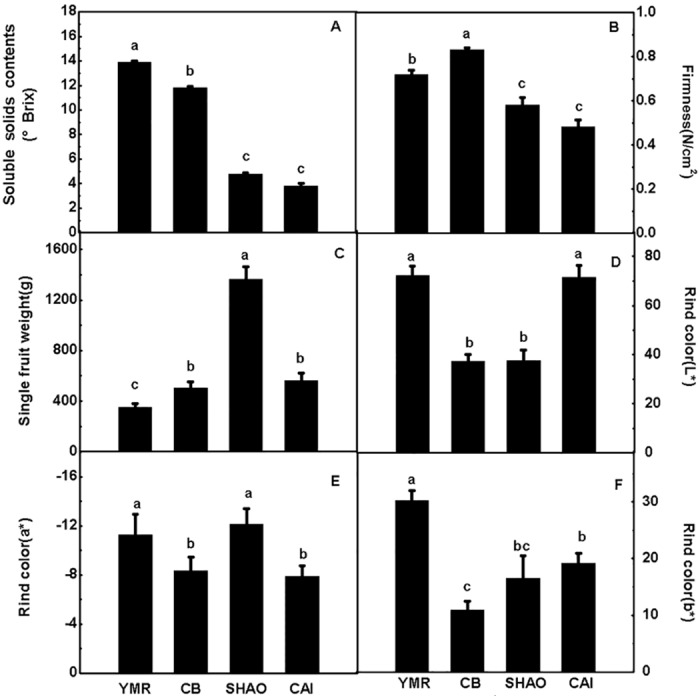
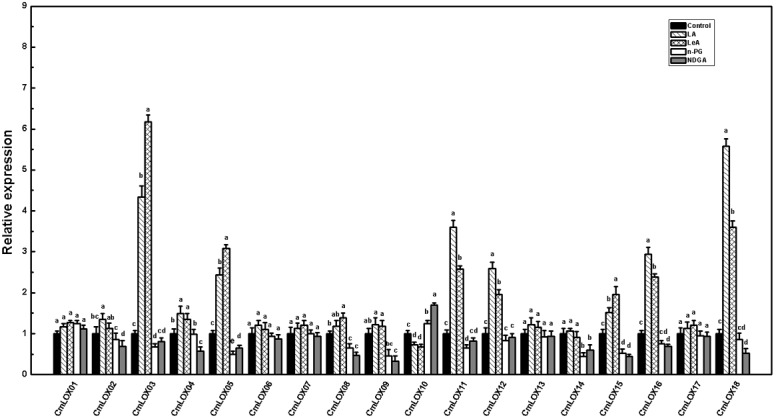
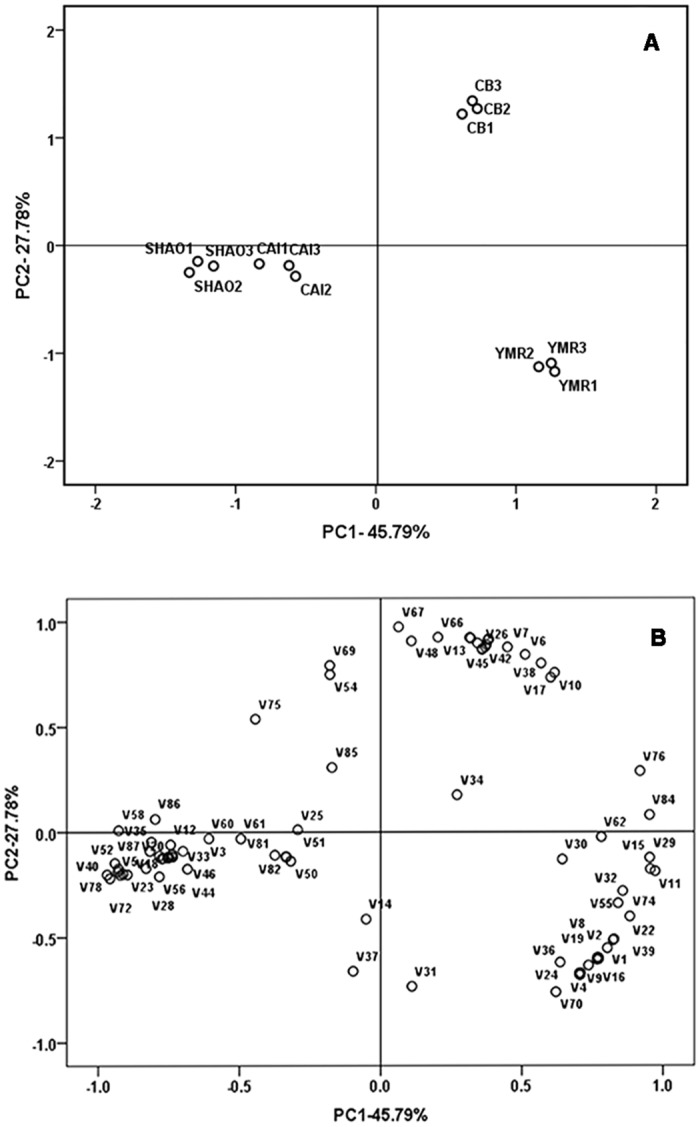
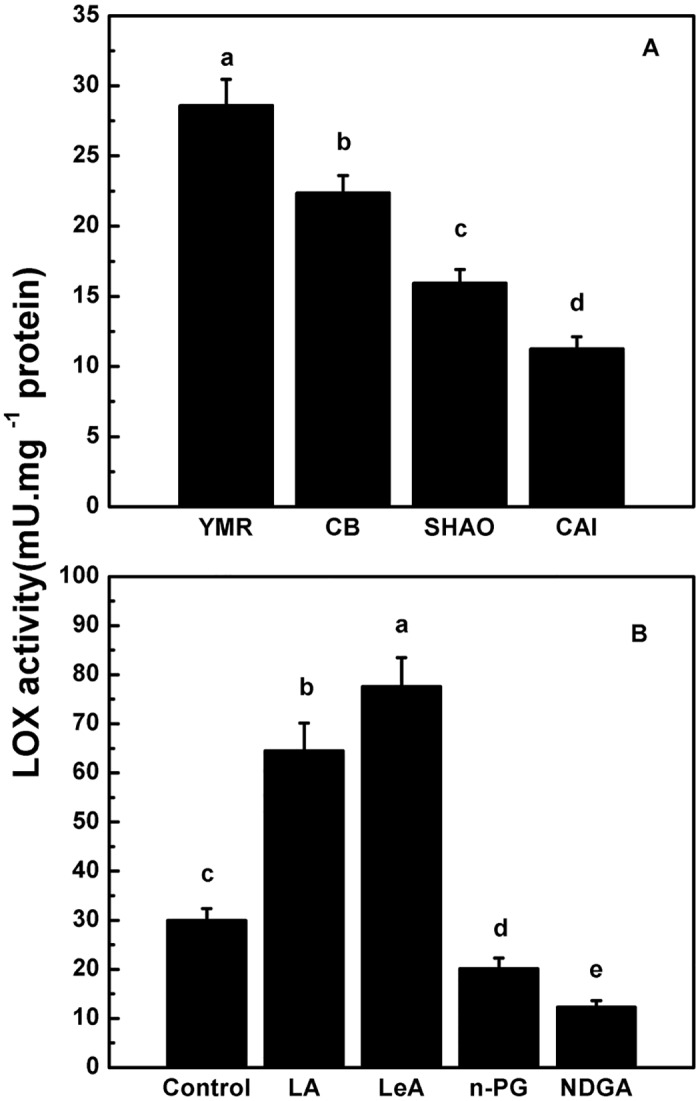
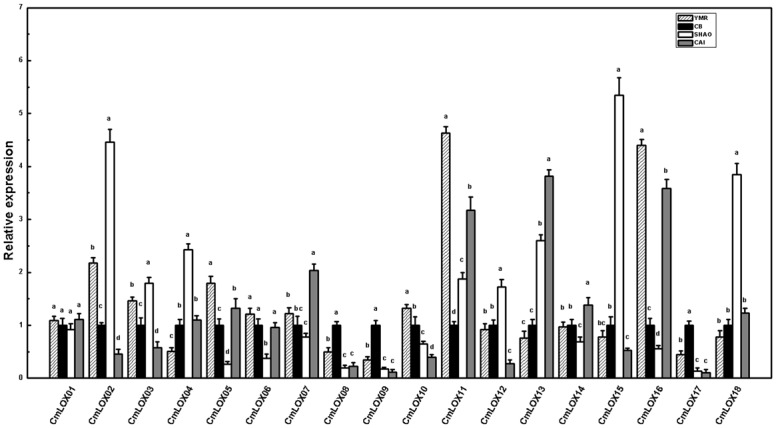
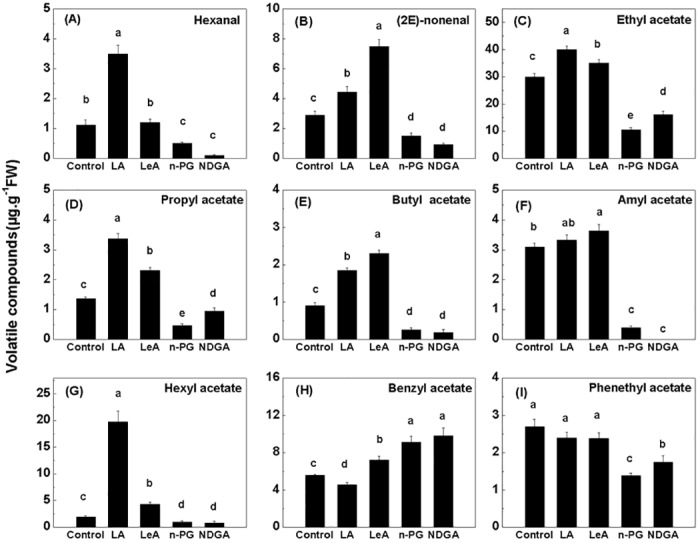
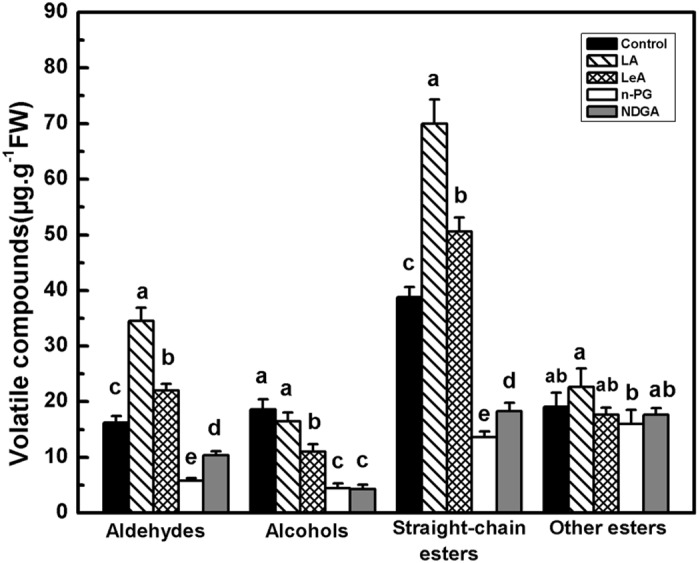
Lipoxygenases (LOXs) play important role in the synthesis of volatile organic compounds (VOCs), which influence the aroma of fruit. In this study, we elucidate that there is a positive relationship between LOXs activity and VOC production in melon (Cucumis melo), and CmLOX genes are involved in fruit aroma generation in melon. To this end, we tested four aroma types of melon that feature a thin pericarp: two aromatic cultivars of the oriental melons (C. melo var. makuwa Makino), 'Yu Meiren' (YMR) and 'Cui Bao' (CB); a non-aromatic oriental pickling melon (C. melo var. conomon), 'Shao Gua' (SHAO); and a non-aromatic snake melon (C. melo L. var. flexuosus Naud), 'Cai Gua' (CAI). A principal component analysis (PCA) revealed that the aromas of SHAO and CAI are similar in nature because their ester contents are lower than those of YMR and CB. Ethyl acetate, benzyl acetate, (E, Z)-2, 6-nonadienal and menthol are four principal volatile compounds that affect the aromatic characteristics of these four types of melons. The LOX activity and total ester content in YMR were the highest among the examined melon varieties. The expression patterns of 18 CmLOX genes were found to vary based on the aromatic nature of the melon. Four of them were highly expressed in YMR. Moreover, we treated the fruit disks of YMR with LOX substrates (linoleic acid and linolenic acid) and LOX inhibitors (n-propyl gallate and nordihydroguariaretic acid). Substrate application promoted LOX activity and induced accumulation of hexanal, (2E)-nonenal and straight-chain esters, such as ethyl acetate. In contrast, LOX inhibitors decreased the levels of these compounds. The effect of CmLOXs in the biosynthesis of esters in melons are discussed.
脂氧合酶(LOXs)在挥发性有机化合物(VOCs)的合成中发挥着重要作用,而挥发性有机化合物会影响水果的香气。在本研究中,我们阐明了甜瓜(Cucumis melo)中LOXs活性与VOC产生之间存在正相关关系,并且CmLOX基因参与了甜瓜果实香气的形成。为此,我们测试了四种果皮较薄的甜瓜香气类型:两种东方甜瓜(C. melo var. makuwa Makino)的芳香品种,‘玉美人’(YMR)和‘翠宝’(CB);一种非芳香型东方腌渍瓜(C. melo var. conomon),‘邵瓜’(SHAO);以及一种非芳香型蛇瓜(C. melo L. var. flexuosus Naud),‘菜瓜’(CAI)。主成分分析(PCA)表明,SHAO和CAI的香气本质相似,因为它们的酯含量低于YMR和CB。乙酸乙酯、乙酸苄酯、(E,Z)-2,6-壬二烯醛和薄荷醇是影响这四种甜瓜芳香特性的四种主要挥发性化合物。在所检测的甜瓜品种中,YMR的LOX活性和总酯含量最高。发现18个CmLOX基因的表达模式因甜瓜的芳香特性而异。其中四个在YMR中高表达。此外,我们用LOX底物(亚油酸和亚麻酸)和LOX抑制剂(没食子酸丙酯和去甲二氢愈创木酸)处理YMR的果实圆盘。底物处理促进了LOX活性,并诱导了己醛、(2E)-壬烯醛和直链酯(如乙酸乙酯)的积累。相反,LOX抑制剂降低了这些化合物的水平。讨论了CmLOXs在甜瓜酯生物合成中的作用。