Stevenson James, Lunine Jonathan, Clancy Paulette
School of Chemical and Biomolecular Engineering, Cornell University, 365 Olin Hall, Ithaca, NY 14853, USA.
Department of Astronomy, Cornell University, Ithaca, NY 14853, USA.
Sci Adv. 2015 Feb 27;1(1):e1400067. doi: 10.1126/sciadv.1400067. eCollection 2015 Feb.
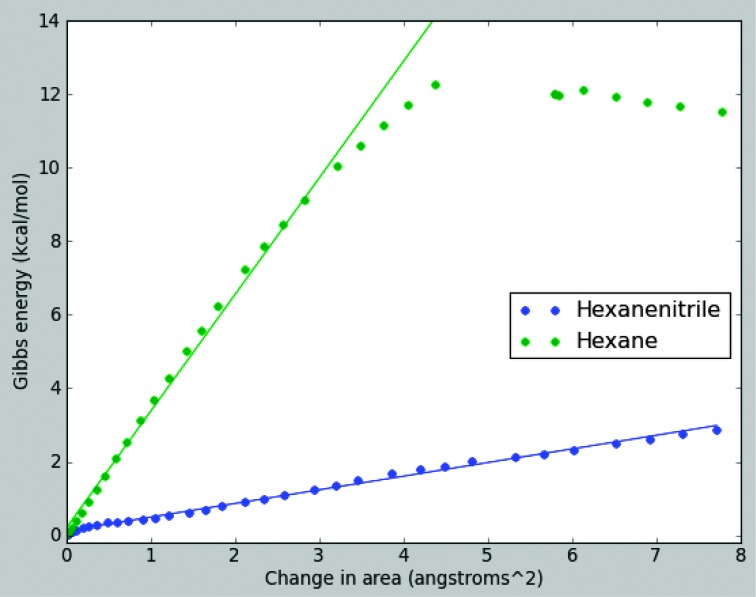
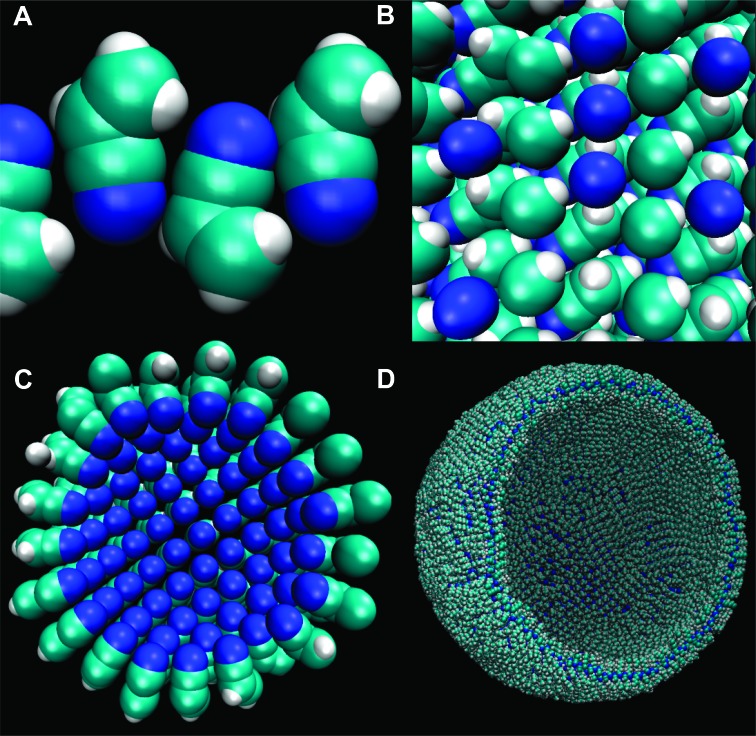
The lipid bilayer membrane, which is the foundation of life on Earth, is not viable outside of biology based on liquid water. This fact has caused astronomers who seek conditions suitable for life to search for exoplanets within the "habitable zone," the narrow band in which liquid water can exist. However, can cell membranes be created and function at temperatures far below those at which water is a liquid? We take a step toward answering this question by proposing a new type of membrane, composed of small organic nitrogen compounds, that is capable of forming and functioning in liquid methane at cryogenic temperatures. Using molecular simulations, we demonstrate that these membranes in cryogenic solvent have an elasticity equal to that of lipid bilayers in water at room temperature. As a proof of concept, we also demonstrate that stable cryogenic membranes could arise from compounds observed in the atmosphere of Saturn's moon, Titan, known for the existence of seas of liquid methane on its surface.
脂质双分子层膜是地球上生命的基础,基于液态水,它在生物学之外无法存活。这一事实促使寻找适合生命存在条件的天文学家在“宜居带”内寻找系外行星,宜居带是液态水能够存在的狭窄区域。然而,细胞膜能否在远低于水呈液态的温度下形成并发挥功能呢?我们朝着回答这个问题迈出了一步,提出了一种由有机小分子氮化合物组成的新型膜,这种膜能够在低温下于液态甲烷中形成并发挥功能。通过分子模拟,我们证明这些在低温溶剂中的膜具有与室温下水环境中脂质双分子层相同的弹性。作为概念验证,我们还证明稳定的低温膜可能由在土星卫星土卫六大气层中观测到的化合物形成,土卫六以其表面存在液态甲烷海洋而闻名。