Sage Andrew T, Besant Justin D, Mahmoudian Laili, Poudineh Mahla, Bai Xiaohui, Zamel Ricardo, Hsin Michael, Sargent Edward H, Cypel Marcelo, Liu Mingyao, Keshavjee Shaf, Kelley Shana O
Department of Pharmaceutical Sciences, Leslie Dan Faculty of Pharmacy, University of Toronto, Toronto, Ontario M5S 3M2, Canada.
Institute for Biomaterials and Biomedical Engineering, University of Toronto, Toronto, Ontario M5S 3G9, Canada.
Sci Adv. 2015 Aug 28;1(7):e1500417. doi: 10.1126/sciadv.1500417. eCollection 2015 Aug.
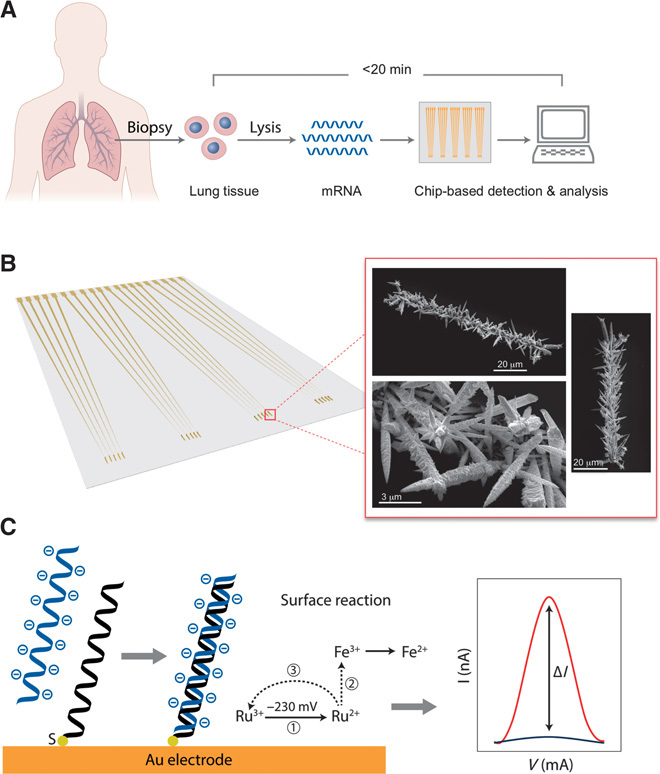
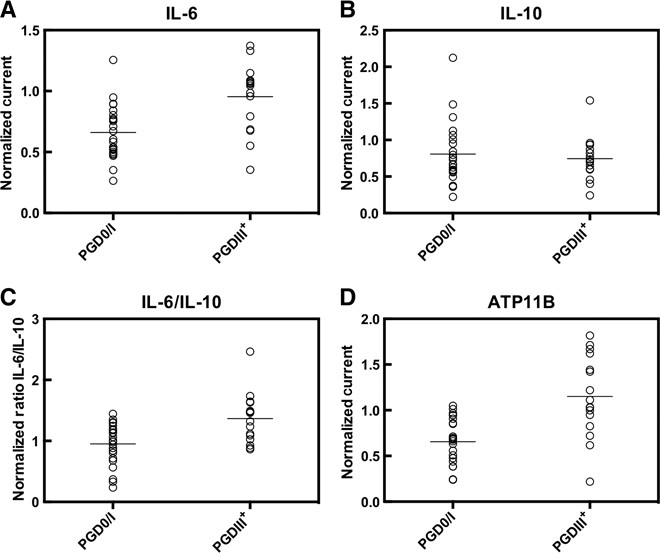
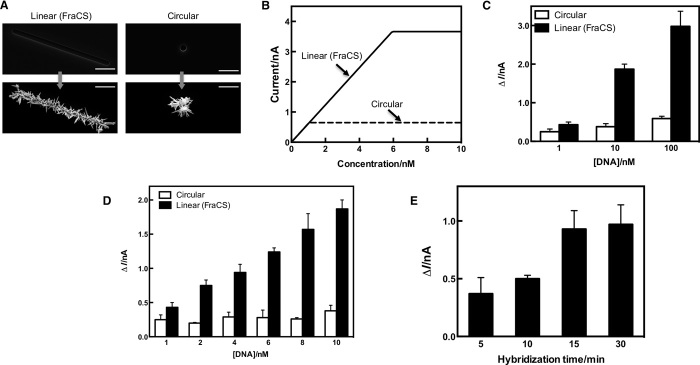
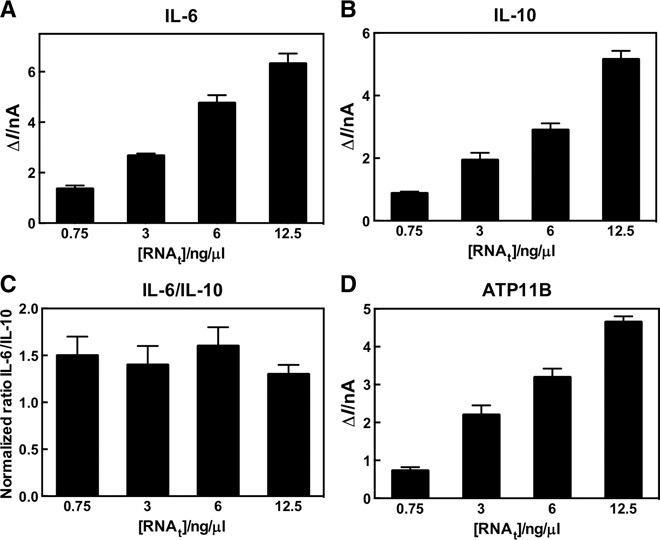
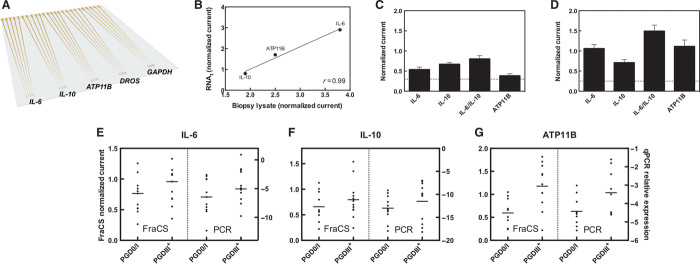
Biomarker profiling is being rapidly incorporated in many areas of modern medical practice to improve the precision of clinical decision-making. This potential improvement, however, has not been transferred to the practice of organ assessment and transplantation because previously developed gene-profiling techniques require an extended period of time to perform, making them unsuitable in the time-sensitive organ assessment process. We sought to develop a novel class of chip-based sensors that would enable rapid analysis of tissue levels of preimplantation mRNA markers that correlate with the development of primary graft dysfunction (PGD) in recipients after transplant. Using fractal circuit sensors (FraCS), three-dimensional metal structures with large surface areas, we were able to rapidly (<20 min) and reproducibly quantify small differences in the expression of interleukin-6 (IL-6), IL-10, and ATP11B mRNA in donor lung biopsies. A proof-of-concept study using 52 human donor lungs was performed to develop a model that was used to predict, with excellent sensitivity (74%) and specificity (91%), the incidence of PGD for a donor lung. Thus, the FraCS-based approach delivers a key predictive value test that could be applied to enhance transplant patient outcomes. This work provides an important step toward bringing rapid diagnostic mRNA profiling to clinical application in lung transplantation.
生物标志物分析正迅速融入现代医学实践的许多领域,以提高临床决策的精准度。然而,这种潜在的改进尚未应用于器官评估和移植实践,因为先前开发的基因分析技术需要较长时间来完成,使其不适用于对时间敏感的器官评估过程。我们试图开发一类新型的基于芯片的传感器,能够快速分析与移植后受者原发性移植物功能障碍(PGD)发展相关的植入前mRNA标志物的组织水平。使用具有大表面积的三维金属结构——分形电路传感器(FraCS),我们能够快速(<20分钟)且可重复地量化供体肺活检组织中白细胞介素-6(IL-6)、IL-10和ATP11B mRNA表达的微小差异。进行了一项使用52例人类供体肺的概念验证研究,以建立一个模型,该模型用于预测供体肺PGD的发生率,具有出色的敏感性(74%)和特异性(91%)。因此,基于FraCS的方法提供了一种关键的预测价值测试,可用于改善移植患者的预后。这项工作朝着将快速诊断mRNA分析应用于肺移植临床迈出了重要一步。