Xue Yuhua, Ding Yong, Niu Jianbing, Xia Zhenhai, Roy Ajit, Chen Hao, Qu Jia, Wang Zhong Lin, Dai Liming
Center of Advanced Science and Engineering for Carbon (Case4Carbon), Department of Macromolecular Science and Engineering, Case Western Reserve University, Cleveland, OH 44106, USA. ; Institute of Advanced Materials for Nano-Bio Applications, School of Ophthalmology & Optometry, Wenzhou Medical University, Wenzhou, Zhejiang 325027, China.
School of Materials Science and Engineering, Georgia Institute of Technology, Atlanta, GA 30332-0245, USA.
Sci Adv. 2015 Sep 4;1(8):e1400198. doi: 10.1126/sciadv.1400198. eCollection 2015 Sep.
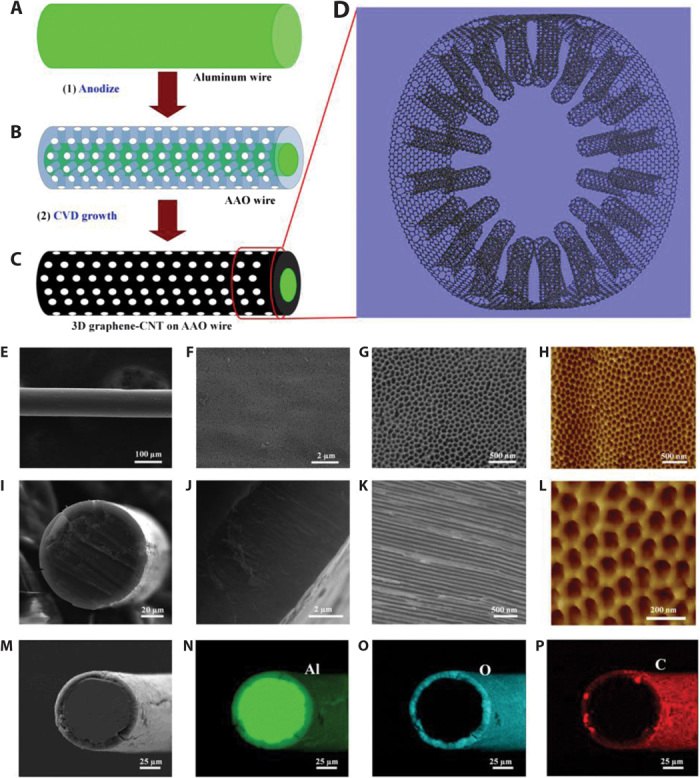
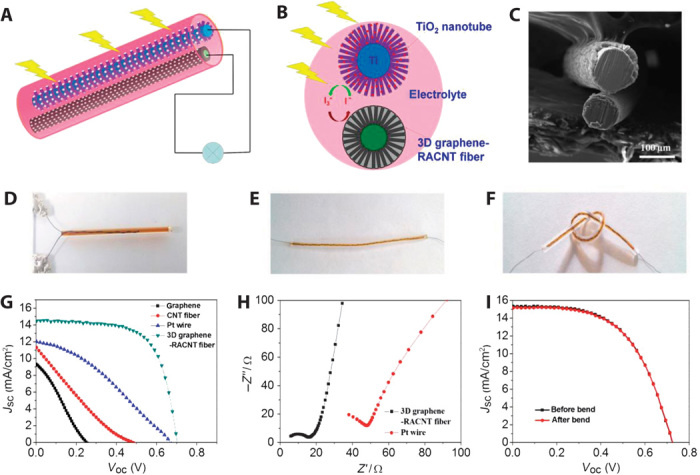
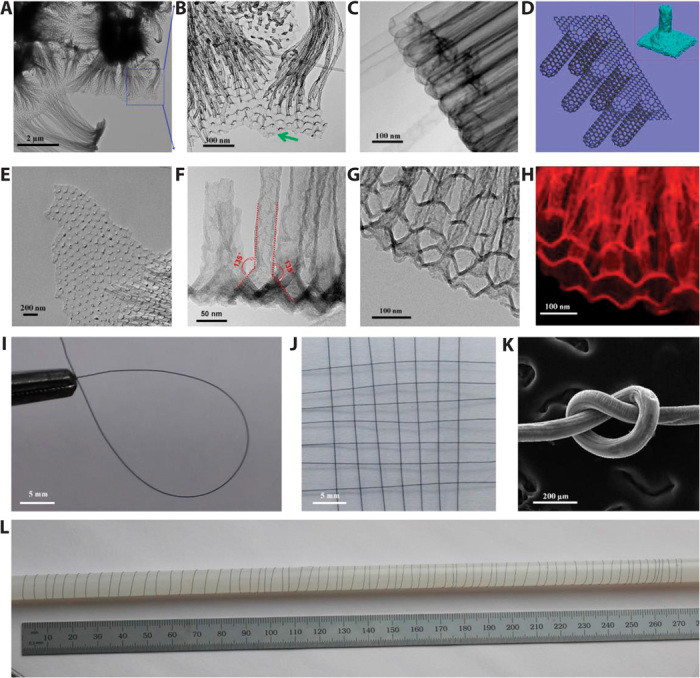
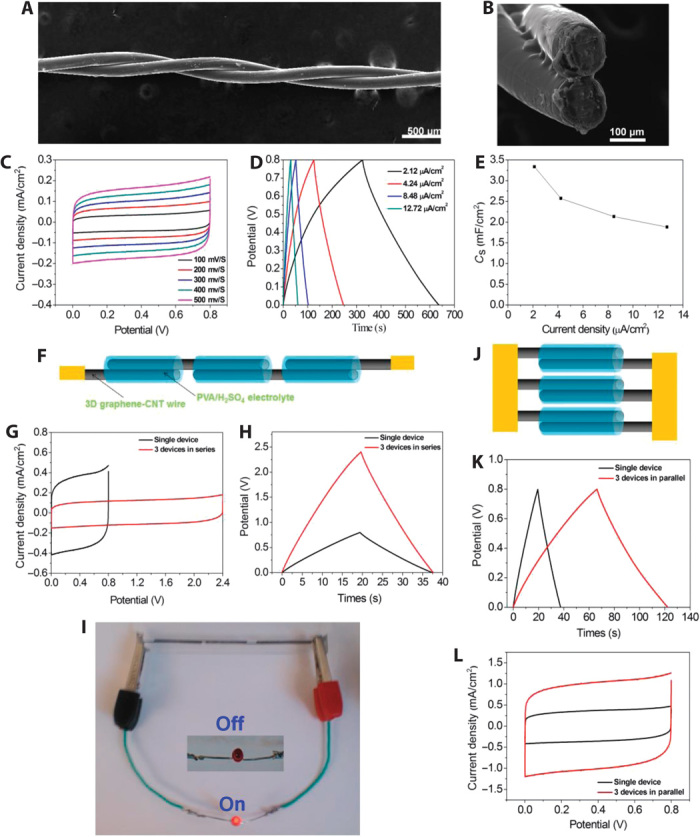
One-dimensional (1D) carbon nanotubes (CNTs) and 2D single-atomic layer graphene have superior thermal, electrical, and mechanical properties. However, these nanomaterials exhibit poor out-of-plane properties due to the weak van der Waals interaction in the transverse direction between graphitic layers. Recent theoretical studies indicate that rationally designed 3D architectures could have desirable out-of-plane properties while maintaining in-plane properties by growing CNTs and graphene into 3D architectures with a seamless nodal junction. However, the experimental realization of seamlessly-bonded architectures remains a challenge. We developed a strategy of creating 3D graphene-CNT hollow fibers with radially aligned CNTs (RACNTs) seamlessly sheathed by a cylindrical graphene layer through a one-step chemical vapor deposition using an anodized aluminum wire template. By controlling the aluminum wire diameter and anodization time, the length of the RACNTs and diameter of the graphene hollow fiber can be tuned, enabling efficient energy conversion and storage. These fibers, with a controllable surface area, meso-/micropores, and superior electrical properties, are excellent electrode materials for all-solid-state wire-shaped supercapacitors with poly(vinyl alcohol)/H2SO4 as the electrolyte and binder, exhibiting a surface-specific capacitance of 89.4 mF/cm(2) and length-specific capacitance up to 23.9 mF/cm, - one to four times the corresponding record-high capacities reported for other fiber-like supercapacitors. Dye-sensitized solar cells, fabricated using the fiber as a counter electrode, showed a power conversion efficiency of 6.8% and outperformed their counterparts with an expensive Pt wire counter electrode by a factor of 2.5. These novel fiber-shaped graphene-RACNT energy conversion and storage devices are so flexible they can be woven into fabrics as power sources.
一维(1D)碳纳米管(CNT)和二维单原子层石墨烯具有优异的热、电和机械性能。然而,由于石墨层之间横向的范德华相互作用较弱,这些纳米材料的面外性能较差。最近的理论研究表明,通过将碳纳米管和石墨烯生长成具有无缝节点连接的三维结构,合理设计的三维结构可以在保持面内性能的同时具有理想的面外性能。然而,无缝结合结构的实验实现仍然是一个挑战。我们开发了一种策略,通过使用阳极氧化铝丝模板的一步化学气相沉积法,制备出具有径向排列碳纳米管(RACNT)的三维石墨烯-CNT中空纤维,该碳纳米管被圆柱形石墨烯层无缝包覆。通过控制铝丝直径和阳极氧化时间,可以调节RACNT的长度和石墨烯中空纤维的直径,从而实现高效的能量转换和存储。这些纤维具有可控的表面积、介孔/微孔以及优异的电学性能,是以聚乙烯醇/H2SO4作为电解质和粘合剂的全固态线状超级电容器的优异电极材料,其表面比电容为89.4 mF/cm(2),长度比电容高达23.9 mF/cm,是其他纤维状超级电容器报道的相应记录高容量的一到四倍。使用该纤维作为对电极制备的染料敏化太阳能电池,功率转换效率为6.8%,比使用昂贵的铂丝对电极的同类电池性能高出2.5倍。这些新型纤维状石墨烯-RACNT能量转换和存储装置非常灵活,可以编织成织物作为电源。