Yoo Minyeong, Bestel-Corre Gwenaelle, Croux Christian, Riviere Antoine, Meynial-Salles Isabelle, Soucaille Philippe
Université de Toulouse, INSA, UPS, INP, LISBP, Toulouse, France INRA, UMR792, Toulouse, France CNRS, UMR5504, Toulouse, France.
Metabolic Explorer, Biopôle Clermont-Limagne, Saint Beauzire, France.
mBio. 2015 Nov 24;6(6):e01808-15. doi: 10.1128/mBio.01808-15.
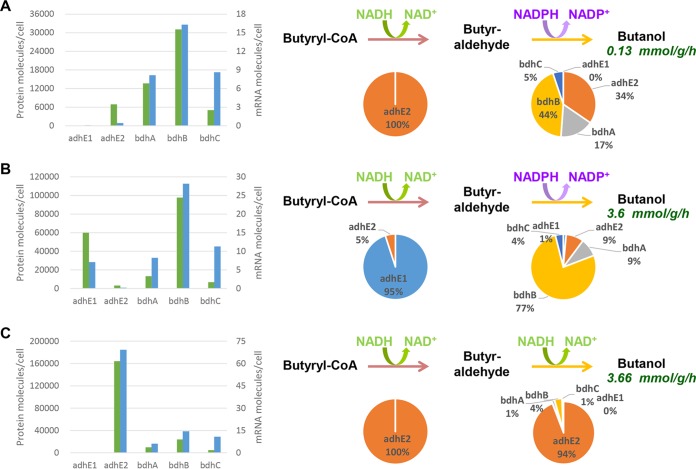
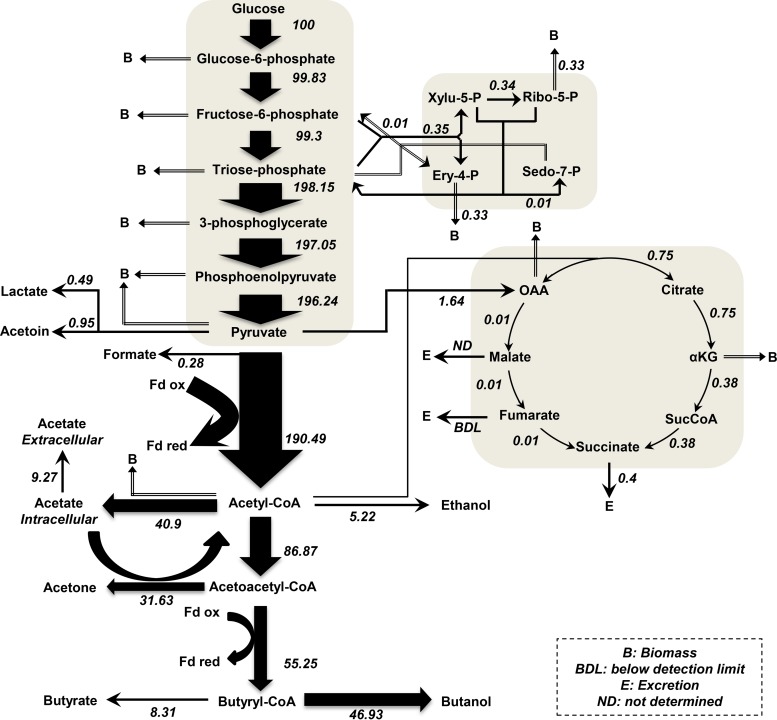
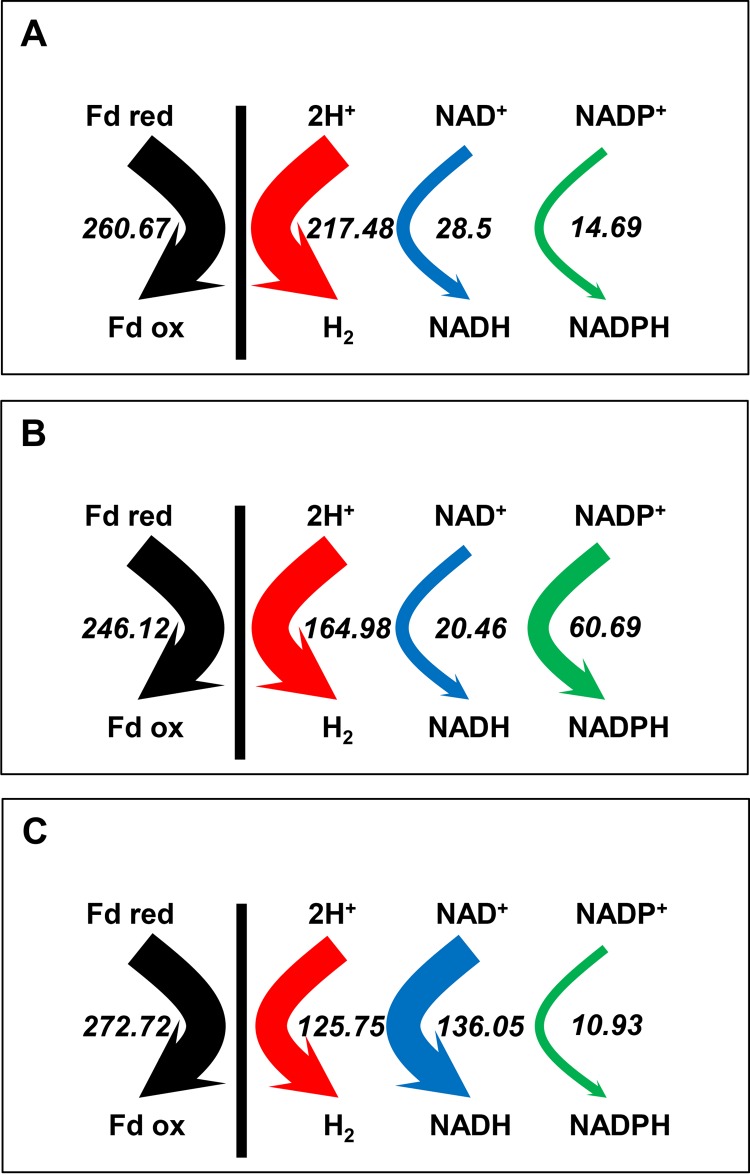
Engineering industrial microorganisms for ambitious applications, for example, the production of second-generation biofuels such as butanol, is impeded by a lack of knowledge of primary metabolism and its regulation. A quantitative system-scale analysis was applied to the biofuel-producing bacterium Clostridium acetobutylicum, a microorganism used for the industrial production of solvent. An improved genome-scale model, iCac967, was first developed based on thorough biochemical characterizations of 15 key metabolic enzymes and on extensive literature analysis to acquire accurate fluxomic data. In parallel, quantitative transcriptomic and proteomic analyses were performed to assess the number of mRNA molecules per cell for all genes under acidogenic, solventogenic, and alcohologenic steady-state conditions as well as the number of cytosolic protein molecules per cell for approximately 700 genes under at least one of the three steady-state conditions. A complete fluxomic, transcriptomic, and proteomic analysis applied to different metabolic states allowed us to better understand the regulation of primary metabolism. Moreover, this analysis enabled the functional characterization of numerous enzymes involved in primary metabolism, including (i) the enzymes involved in the two different butanol pathways and their cofactor specificities, (ii) the primary hydrogenase and its redox partner, (iii) the major butyryl coenzyme A (butyryl-CoA) dehydrogenase, and (iv) the major glyceraldehyde-3-phosphate dehydrogenase. This study provides important information for further metabolic engineering of C. acetobutylicum to develop a commercial process for the production of n-butanol.
Currently, there is a resurgence of interest in Clostridium acetobutylicum, the biocatalyst of the historical Weizmann process, to produce n-butanol for use both as a bulk chemical and as a renewable alternative transportation fuel. To develop a commercial process for the production of n-butanol via a metabolic engineering approach, it is necessary to better characterize both the primary metabolism of C. acetobutylicum and its regulation. Here, we apply a quantitative system-scale analysis to acidogenic, solventogenic, and alcohologenic steady-state C. acetobutylicum cells and report for the first time quantitative transcriptomic, proteomic, and fluxomic data. This approach allows for a better understanding of the regulation of primary metabolism and for the functional characterization of numerous enzymes involved in primary metabolism.
对工业微生物进行工程改造以实现宏伟应用,例如生产丁醇等第二代生物燃料,因缺乏对初级代谢及其调控的了解而受到阻碍。对用于工业溶剂生产的产丁醇梭菌进行了定量系统规模分析。首先,基于对15种关键代谢酶的深入生化表征以及广泛的文献分析,开发了一个改进的基因组规模模型iCac967,以获取准确的通量组学数据。同时,进行了定量转录组学和蛋白质组学分析,以评估产酸、产溶剂和产醇稳态条件下所有基因的每个细胞mRNA分子数量,以及在至少一种稳态条件下约700个基因的每个细胞胞质蛋白分子数量。对不同代谢状态进行完整的通量组学、转录组学和蛋白质组学分析,使我们能够更好地理解初级代谢的调控。此外,该分析还能对参与初级代谢的众多酶进行功能表征,包括:(i)参与两条不同丁醇途径的酶及其辅因子特异性;(ii)初级氢化酶及其氧化还原伙伴;(iii)主要的丁酰辅酶A脱氢酶;(iv)主要的3-磷酸甘油醛脱氢酶。本研究为进一步对产丁醇梭菌进行代谢工程改造以开发正丁醇生产商业工艺提供了重要信息。
目前,人们对历史上魏茨曼工艺的生物催化剂产丁醇梭菌重新产生了兴趣,以生产正丁醇用作大宗化学品和可再生替代运输燃料。要通过代谢工程方法开发正丁醇生产商业工艺,有必要更好地表征产丁醇梭菌的初级代谢及其调控。在此,我们对产酸、产溶剂和产醇稳态的产丁醇梭菌细胞进行了定量系统规模分析,并首次报告了定量转录组学、蛋白质组学和通量组学数据。这种方法有助于更好地理解初级代谢的调控,并对参与初级代谢的众多酶进行功能表征。