Ambridge Ben, Bidgood Amy, Pine Julian M, Rowland Caroline F, Freudenthal Daniel
University of Liverpool, ESRC International Centre for Language and Communicative Development (LuCiD).
Cogn Sci. 2016 Aug;40(6):1435-59. doi: 10.1111/cogs.12277. Epub 2015 Nov 26.
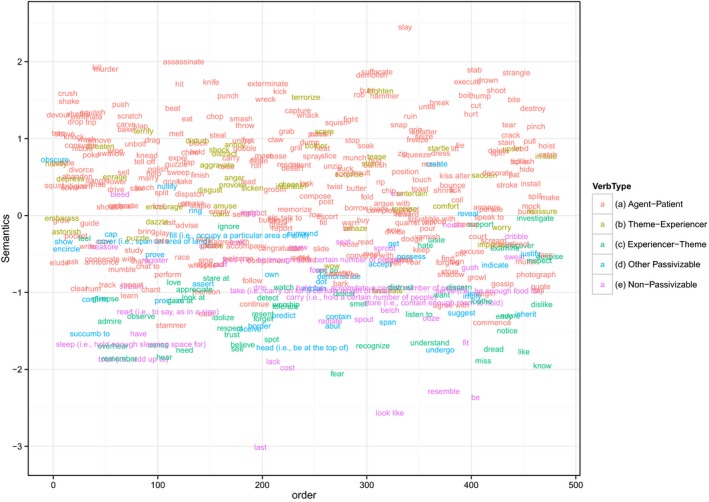
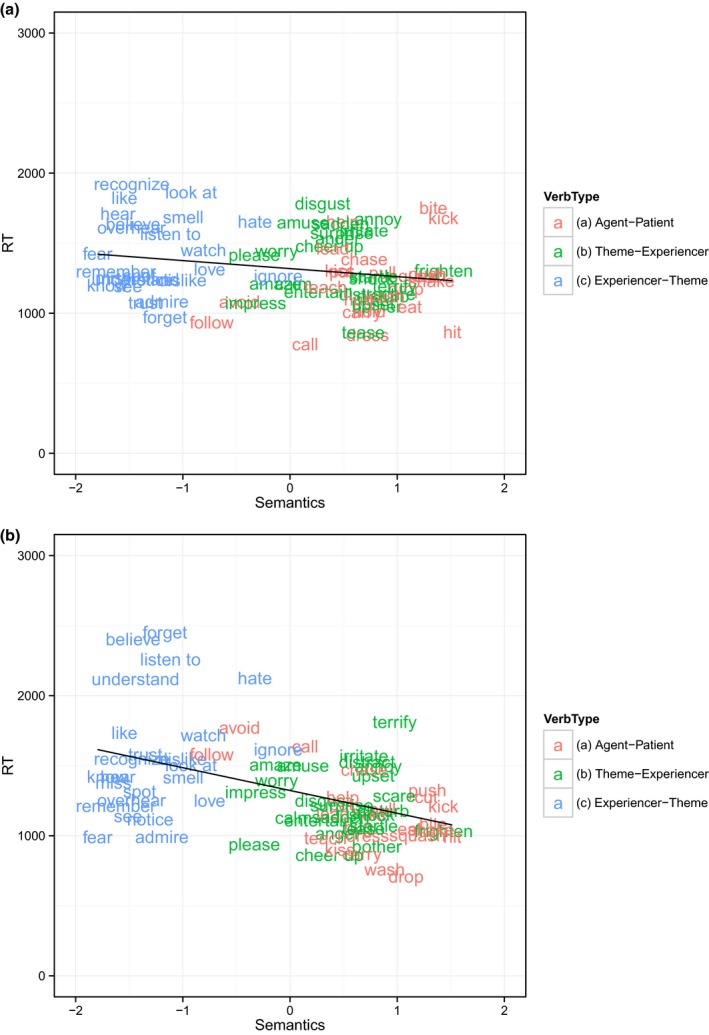
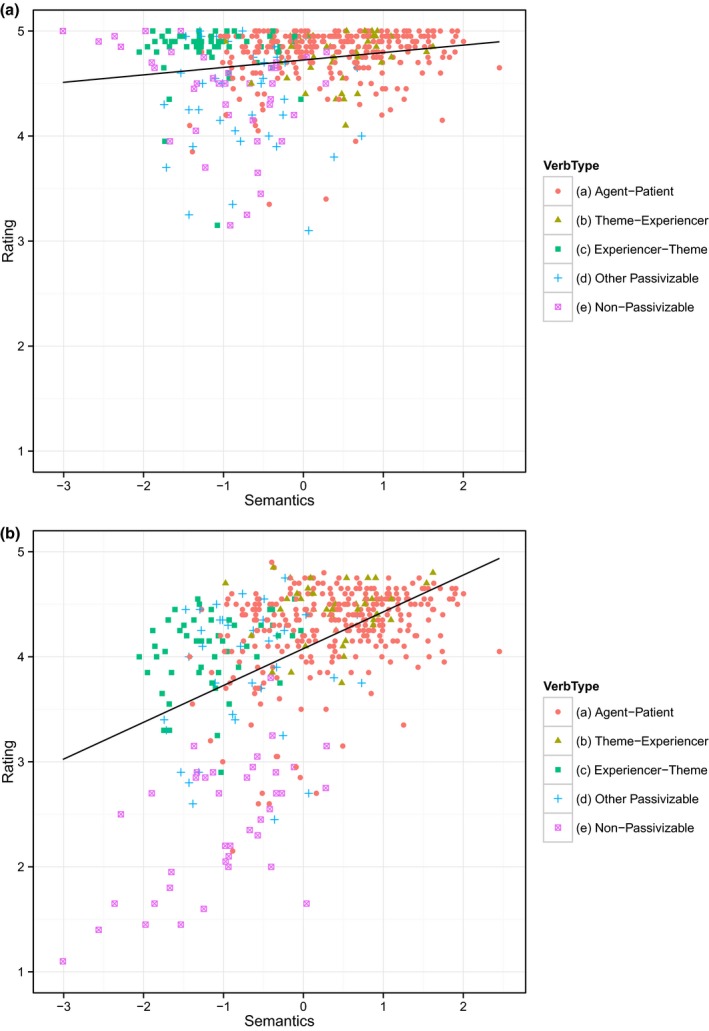
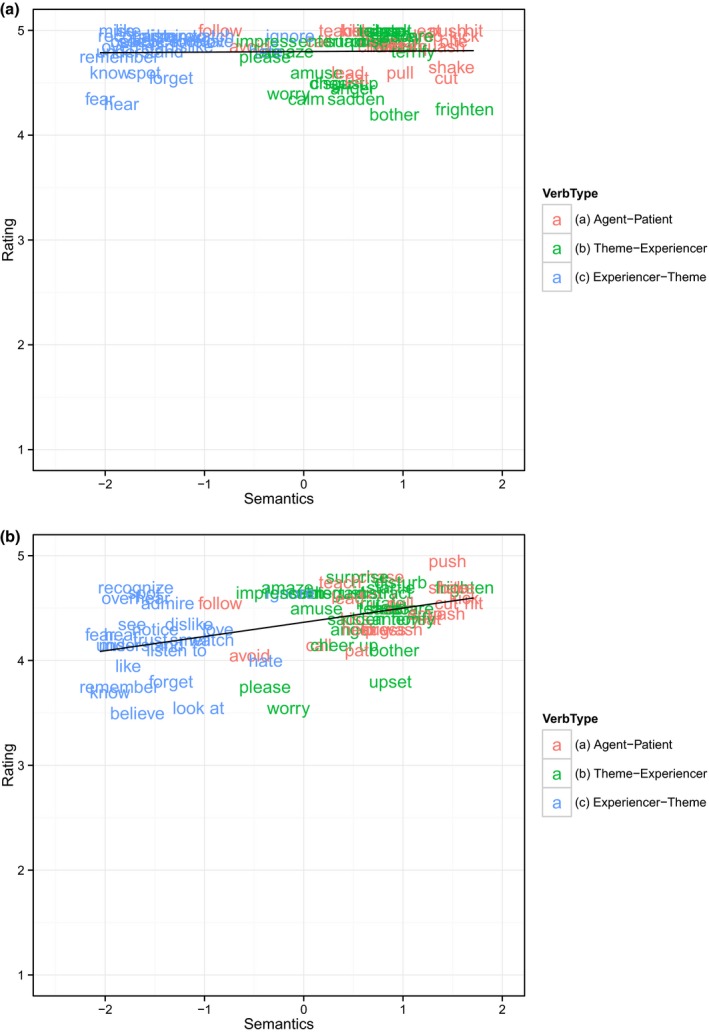
To explain the phenomenon that certain English verbs resist passivization (e.g., *£5 was cost by the book), Pinker (1989) proposed a semantic constraint on the passive in the adult grammar: The greater the extent to which a verb denotes an action where a patient is affected or acted upon, the greater the extent to which it is compatible with the passive. However, a number of comprehension and production priming studies have cast doubt upon this claim, finding no difference between highly affecting agent-patient/theme-experiencer passives (e.g., Wendy was kicked/frightened by Bob) and non-actional experiencer theme passives (e.g., Wendy was heard by Bob). The present study provides evidence that a semantic constraint is psychologically real, and is readily observed when more fine-grained independent and dependent measures are used (i.e., participant ratings of verb semantics, graded grammaticality judgments, and reaction time in a forced-choice picture-matching comprehension task). We conclude that a semantic constraint on the passive must be incorporated into accounts of the adult grammar.
为了解释某些英语动词不能被被动化的现象(例如,*这本书花了5英镑),平克(1989)提出了成人语法中被动语态的语义限制:一个动词所表示的动作对受事产生影响或作用的程度越大,它与被动语态的兼容性就越大。然而,一些理解和产出启动研究对这一说法提出了质疑,发现高度影响施事-受事/主题-体验者的被动语态(例如,温迪被鲍勃踢了/吓到了)和非动作性体验者-主题被动语态(例如,鲍勃听到了温迪的声音)之间没有区别。本研究提供了证据表明语义限制在心理上是真实存在的,并且当使用更精细的独立和相关测量方法时(即参与者对动词语义的评分、分级语法性判断以及强制选择图片匹配理解任务中的反应时间)很容易观察到。我们得出结论,被动语态的语义限制必须纳入成人语法的解释中。