Wang Haifeng, Gao Xu, Lu Xin, Wang Yan, Ma Chunfei, Shi Zhenkai, Zhu Feng, He Biming, Xu Chuanliang, Sun Yinghao
Department of Urology, Changhai Hospital, Second Military University, Shanghai, 20043, China.
Department of Urology, Changhai Hospital, Second Military University, Shanghai, 20043, China
Biosci Rep. 2015 Nov 26;35(6). doi: 10.1042/BSR20150003. Print 2015.
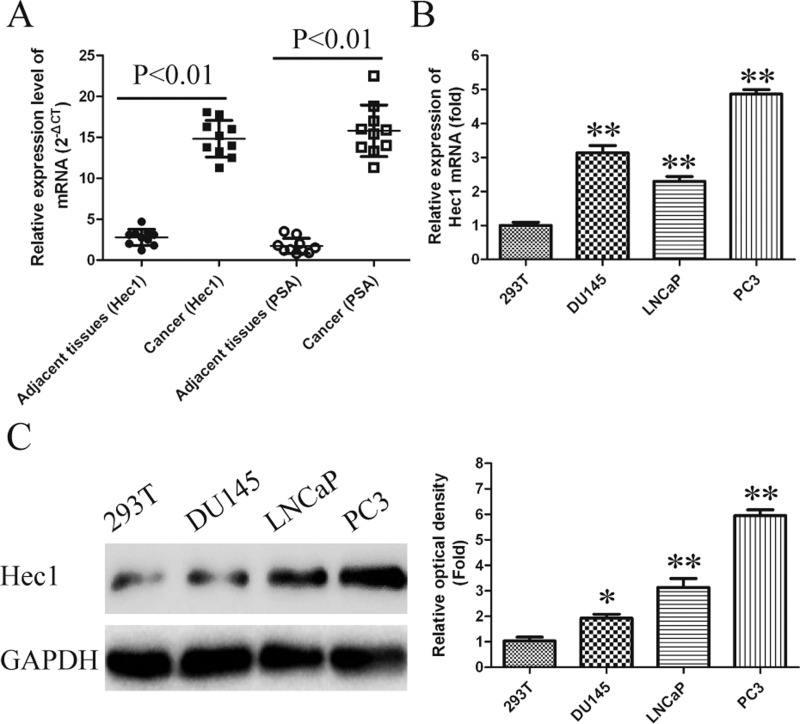
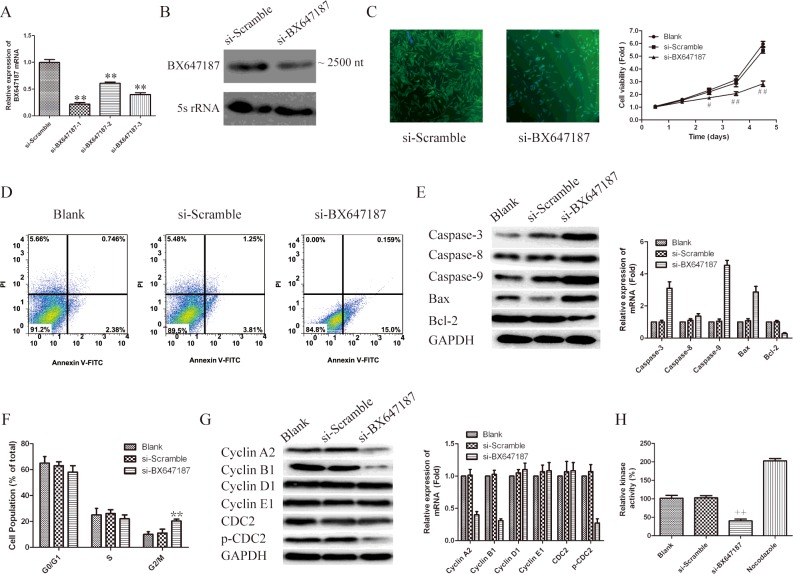
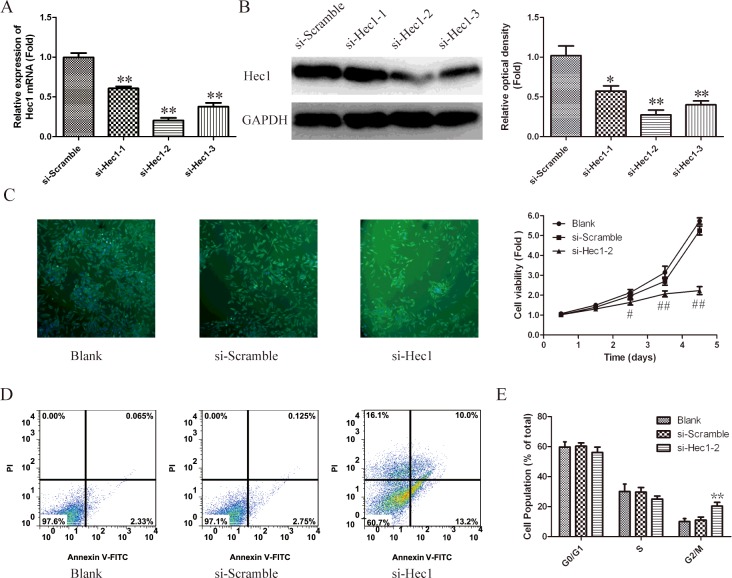
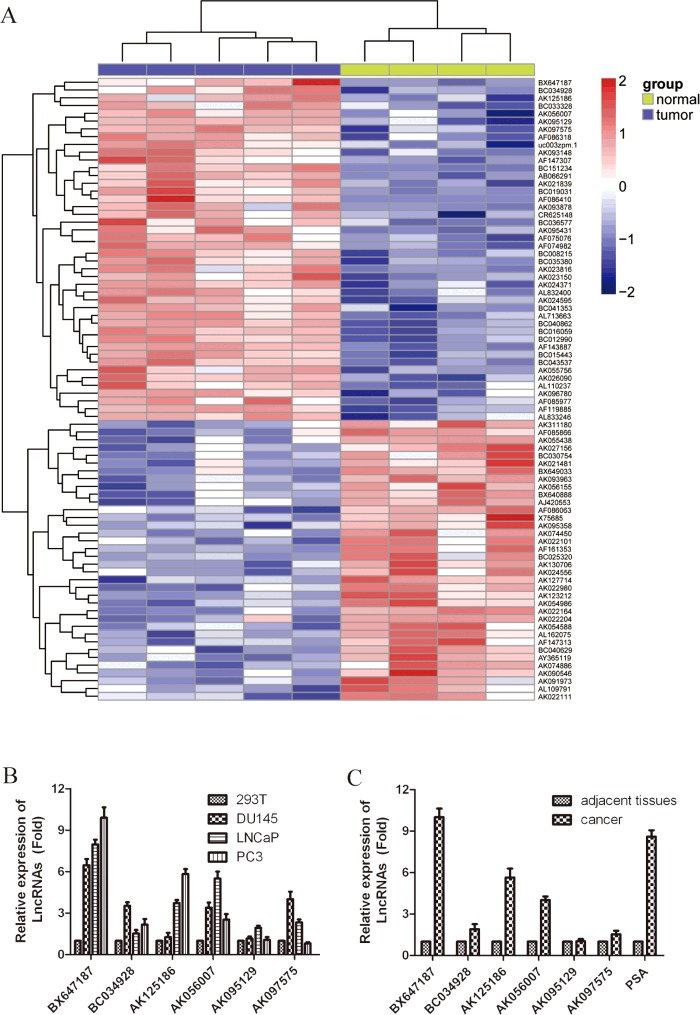
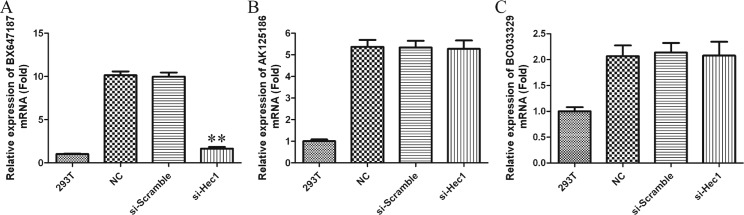
Hec1 (highly expressed in cancer) is a member of a conserved Ndc80 (nuclear division cycle 80) complex that regulates mitotic processes. Its overexpression is seen in various tumours and is associated with cancer progression. However, its expression pattern and role inhuman prostate cancer (PCa) still not clear. The aim of our study is to investigate the expression and functional role of Hec1 in human PCa. Hec1 expression was measured in 10 pairs of PCa cancerous and non-cancerous tissue samples by quantitative real-time (qRT)-PCR. The effects of Hec1 on PCa cells were studied by RNAi approach. Apoptosis and cell cycle were analysed by flow cytometry. Cells viability was evaluated using cell counting Kit-8. Cyclin B1-Cdc2 (cell division cycle 2) activity was measured by ELISA assay. Long non-coding (Lnc)RNAs regulated by Hec1 were gained from bioinformatics analysis. The role of LncRNA BX647187, regulated by Hec1, was finally characterized in PCa cells by siRNA. Our results showed that Hec1 mRNA and protein were significantly overexpressed in Human PCa tissues and several PCa cell lines. Silencing Hec1 markedly suppressed proliferation, promoted apoptosis and induced cell-cycle arrest in G2/M-phase in PCa cells. Through bioinformatics analysis and knockdown Hec1 in PCa cells, we found LncRNA BX647187 was positively regulated by Hec1. We further demonstrated that suppression of BX647187 in PCa cells significantly reduced cell proliferation and promoted apoptosis. Thus, we conclude that Hec1 is consistently overexpressed in human PCa and Hec1 is closely linked with human PCa progression through the meditator LncRNA BX647187. Our studies may contribute to understand the molecular mechanism of PCa pathogenesis and clinical therapy.
Hec1(在癌症中高表达)是保守的Ndc80(核分裂周期80)复合体的成员,该复合体调节有丝分裂过程。其在各种肿瘤中均有过表达,且与癌症进展相关。然而,其在人类前列腺癌(PCa)中的表达模式和作用仍不清楚。我们研究的目的是调查Hec1在人类PCa中的表达及功能作用。通过定量实时(qRT)-PCR检测10对PCa癌组织和非癌组织样本中Hec1的表达。采用RNA干扰方法研究Hec1对PCa细胞的影响。通过流式细胞术分析细胞凋亡和细胞周期。使用细胞计数试剂盒-8评估细胞活力。通过酶联免疫吸附测定法检测细胞周期蛋白B1-Cdc2(细胞分裂周期2)活性。通过生物信息学分析获得受Hec1调控的长链非编码(Lnc)RNA。最终通过小干扰RNA在PCa细胞中鉴定受Hec1调控的LncRNA BX647187的作用。我们的结果显示,Hec1 mRNA和蛋白在人类PCa组织和几种PCa细胞系中显著过表达。沉默Hec1可显著抑制PCa细胞增殖、促进细胞凋亡并诱导细胞周期阻滞于G2/M期。通过生物信息学分析以及在PCa细胞中敲低Hec1,我们发现LncRNA BX647187受Hec1正向调控。我们进一步证明,在PCa细胞中抑制BX647187可显著降低细胞增殖并促进细胞凋亡。因此,我们得出结论,Hec1在人类PCa中持续过表达,且Hec1通过中介LncRNA BX647187与人类PCa进展密切相关。我们的研究可能有助于理解PCa发病机制和临床治疗的分子机制。