Colzato Lorenza S, Barone Hayley, Sellaro Roberta, Hommel Bernhard
Cognitive Psychology Unit, Institute for Psychological Research and Leiden Institute for Brain and Cognition, Leiden University, Wassenaarseweg 52, 2333, AK, Leiden, The Netherlands.
Psychol Res. 2017 Jan;81(1):271-277. doi: 10.1007/s00426-015-0727-0. Epub 2015 Nov 26.
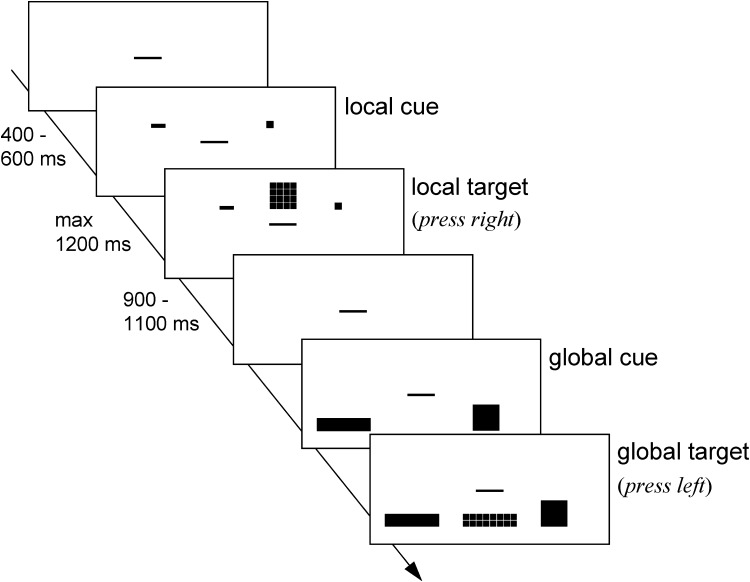
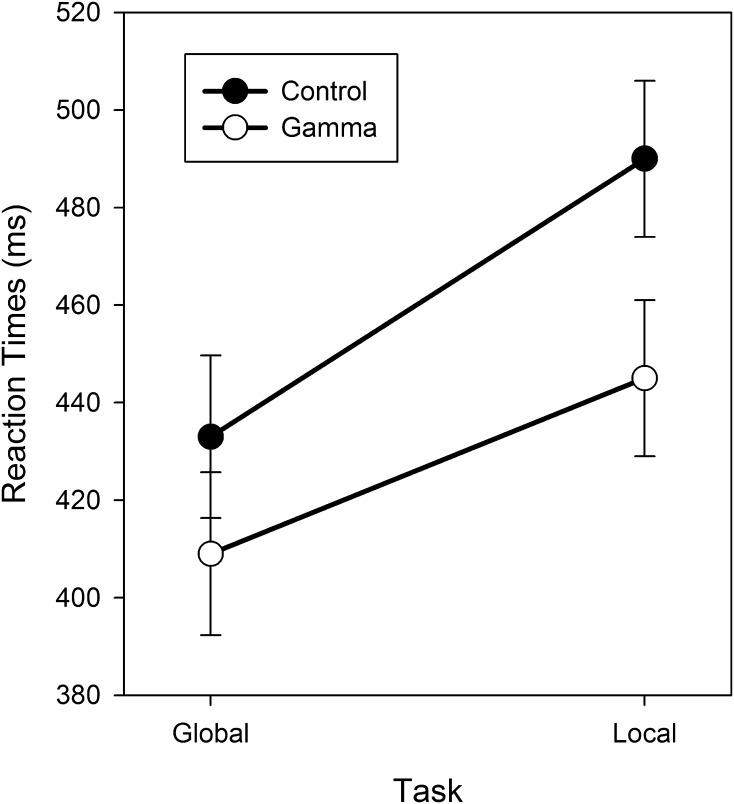
A recent study showed that binaural beats have an impact on the efficiency of allocating attention over time. We were interested to see whether this impact affects attentional focusing or, even further, the top-down control over irrelevant information. Healthy adults listened to gamma-frequency (40 Hz) binaural beats, which are assumed to increase attentional concentration, or a constant tone of 340 Hz (control condition) for 3 min before and during a global-local task. While the size of the congruency effect (indicating the failure to suppress task-irrelevant information) was unaffected by the binaural beats, the global-precedence effect (reflecting attentional focusing) was considerably smaller after gamma-frequency binaural beats than after the control condition. Our findings suggest that high-frequency binaural beats bias the individual attentional processing style towards a reduced spotlight of attention.
最近的一项研究表明,双耳节拍对随着时间分配注意力的效率有影响。我们感兴趣的是,这种影响是否会影响注意力的集中,或者更进一步,是否会影响对无关信息的自上而下的控制。健康成年人在进行全局-局部任务之前和期间,聆听了被认为能提高注意力集中度的伽马频率(40赫兹)双耳节拍,或者340赫兹的恒定音调(对照条件),持续3分钟。虽然一致性效应的大小(表明无法抑制与任务无关的信息)不受双耳节拍的影响,但伽马频率双耳节拍后的全局优先效应(反映注意力集中)比对照条件后明显更小。我们的研究结果表明,高频双耳节拍会使个体的注意力加工方式偏向于缩小注意力焦点。