Zhou Yulian, Williams John, Smallwood Philip M, Nathans Jeremy
Departments of Molecular Biology and Genetics, Johns Hopkins University School of Medicine, Baltimore, Maryland, 21205, United States of America.
Howard Hughes Medical Institute, Johns Hopkins University School of Medicine, Baltimore, Maryland, 21205, United States of America.
PLoS One. 2015 Dec 2;10(12):e0143650. doi: 10.1371/journal.pone.0143650. eCollection 2015.
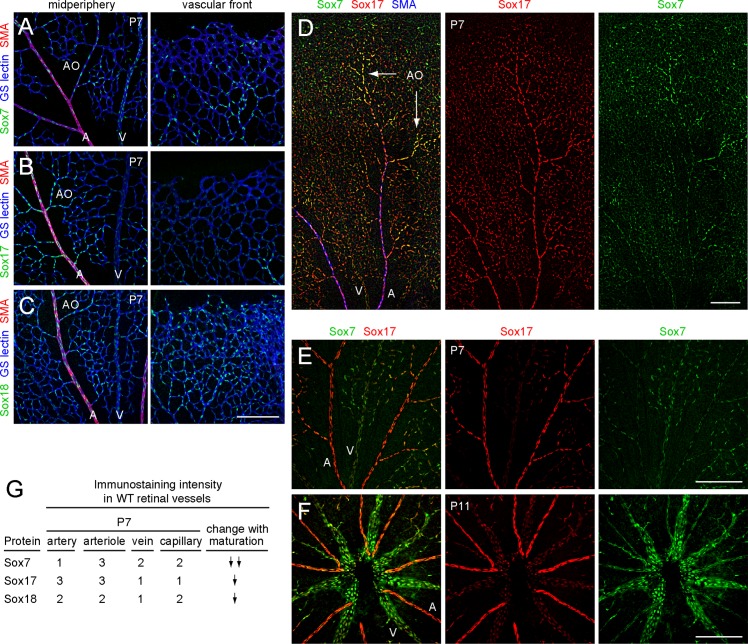
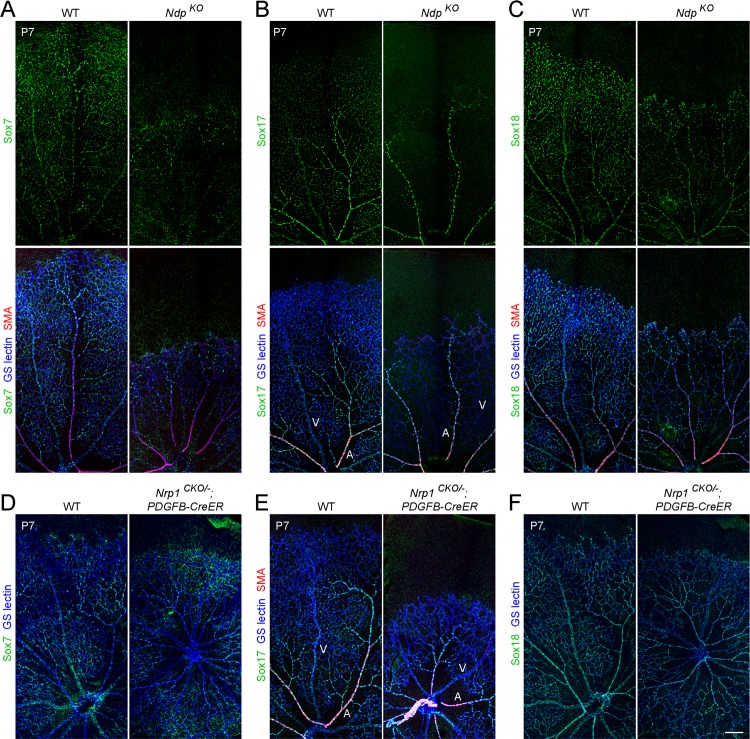
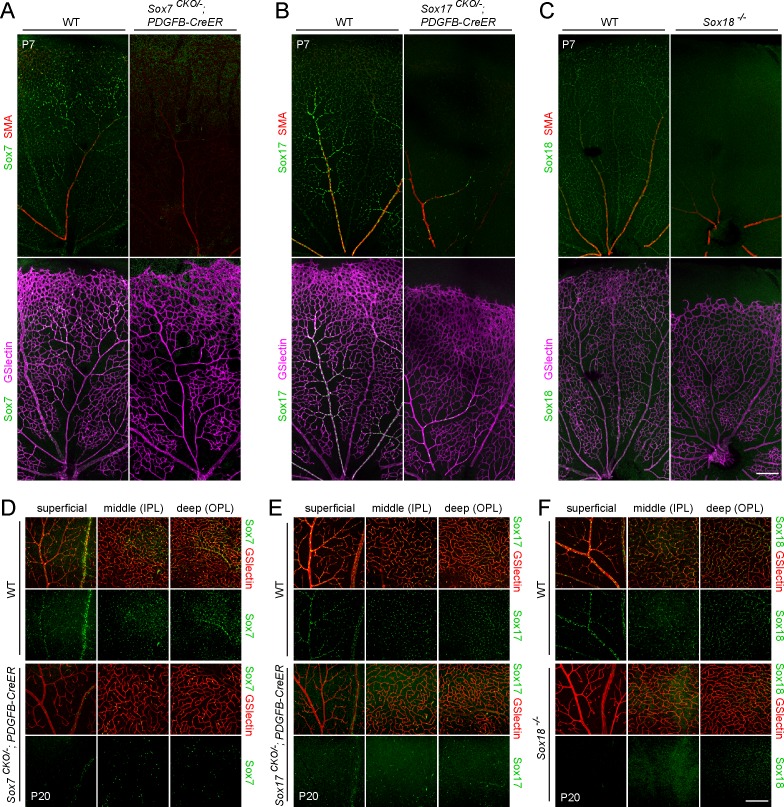
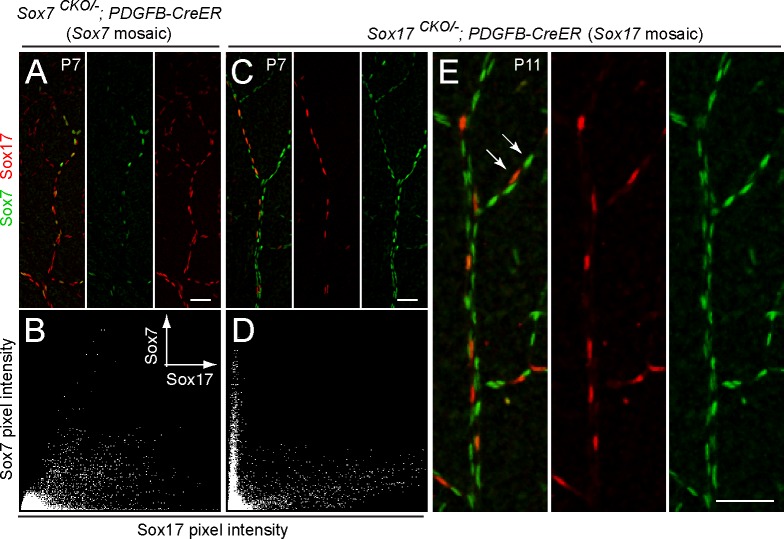
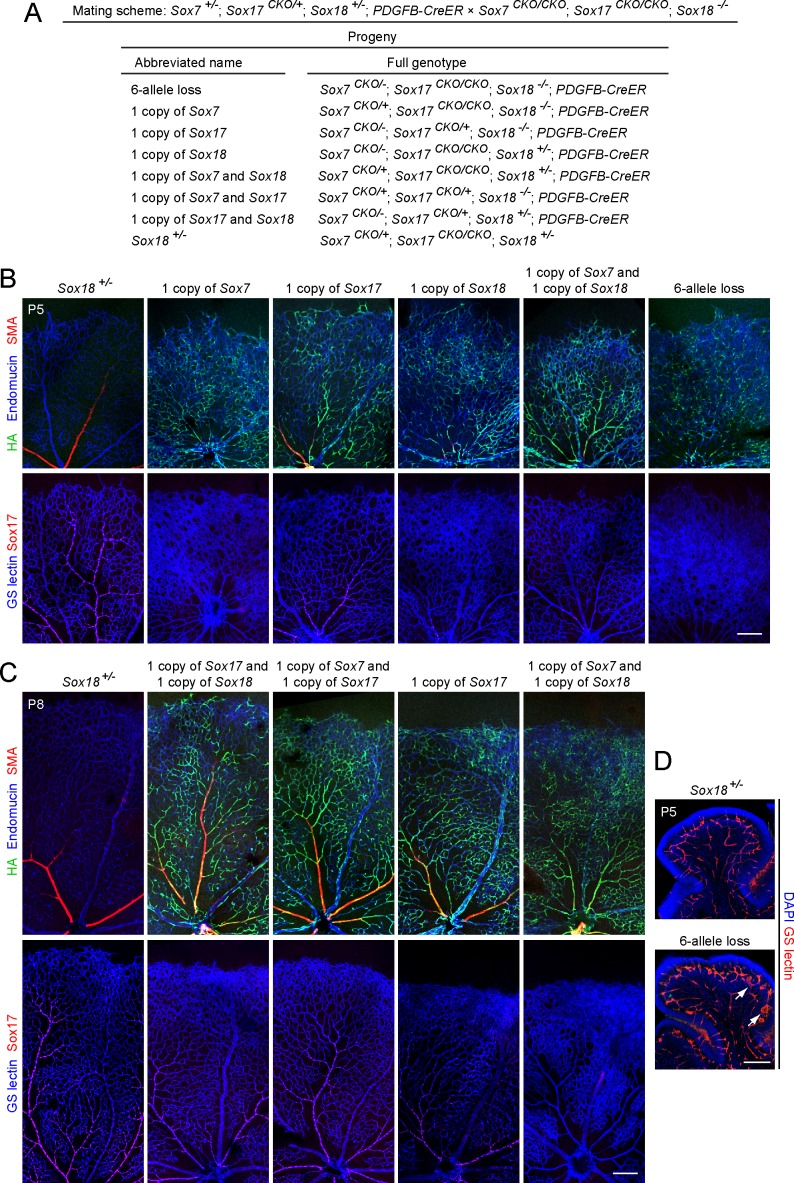
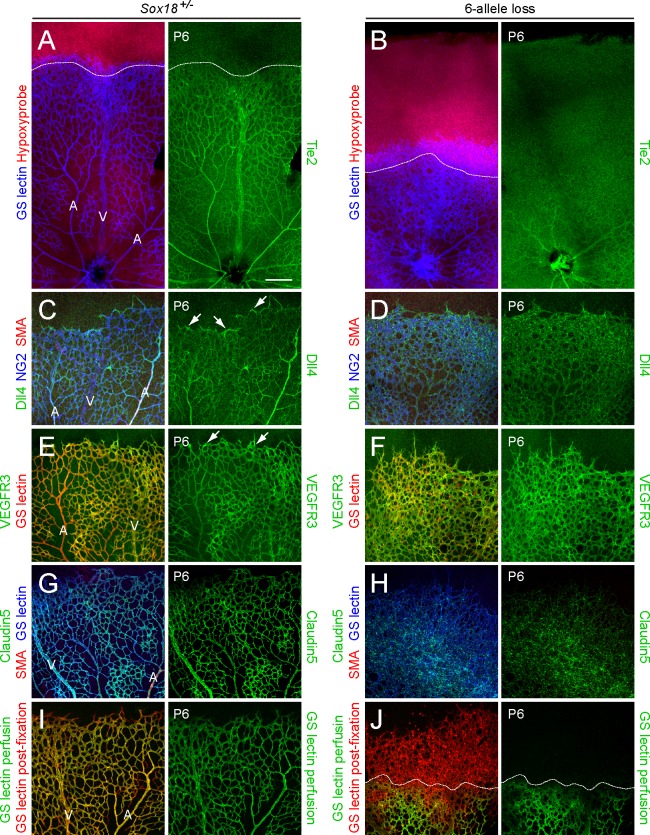
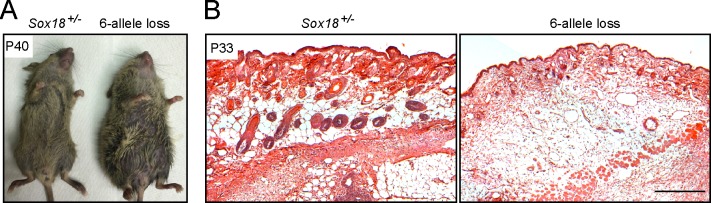
Vascular development and maintenance are controlled by a complex transcriptional program, which integrates both extracellular and intracellular signals in endothelial cells. Here we study the roles of three closely related SoxF family transcription factors-Sox7, Sox17, and Sox18 -in the developing and mature mouse vasculature using targeted gene deletion on a mixed C57/129/CD1 genetic background. In the retinal vasculature, each SoxF gene exhibits a distinctive pattern of expression in different classes of blood vessels. On a mixed genetic background, vascular endothelial-specific deletion of individual SoxF genes has little or no effect on vascular architecture or differentiation, a result that can be explained by overlapping function and by reciprocal regulation of gene expression between Sox7 and Sox17. By contrast, combined deletion of Sox7, Sox17, and Sox18 at the onset of retinal angiogenesis leads to a dense capillary plexus with a nearly complete loss of radial arteries and veins, whereas the presence of a single Sox17 allele largely restores arterial identity, as determined by vascular smooth muscle cell coverage. In the developing retina, expression of all three SoxF genes is reduced in the absence of Norrin/Frizzled4-mediated canonical Wnt signaling, but SoxF gene expression is unaffected by reduced VEGF signaling in response to deletion of Neuropilin1 (Npn1). In adulthood, Sox7, Sox17, and Sox18 act in a largely redundant manner to maintain blood vessel function, as adult onset vascular endothelial-specific deletion of all three SoxF genes leads to massive edema despite nearly normal vascular architecture. These data reveal critical and partially redundant roles for Sox7, Sox17 and Sox18 in vascular growth, differentiation, and maintenance.
血管的发育和维持受一个复杂的转录程序控制,该程序整合了内皮细胞中的细胞外和细胞内信号。在这里,我们使用在混合C57/129/CD1遗传背景上进行的靶向基因缺失,研究了三个密切相关的SoxF家族转录因子——Sox7、Sox17和Sox18——在发育中和成熟的小鼠脉管系统中的作用。在视网膜脉管系统中,每个SoxF基因在不同类型的血管中表现出独特的表达模式。在混合遗传背景下,单个SoxF基因的血管内皮特异性缺失对血管结构或分化几乎没有影响,这一结果可以通过功能重叠以及Sox7和Sox17之间基因表达的相互调节来解释。相比之下,在视网膜血管生成开始时联合缺失Sox7、Sox17和Sox18会导致密集的毛细血管丛,径向动脉和静脉几乎完全缺失,而单个Sox17等位基因的存在在很大程度上恢复了动脉特征,这由血管平滑肌细胞覆盖情况来确定。在发育中的视网膜中,在没有Norrin/Frizzled4介导的经典Wnt信号传导的情况下,所有三个SoxF基因的表达都会降低,但SoxF基因表达不受因神经纤毛蛋白1(Npn1)缺失而导致的VEGF信号传导减少的影响。在成年期,Sox7、Sox17和Sox18在很大程度上以冗余方式发挥作用来维持血管功能,因为成年期开始的所有三个SoxF基因的血管内皮特异性缺失会导致大量水肿,尽管血管结构几乎正常。这些数据揭示了Sox7、Sox17和Sox18在血管生长、分化和维持中的关键且部分冗余的作用。