Smith Christopher T, Steel Eleanor A, Parrish Michael H, Kelm Mary K, Boettiger Charlotte A
Neurobiology Curriculum, University of North Carolina, Chapel Hill NC, USA.
Department of Psychology and Neuroscience, University of North Carolina, Chapel Hill NC, USA.
Front Hum Neurosci. 2015 Nov 23;9:627. doi: 10.3389/fnhum.2015.00627. eCollection 2015.
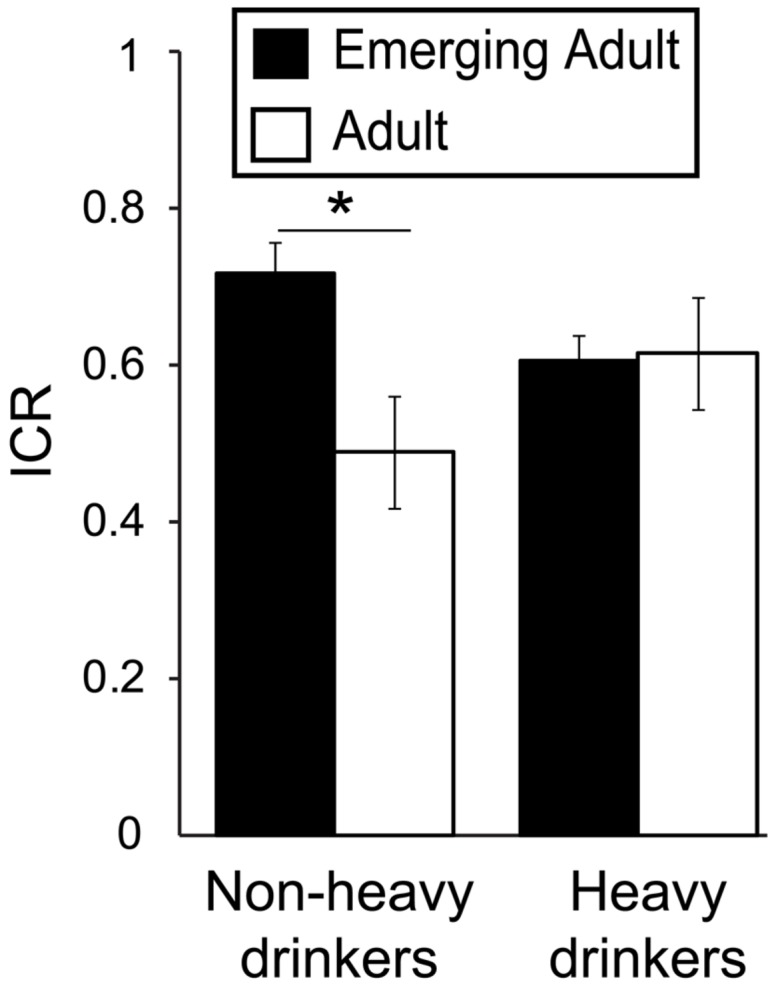
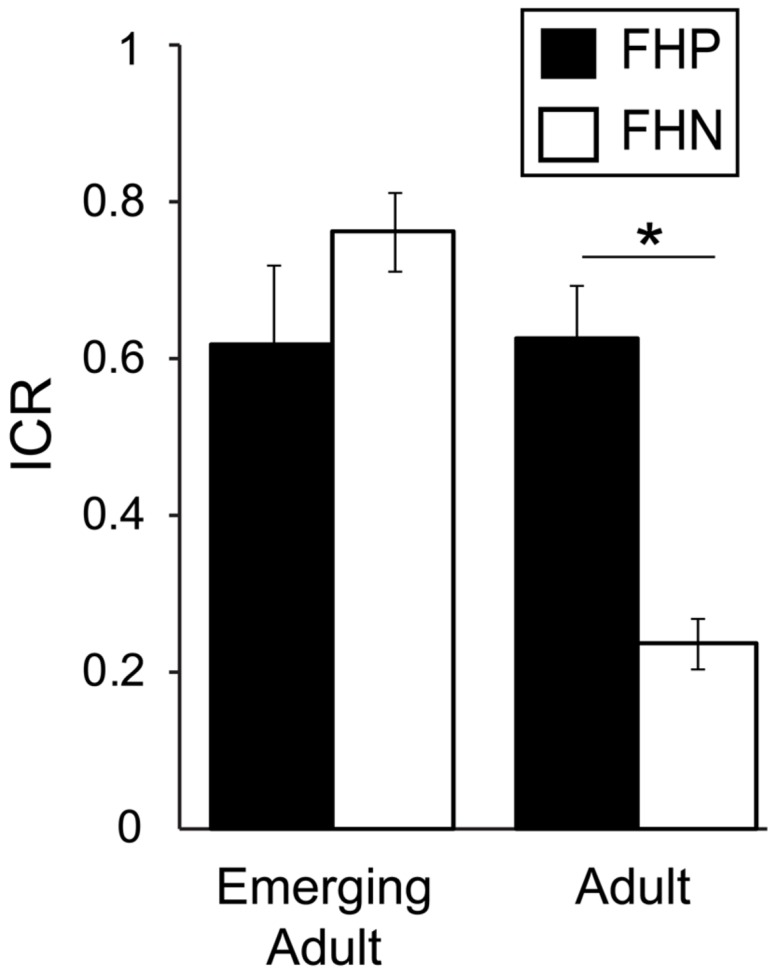
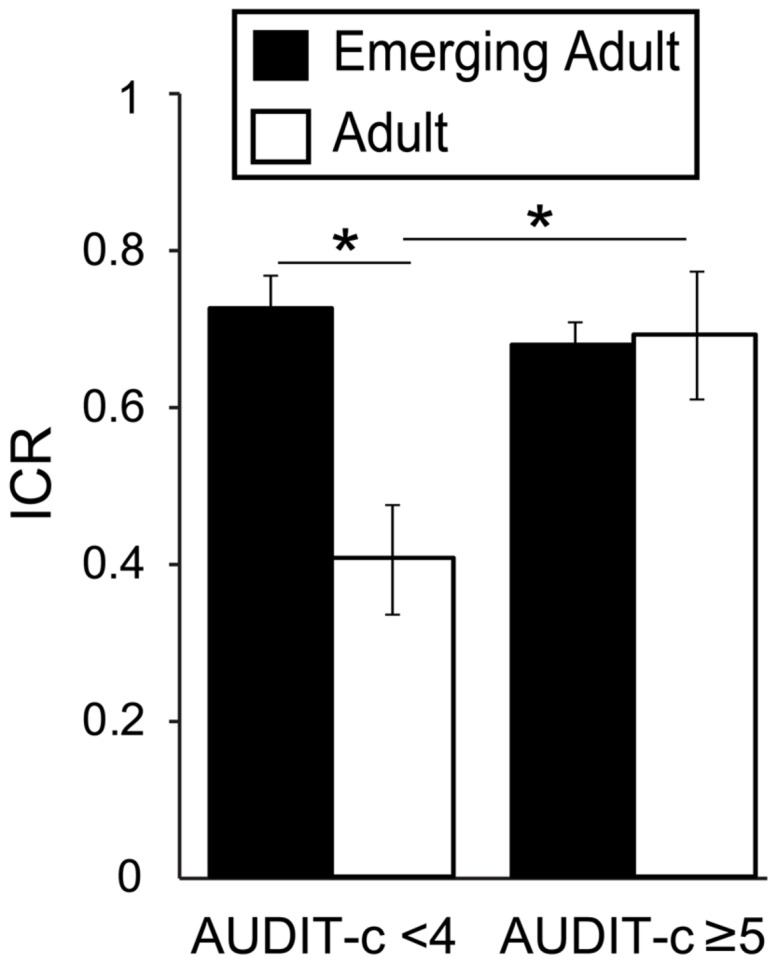
Adults with alcohol use disorders (AUDs) show marked immediate reward selection (or "Now") bias in intertemporal choice tasks. This Now bias persists long into abstinence, suggesting an irreversible consequence of chronic alcohol abuse or a pre-existing AUD intermediate phenotype. However, some data show substantial Now bias among emerging adults (18-25), regardless of drinking behavior, suggesting age-dependent effects on Now bias. The objectives of the present study were to determine (1) whether Now bias is greater among emerging adults relative to adults, (2) whether any such age effect on Now bias is diminished in sub-clinical heavy alcohol users, and (3) whether having a problem drinking first degree relative is independently associated with elevated Now bias. To achieve these objectives, we used an intertemporal choice task to quantify Now bias in n = 237 healthy participants (ages 18-40; 50% female), and a wide range of non-zero alcohol use, based on the Alcohol Use Disorders Identification Test (AUDIT). We found that among non-heavy drinkers, Now bias inversely correlated with age; this relationship was not present among heavy drinkers. We found no significant relationship between AUDIT score and Now bias among emerging adults, but AUDIT scores and Now bias were positively correlated among 26-40 year olds. Additionally, non-heavy drinking adults who reported a problem drinking first degree relative showed greater Now bias compared to those not reporting familial problem drinking. While not definitive, these findings lend support for elevated Now bias in adulthood as an intermediate phenotype for AUDs. Moreover, non-additive effects of age and heavy drinking on Now bias suggest perturbations in largely common neural circuits in both groups.
患有酒精使用障碍(AUDs)的成年人在跨期选择任务中表现出明显的即时奖励选择(即“现在”)偏差。这种即时偏差在戒酒很长时间后仍然存在,这表明慢性酒精滥用有不可逆转的后果,或者存在一种预先存在的AUD中间表型。然而,一些数据显示,无论饮酒行为如何,在新兴成年人(18 - 25岁)中都存在大量的即时偏差,这表明年龄对即时偏差有影响。本研究的目的是确定:(1)相对于成年人,新兴成年人中的即时偏差是否更大;(2)在亚临床重度饮酒者中,年龄对即时偏差的任何此类影响是否会减弱;(3)有饮酒问题的一级亲属是否与即时偏差升高独立相关。为了实现这些目标,我们使用了一项跨期选择任务,根据酒精使用障碍识别测试(AUDIT),对n = 237名健康参与者(年龄18 - 40岁;50%为女性)以及广泛的非零酒精使用情况进行即时偏差量化。我们发现,在非重度饮酒者中,即时偏差与年龄呈负相关;在重度饮酒者中不存在这种关系。我们发现,在新兴成年人中,AUDIT评分与即时偏差之间没有显著关系,但在26 - 40岁的人群中,AUDIT评分与即时偏差呈正相关。此外,报告有饮酒问题的一级亲属的非重度饮酒成年人与未报告家族饮酒问题的成年人相比,表现出更大的即时偏差。虽然这些发现并不确定,但它们支持了成年期即时偏差升高作为AUDs中间表型的观点。此外,年龄和重度饮酒对即时偏差的非加性效应表明,两组在很大程度上共同的神经回路存在扰动。