Roux Pierre-François, Frésard Laure, Boutin Morgane, Leroux Sophie, Klopp Christophe, Djari Anis, Esquerré Diane, Martin Pascal G P, Zerjal Tatiana, Gourichon David, Pitel Frédérique, Lagarrigue Sandrine
Agrocampus Ouest, Unité Mixte de Recherche 1348 Physiologie, Environnement et Génétique pour l'Animal et les Systèmes d'Élevage, F-35000 Rennes, France Institut National de la Recherche Agronomique, Unité Mixte de Recherche 1348 Physiologie, Environnement et Génétique pour l'Animal et les Systèmes d'Élevage, F-35000 Rennes, France.
Unité Mixte de Recherche Institut National de la Recherche Agronomique, Génétique, Physiologie et Systèmes d'élevage, Institut National de la Recherche Agronomique, F-31326 Castanet Tolosan, France École Nationale Supérieure Agronomique de Toulouse, Génétique, Physiologie et Systèmes d'élevage, Institut National de la Recherche Agronomique, F-31326 Castanet Tolosan, France École Nationale Vétérinaire de Toulouse, Génétique, Physiologie et Systèmes d'élevage, Institut National de la Recherche Agronomique, F-31326 Castanet Tolosan, France.
G3 (Bethesda). 2015 Dec 4;6(2):321-35. doi: 10.1534/g3.115.022251.
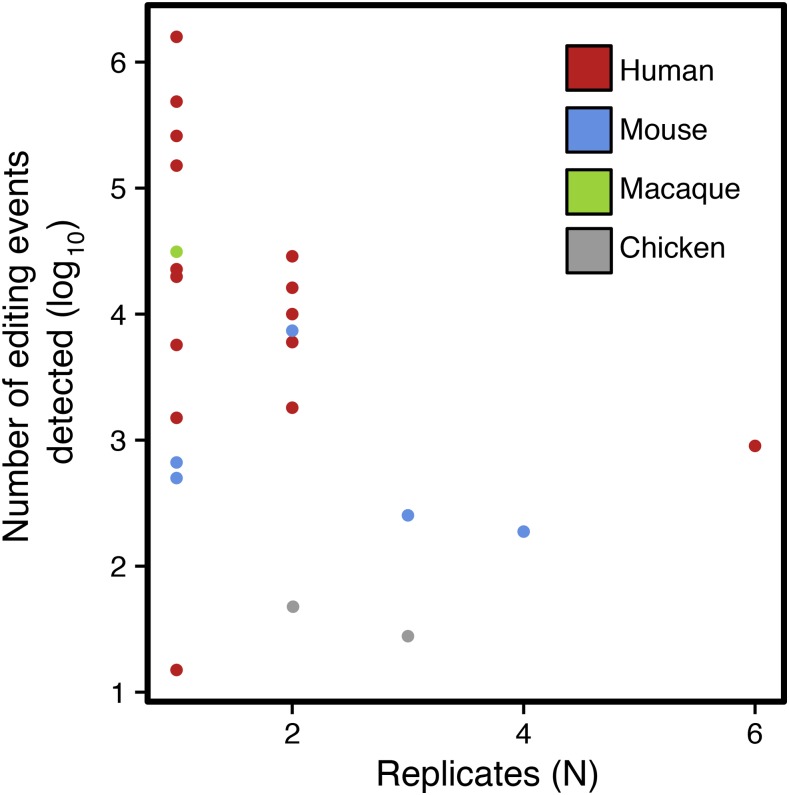
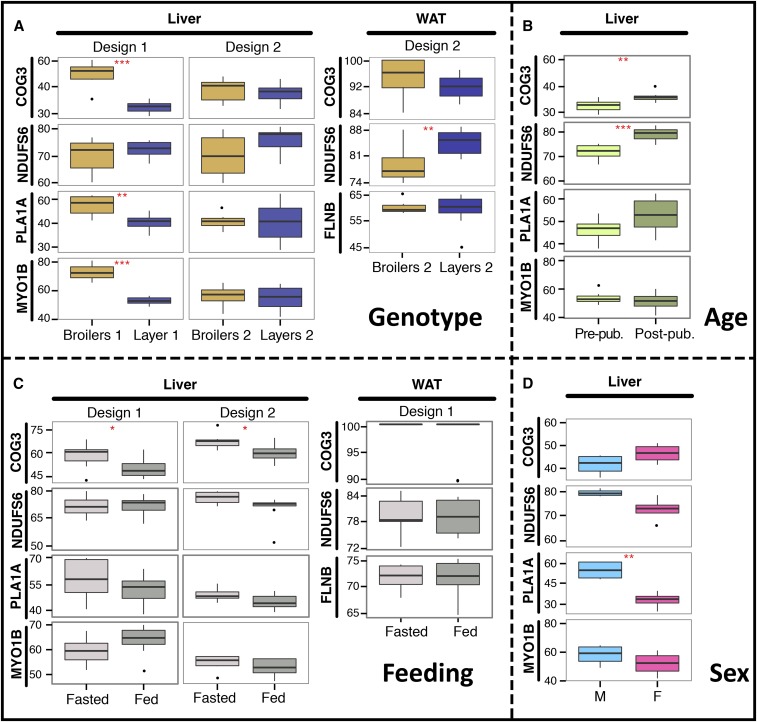
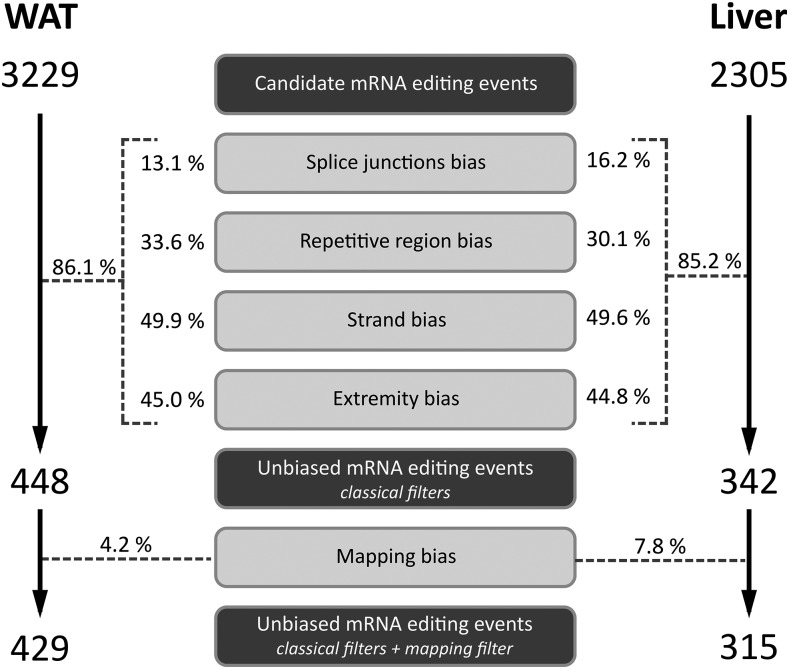
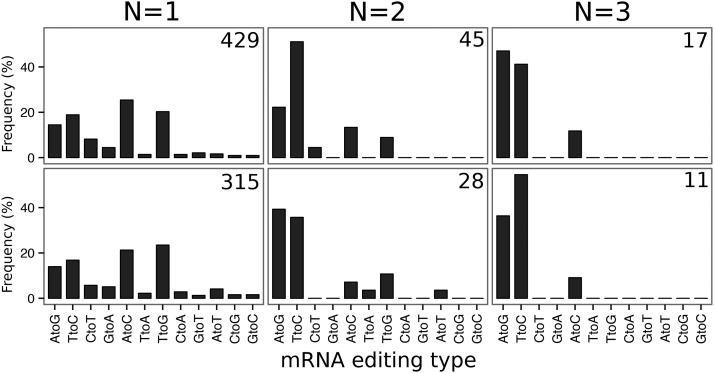
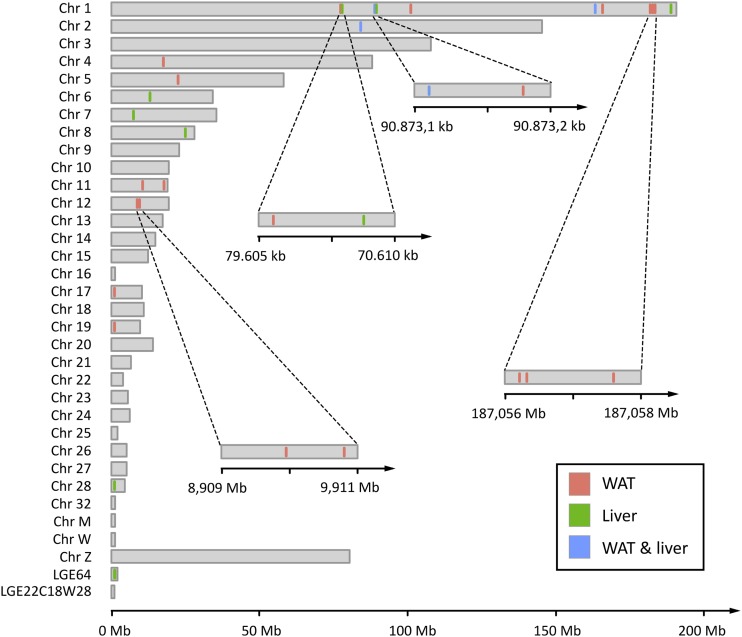
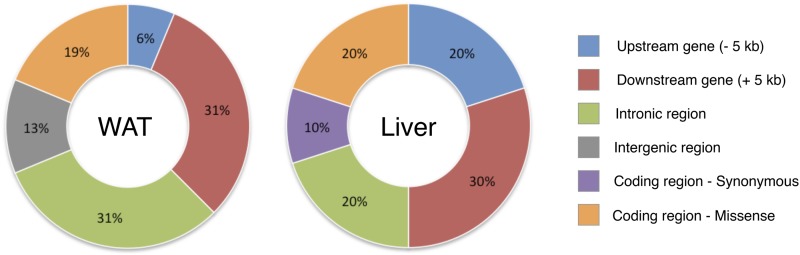
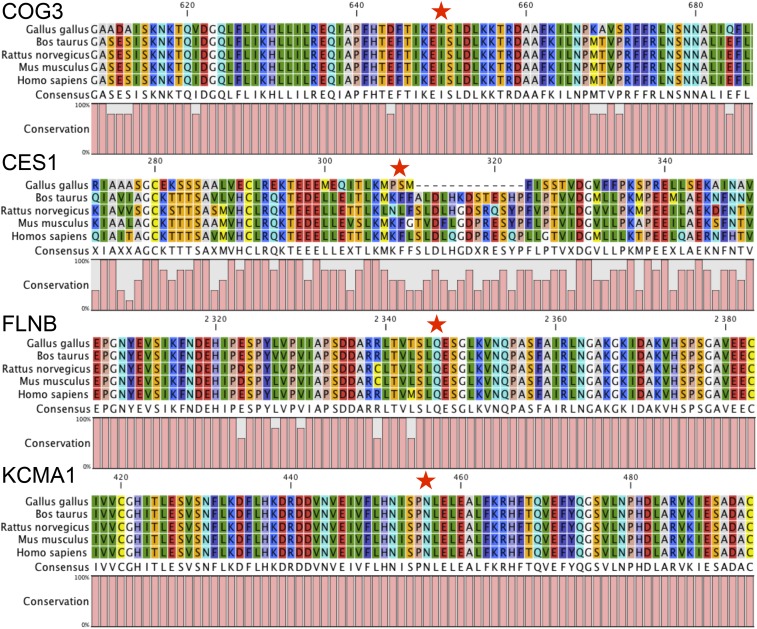
RNA editing is a posttranscriptional process leading to differences between genomic DNA and transcript sequences, potentially enhancing transcriptome diversity. With recent advances in high-throughput sequencing, many efforts have been made to describe mRNA editing at the transcriptome scale, especially in mammals, yielding contradictory conclusions regarding the extent of this phenomenon. We show, by detailed description of the 25 studies focusing so far on mRNA editing at the whole-transcriptome scale, that systematic sequencing artifacts are considered in most studies whereas biological replication is often neglected and multi-alignment not properly evaluated, which ultimately impairs the legitimacy of results. We recently developed a rigorous strategy to identify mRNA editing using mRNA and genomic DNA sequencing, taking into account sequencing and mapping artifacts, and biological replicates. We applied this method to screen for mRNA editing in liver and white adipose tissue from eight chickens and confirm the small extent of mRNA recoding in this species. Among the 25 unique edited sites identified, three events were previously described in mammals, attesting that this phenomenon is conserved throughout evolution. Deeper investigations on five sites revealed the impact of tissular context, genotype, age, feeding conditions, and sex on mRNA editing levels. More specifically, this analysis highlighted that the editing level at the site located on COG3 was strongly regulated by four of these factors. By comprehensively characterizing the mRNA editing landscape in chickens, our results highlight how this phenomenon is limited and suggest regulation of editing levels by various genetic and environmental factors.
RNA编辑是一种转录后过程,导致基因组DNA与转录本序列之间存在差异,可能会增加转录组的多样性。随着高通量测序技术的最新进展,人们已做出诸多努力来描述转录组水平上的mRNA编辑情况,尤其是在哺乳动物中,但关于这一现象的程度却得出了相互矛盾的结论。通过详细描述目前为止专注于全转录组水平mRNA编辑的25项研究,我们发现大多数研究考虑了系统的测序假象,而生物重复性常常被忽视,多重比对也未得到恰当评估,这最终损害了结果的可信度。我们最近开发了一种严格的策略,利用mRNA和基因组DNA测序来识别mRNA编辑,同时考虑到测序和映射假象以及生物重复样本。我们应用这种方法筛选了8只鸡的肝脏和白色脂肪组织中的mRNA编辑情况,并证实了该物种中mRNA重新编码的程度较低。在鉴定出的25个独特编辑位点中,有3个事件先前在哺乳动物中已有描述,这证明了这种现象在整个进化过程中是保守的。对5个位点的深入研究揭示了组织背景、基因型、年龄、饲养条件和性别对mRNA编辑水平的影响。更具体地说,该分析突出表明,位于COG3上的位点的编辑水平受到其中4个因素的强烈调控。通过全面表征鸡的mRNA编辑情况,我们的结果突出了这种现象的局限性,并表明其编辑水平受到各种遗传和环境因素的调控。