Aleksandrzak-Piekarczyk Tamara, Koryszewska-Bagińska Anna, Grynberg Marcin, Nowak Adriana, Cukrowska Bożena, Kozakova Hana, Bardowski Jacek
Institute of Biochemistry and Biophysics, Polish Academy of Sciences, Warsaw, Poland
Institute of Biochemistry and Biophysics, Polish Academy of Sciences, Warsaw, Poland.
Genome Biol Evol. 2015 Dec 3;8(1):202-17. doi: 10.1093/gbe/evv247.
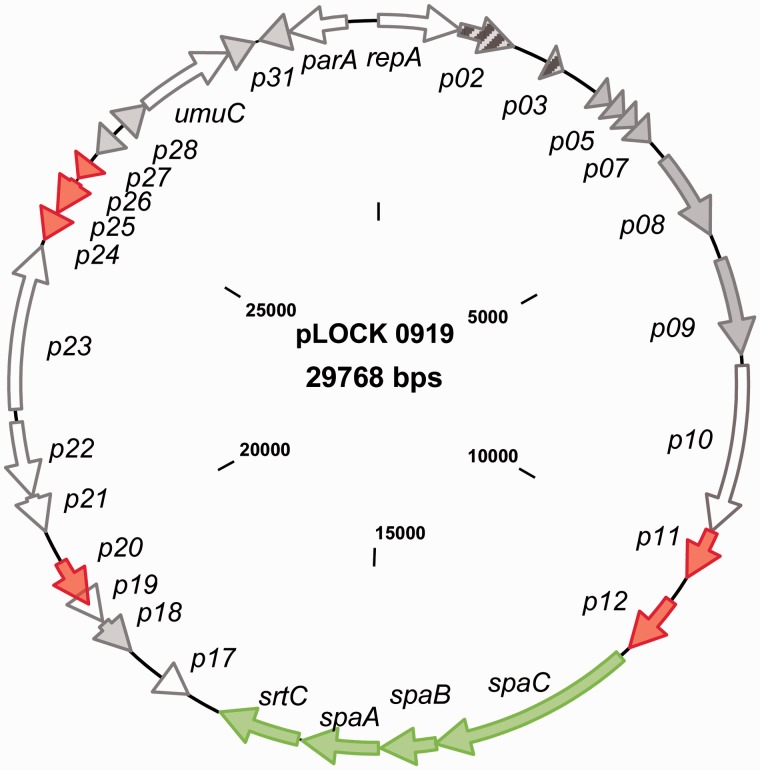
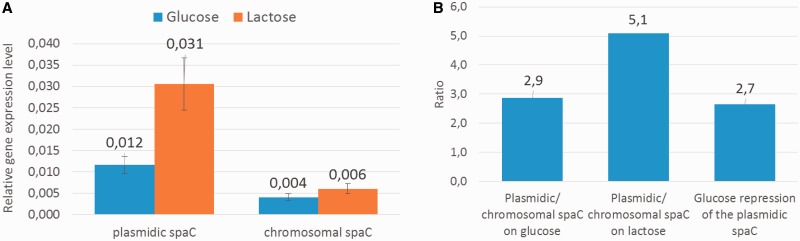
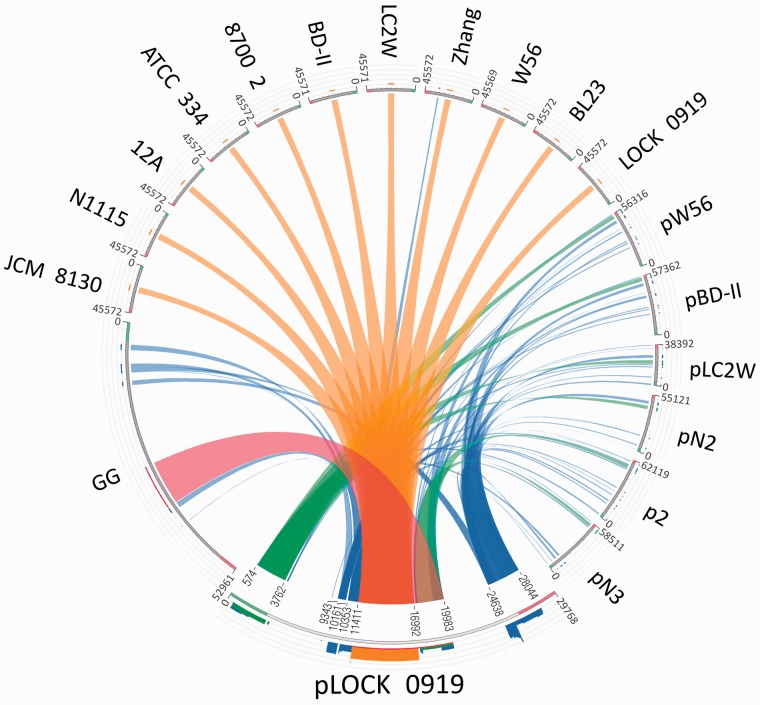
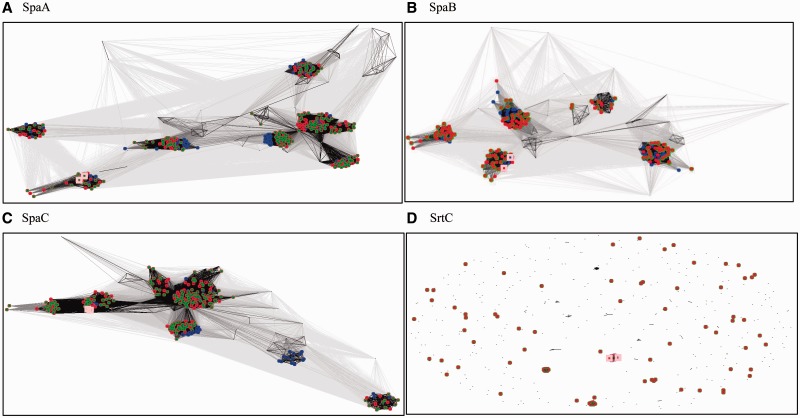
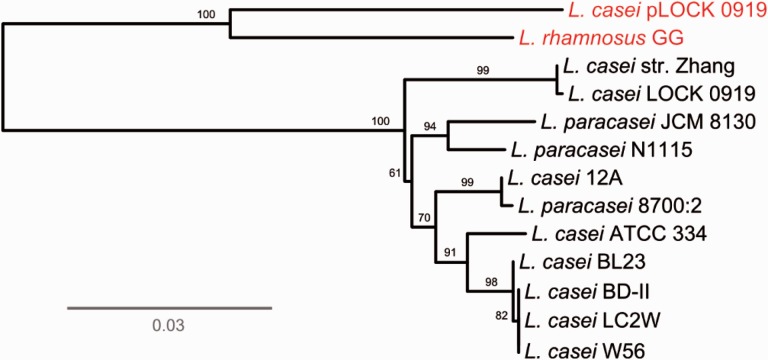
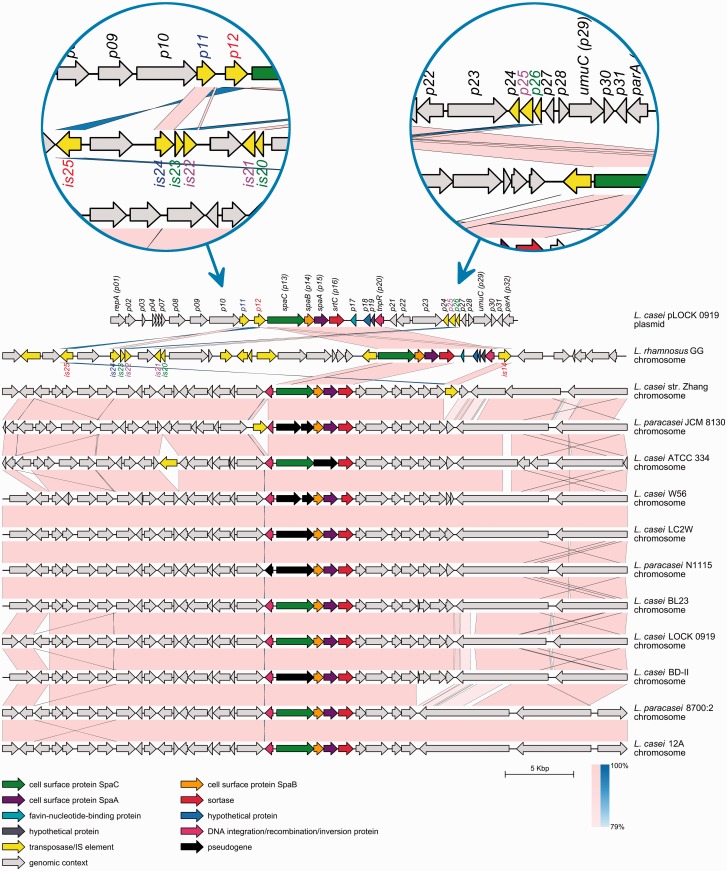
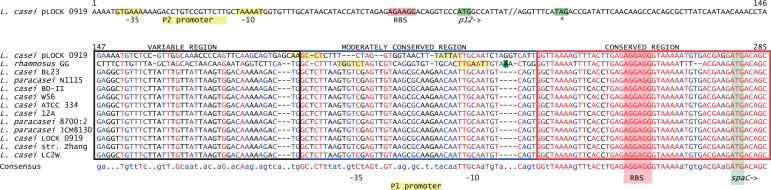
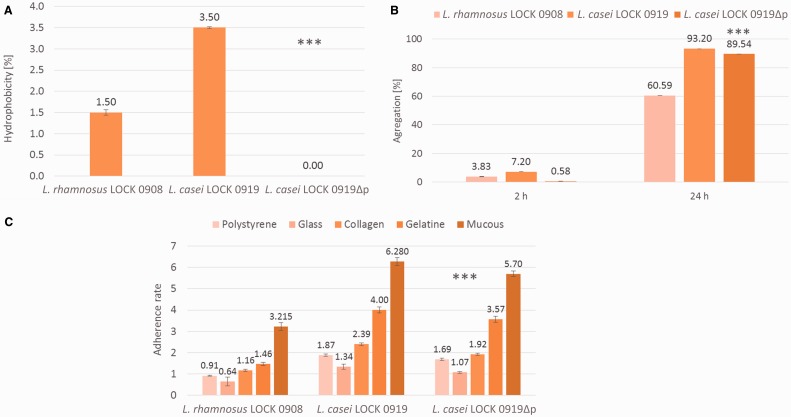
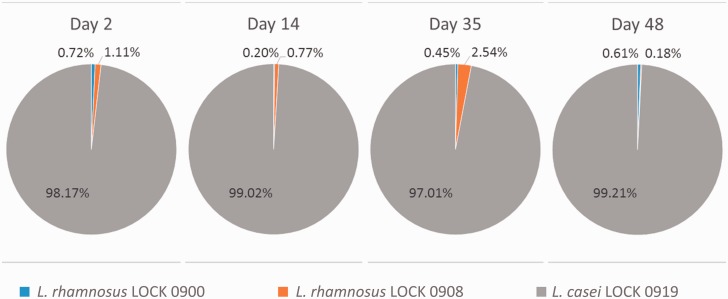
Here, we report the extensive bioinformatic and functional analyses of the unusual pLOCK 0919, a plasmid originating from the probiotic Lactobacillus casei LOCK 0919 strain. This plasmid is atypical because it harbors the spaCBA-srtC gene cluster encoding SpaCBA pili. We show that all other spaCBA-srtC sequences of the Lactobacillus genus that have been previously described and deposited in GenBank are present in the chromosomal DNA. Another important observation for pLOCK 0919 is that the spaCBA-srtC gene cluster and its surrounding genes are highly similar to the respective DNA region that is present in the most well-known and active SpaCBA pili producer, the probiotic Lactobacillus rhamnosus GG strain. Our results demonstrate that the spaCBA-srtC clusters of pLOCK 0919 and L. rhamnosus GG are genealogically similar, located in DNA regions that are rich in transposase genes and are poorly conserved among the publicly available sequences of Lactobacillus sp. In contrast to chromosomally localized pilus gene clusters from L. casei and Lactobacillus paracasei, the plasmidic spaC of L. casei LOCK 0919 is expressed and undergoes a slight glucose-induced repression. Moreover, results of series of in vitro tests demonstrate that L. casei LOCK 0919 has an adhesion potential, which is largely determined by the presence of the pLOCK 0919 plasmid. In particular, the plasmid occurrence positively influenced the hydrophobicity and aggregation abilities of L. casei LOCK 0919. Moreover, in vivo studies indicate that among the three Lactobacillus strains used to colonize the gastrointestinal tract of germ-free mice, already after 2 days of colonization, L. casei LOCK 0919 became the dominant strain and persisted there for at least 48 days.
在此,我们报告了对不同寻常的pLOCK 0919进行的广泛生物信息学和功能分析,pLOCK 0919是一种源自益生菌干酪乳杆菌LOCK 0919菌株的质粒。该质粒是非典型的,因为它含有编码SpaCBA菌毛的spaCBA - srtC基因簇。我们发现,先前已描述并保存在GenBank中的乳杆菌属所有其他spaCBA - srtC序列都存在于染色体DNA中。对pLOCK 0919的另一个重要观察结果是,spaCBA - srtC基因簇及其周围基因与最著名且活性最强的SpaCBA菌毛产生菌——益生菌鼠李糖乳杆菌GG菌株中存在的相应DNA区域高度相似。我们的结果表明,pLOCK 0919和鼠李糖乳杆菌GG的spaCBA - srtC簇在谱系上相似,位于富含转座酶基因且在乳杆菌属公开可用序列中保守性较差的DNA区域。与干酪乳杆菌和副干酪乳杆菌染色体定位的菌毛基因簇不同,干酪乳杆菌LOCK 0919的质粒spaC是表达的,并受到轻微的葡萄糖诱导抑制。此外,一系列体外试验结果表明,干酪乳杆菌LOCK 0919具有黏附潜力,这在很大程度上由pLOCK 0919质粒的存在所决定。特别是,质粒的存在对干酪乳杆菌LOCK 0919的疏水性和聚集能力有积极影响。此外,体内研究表明,在用于定殖无菌小鼠胃肠道的三种乳杆菌菌株中,定殖2天后,干酪乳杆菌LOCK 0919就成为优势菌株,并在那里持续存在至少48天。