Olivares Adrian O, Baker Tania A, Sauer Robert T
Department of Biology, Massachusetts Institute of Technology, Cambridge, Massachusetts 02139, USA.
Nat Rev Microbiol. 2016 Jan;14(1):33-44. doi: 10.1038/nrmicro.2015.4. Epub 2015 Dec 7.
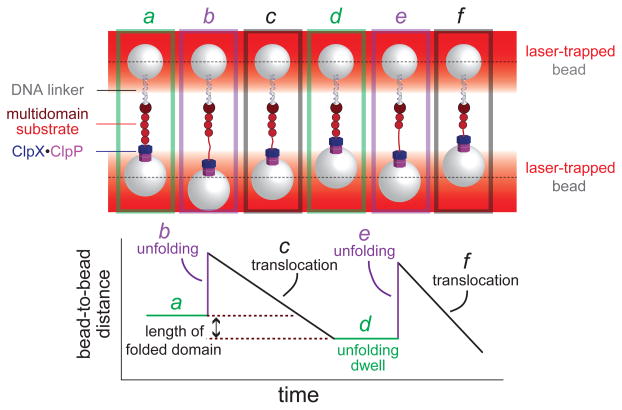
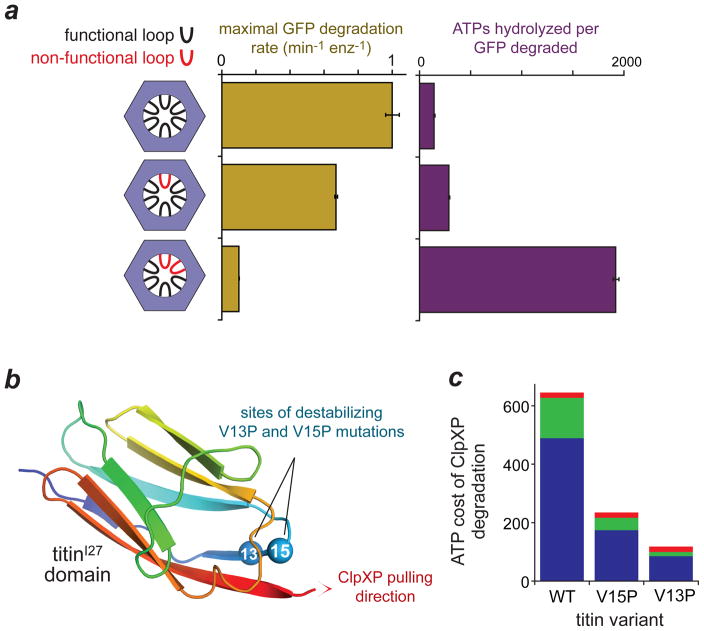
To maintain protein homeostasis, AAA+ proteolytic machines degrade damaged and unneeded proteins in bacteria, archaea and eukaryotes. This process involves the ATP-dependent unfolding of a target protein and its subsequent translocation into a self-compartmentalized proteolytic chamber. Related AAA+ enzymes also disaggregate and remodel proteins. Recent structural and biochemical studies, in combination with direct visualization of unfolding and translocation in single-molecule experiments, have illuminated the molecular mechanisms behind these processes and suggest how remodelling of macromolecular complexes by AAA+ enzymes could occur without global denaturation. In this Review, we discuss the structural and mechanistic features of AAA+ proteases and remodelling machines, focusing on the bacterial ClpXP and ClpX as paradigms. We also consider the potential of these enzymes as antibacterial targets and outline future challenges for the field.
为维持蛋白质稳态,AAA+蛋白水解机器在细菌、古菌和真核生物中降解受损和不需要的蛋白质。这一过程涉及靶蛋白的ATP依赖性解折叠及其随后转运至一个自我分隔的蛋白水解腔室。相关的AAA+酶还能使蛋白质解聚并重塑。最近的结构和生化研究,结合单分子实验中对解折叠和转运的直接可视化,阐明了这些过程背后的分子机制,并揭示了AAA+酶如何在不进行全局变性的情况下对大分子复合物进行重塑。在本综述中,我们讨论AAA+蛋白酶和重塑机器的结构和机制特征,重点以细菌ClpXP和ClpX作为范例。我们还考虑了这些酶作为抗菌靶点的潜力,并概述了该领域未来的挑战。