Takacs Zsofia K, Swart Elise K, Bus Adriana G
Leiden University.
Rev Educ Res. 2015 Dec;85(4):698-739. doi: 10.3102/0034654314566989.
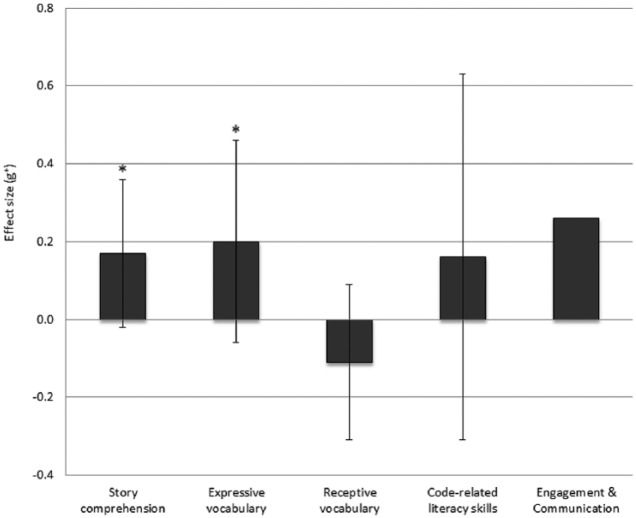
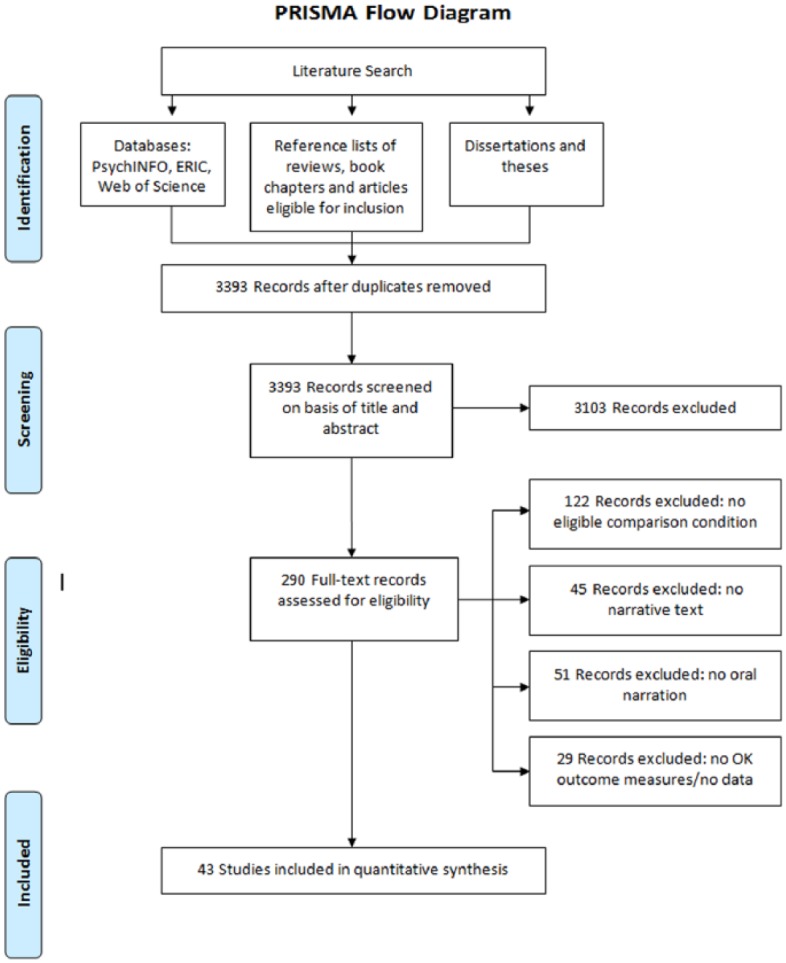
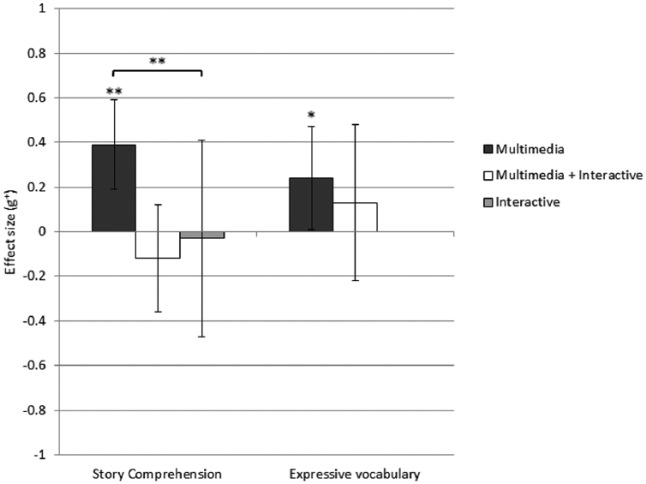
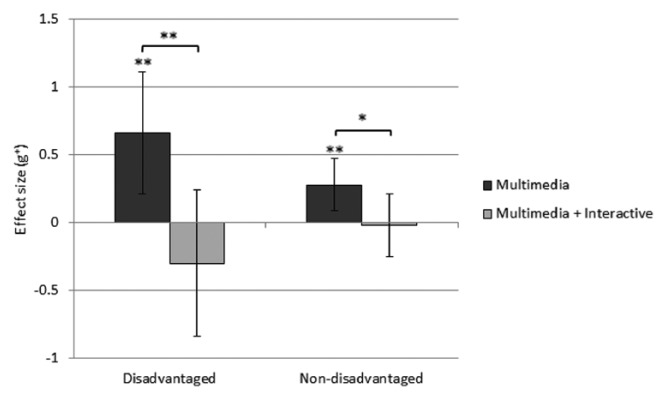
A meta-analysis was conducted on the effects of technology-enhanced stories for young children's literacy development when compared to listening to stories in more traditional settings like storybook reading. A small but significant additional benefit of technology was found for story comprehension (g+ = 0.17) and expressive vocabulary (g+ = 0.20), based on data from 2,147 children in 43 studies. When investigating the different characteristics of technology-enhanced stories, multimedia features like animated pictures, music, and sound effects were found beneficial. In contrast, interactive elements like hotspots, games, and dictionaries were found to be distracting. Especially for children disadvantaged because of less stimulating family environments, multimedia features were helpful and interactive features were detrimental. Findings are discussed from the perspective of cognitive processing theories.
与在故事书阅读等更传统环境中听故事相比,对技术增强型故事对幼儿识字发展的影响进行了一项荟萃分析。基于43项研究中2147名儿童的数据,发现技术在故事理解(g+ = 0.17)和表达性词汇(g+ = 0.20)方面有微小但显著的额外益处。在研究技术增强型故事的不同特征时,发现动画图片、音乐和音效等多媒体特征是有益的。相比之下,热点、游戏和词典等互动元素被发现会分散注意力。特别是对于因家庭环境刺激较少而处于不利地位的儿童,多媒体特征有帮助,而互动特征则有害。从认知加工理论的角度对研究结果进行了讨论。