Freeman Jamie, Smith David, Latinkic Branko, Ewan Ken, Samuel Lee, Zollo Massimo, Marino Natascia, Tyas Lorraine, Jones Nick, Dale Trevor C
School of Biosciences, Cardiff University, Museum Avenue, Cardiff, CF10 3AX, Wales, UK.
Faculty of Epidemiology and Population Health, London School of Hygiene and Tropical Medicine, Keppel Street, London, WC1E 7HT, UK.
Mol Cancer. 2015 Dec 8;14:206. doi: 10.1186/s12943-015-0475-1.
Wnt/β-catenin signaling is often portrayed as a simple pathway that is initiated by Wnt ligand at the cell surface leading, via linear series of interactions between 'core pathway' members, to the induction of nuclear transcription from genes flanked by β-catenin/TCF transcription factor binding sites. Wnt/β-catenin signaling is also regulated by a much larger set of 'non-core regulators'. However the relationship between 'non-core regulators' is currently not well understood. Aberrant activation of the pathway has been shown to drive tumorgenesis in a number of different tissues.
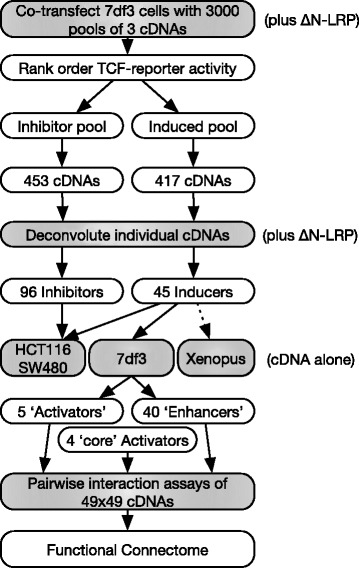
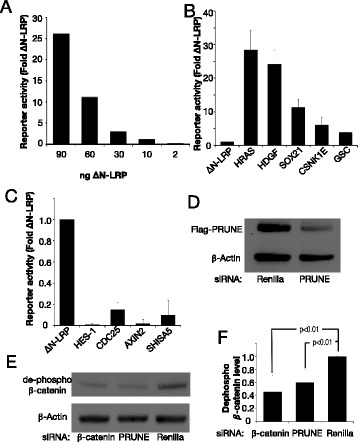
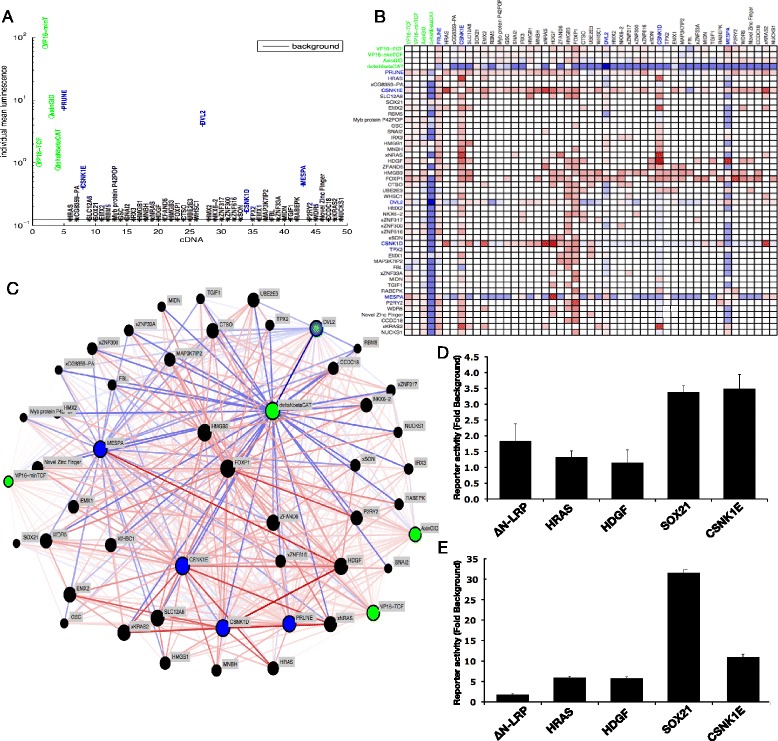
Mammalian cells engineered to have a partially-active level of Wnt/β-catenin signaling were screened by transfection for proteins that up or down-regulated a mid-level of TCF-dependent transcription induced by transient expression of an activated LRP6 Wnt co-receptor (∆NLRP).
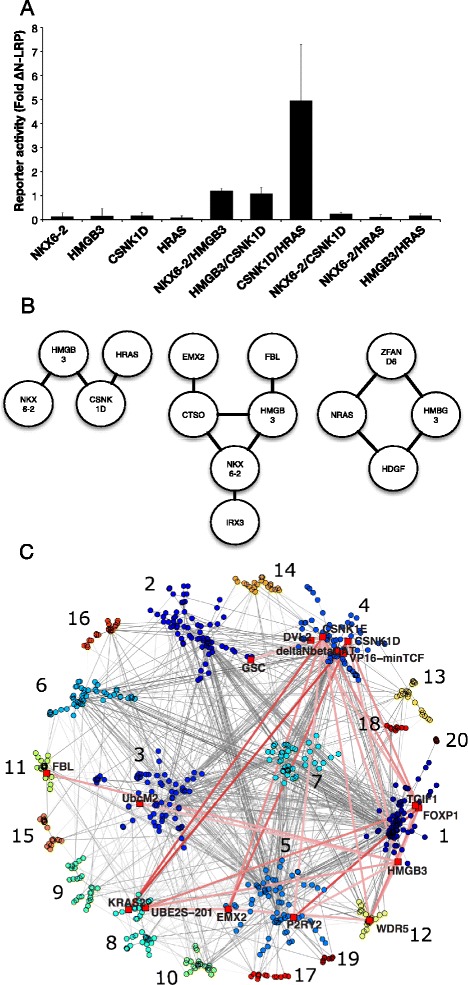
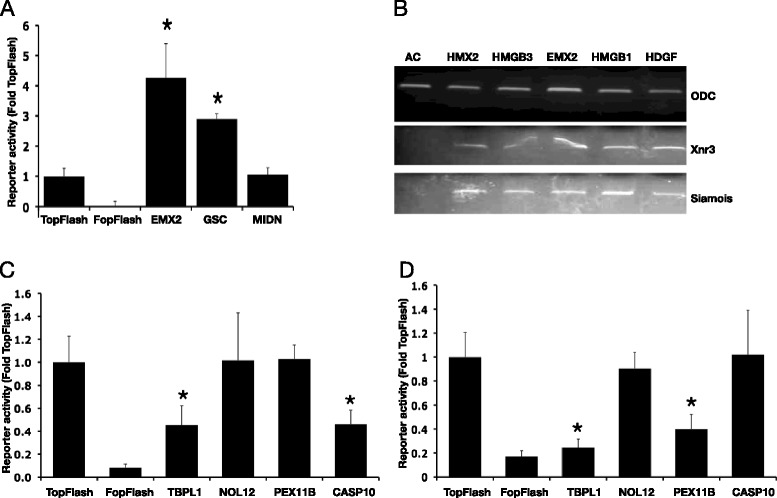
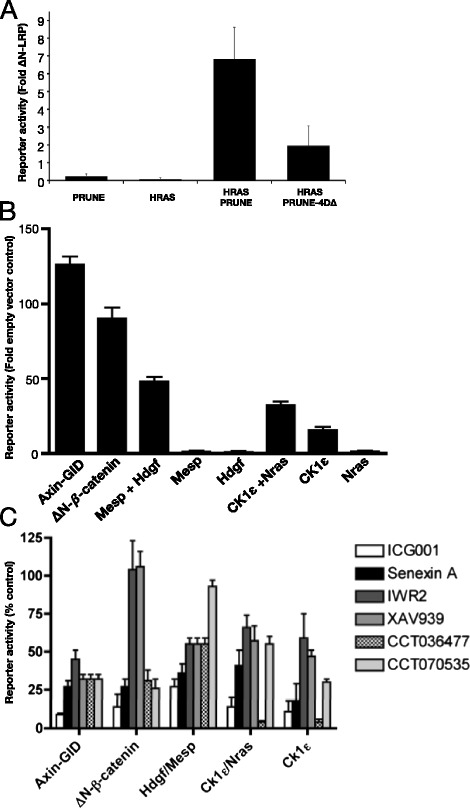
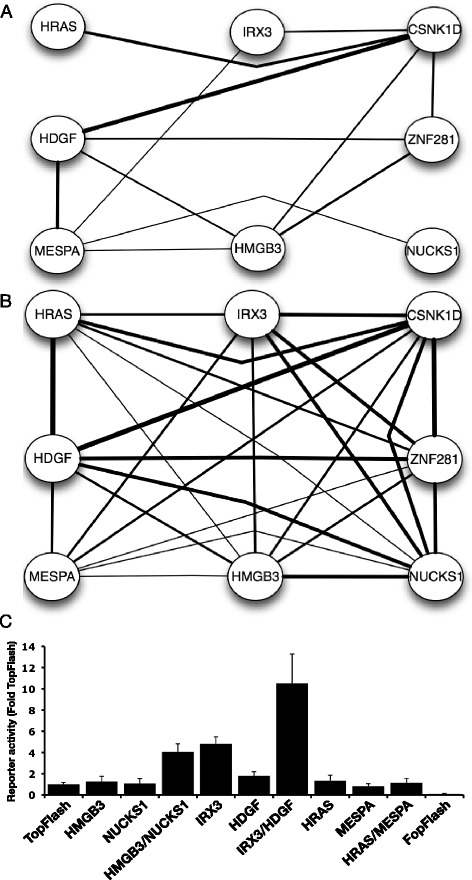
141 novel regulators of TCF-dependent transcription were identified. Surprisingly, when tested without ∆NLRP activation, most up-regulators failed to alter TCF-dependent transcription. However, when expressed in pairs, 27 % (466/1170) functionally interacted to alter levels of TCF-dependent transcription. When proteins were displayed as nodes connected by their ability to co-operate in the regulation of TCF-dependent transcription, a network of functional interactions was revealed. In this network, 'core pathway' components (Eg. β-catenin, GSK-3, Dsh) were found to be the most highly connected nodes. Activation of different nodes in this network impacted on the sensitivity to Wnt pathway small molecule antagonists.
The 'functional connectome' identified here strongly supports an alternative model of the Wnt pathway as a complex context-dependent network. The network further suggests that mutational activation of highly connected Wnt signaling nodes predisposed cells to further context-dependent alterations in levels of TCF-dependent transcription that may be important during tumor progression and treatment.
Wnt/β-连环蛋白信号通路通常被描绘为一条简单的信号通路,该通路由细胞表面的Wnt配体启动,通过“核心信号通路”成员之间的线性相互作用系列,诱导位于β-连环蛋白/TCF转录因子结合位点两侧的基因进行核转录。Wnt/β-连环蛋白信号通路也受到一组更大的“非核心调节因子”的调控。然而,目前对“非核心调节因子”之间的关系了解甚少。该信号通路的异常激活已被证明会在许多不同组织中驱动肿瘤发生。
通过转染筛选具有部分活性水平Wnt/β-连环蛋白信号通路的哺乳动物细胞,以寻找上调或下调由活化的LRP6 Wnt共受体(∆NLRP)瞬时表达诱导的中等水平TCF依赖性转录的蛋白质。
鉴定出141个新的TCF依赖性转录调节因子。令人惊讶的是,在没有∆NLRP激活的情况下进行测试时,大多数上调调节因子未能改变TCF依赖性转录。然而,当成对表达时,27%(466/1170)在功能上相互作用以改变TCF依赖性转录水平。当将蛋白质显示为通过其在调节TCF依赖性转录中的合作能力连接的节点时,揭示了一个功能相互作用网络。在这个网络中,发现“核心信号通路”成分(例如β-连环蛋白、GSK-3、Dsh)是连接性最高的节点。该网络中不同节点的激活影响了对Wnt信号通路小分子拮抗剂的敏感性。
此处鉴定的“功能连接组”有力地支持了Wnt信号通路作为一个复杂的上下文依赖网络的替代模型。该网络进一步表明,高度连接的Wnt信号节点的突变激活使细胞易于在TCF依赖性转录水平上发生进一步的上下文依赖改变,这在肿瘤进展和治疗过程中可能很重要。