Pramanik Kartick C, Fofaria Neel M, Gupta Parul, Ranjan Alok, Kim Sung-Hoon, Srivastava Sanjay K
Department of Biomedical Sciences and Cancer Biology Center, Texas Tech University Health Sciences Center, Amarillo, TX 79106, USA.
Cancer Preventive Material Development Research Center, College of Korean Medicine, Department of Pathology, Kyunghee University, Dongdaemun-ku, Seoul 131-701, South Korea.
Oncotarget. 2015 May 10;6(13):11561-74. doi: 10.18632/oncotarget.3427.
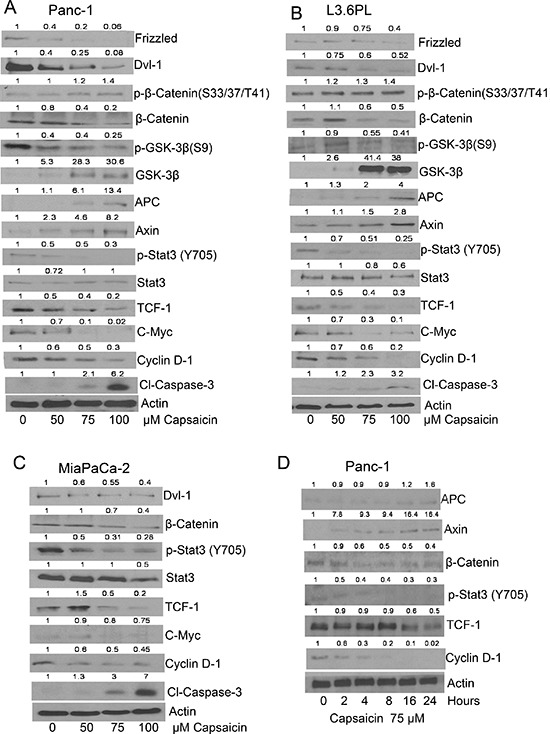
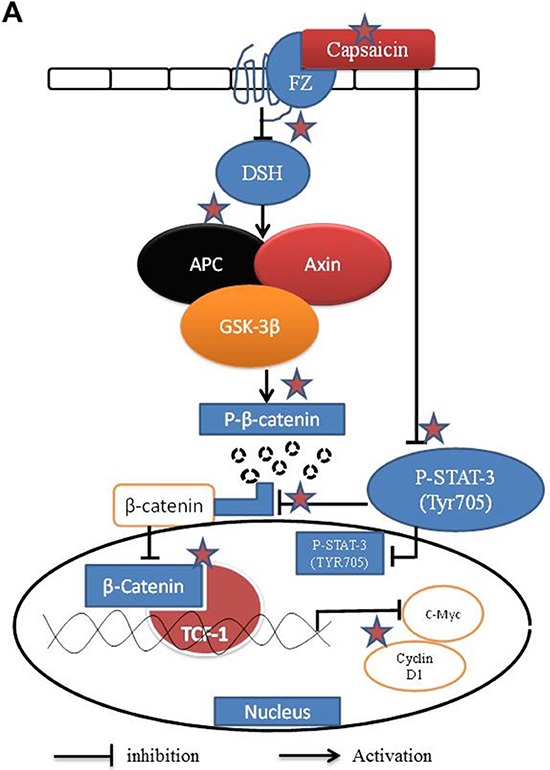
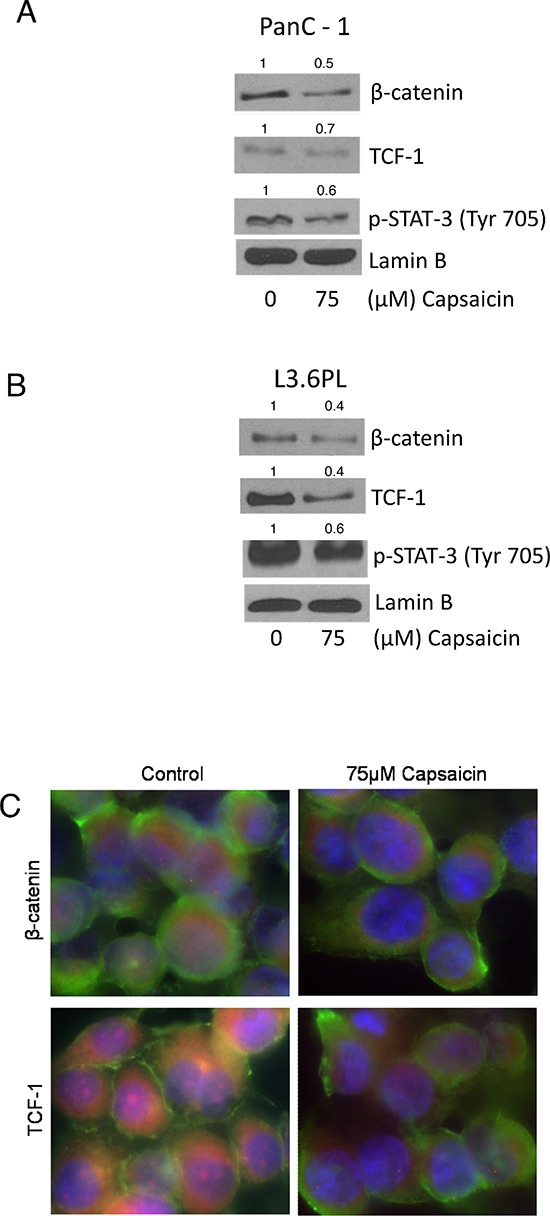
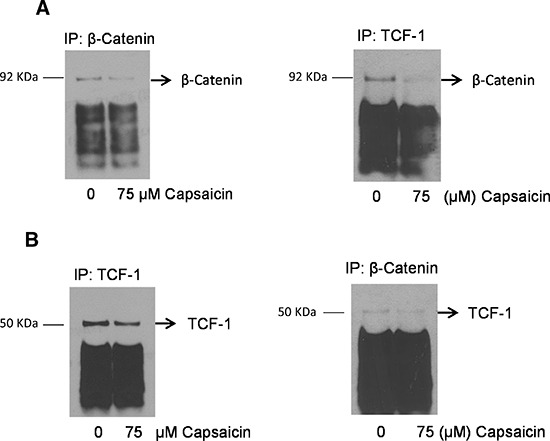
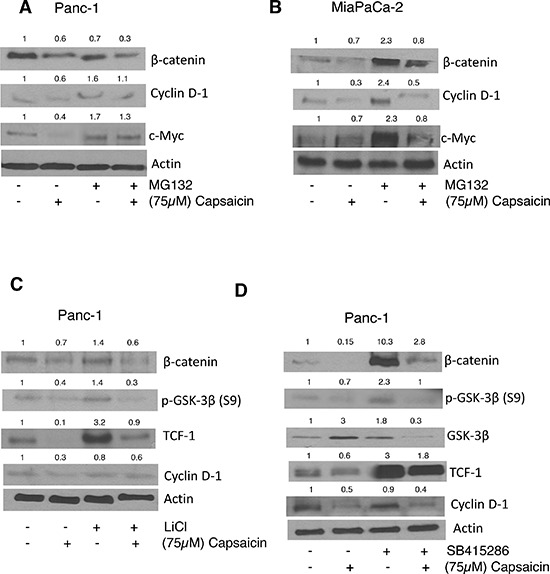
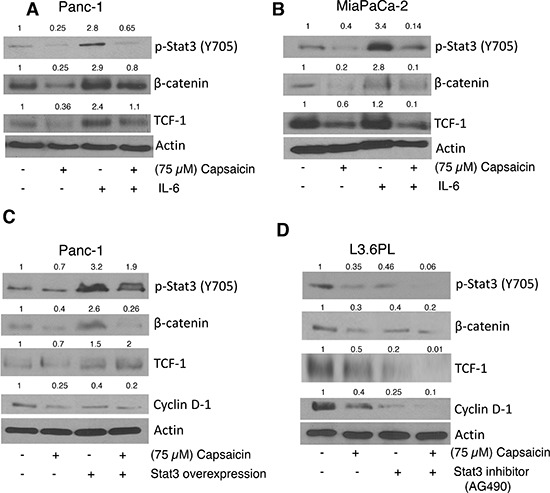
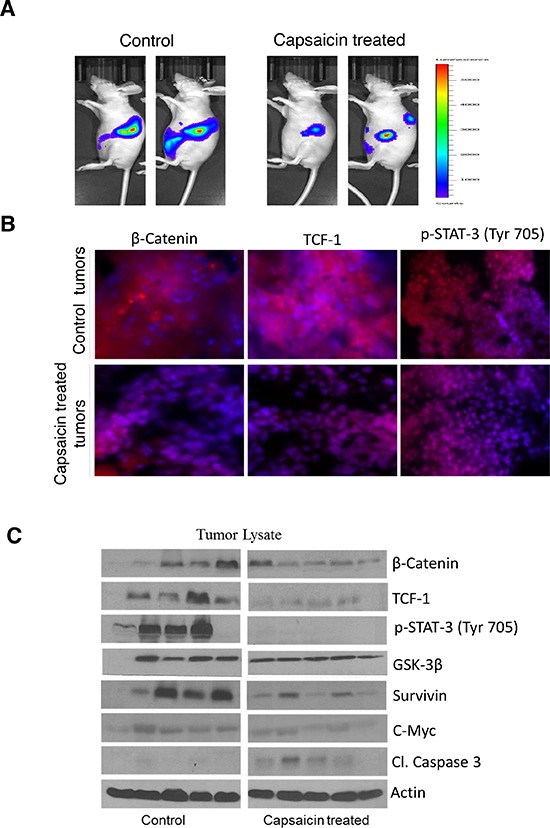
Aberrant activation of β-catenin/TCF signaling is related to the invasiveness of pancreatic cancer. In the present study, we evaluated the effect of capsaicin on β-catenin/TCF signaling. In a concentration and time-dependent study, we observed that capsaicin treatment inhibits the activation of dishevelled (Dsh) protein DvI-1 in L3.6PL, PanC-1 and MiaPaCa-2 pancreatic cancer cells. Capsaicin treatment induced GSK-3β by inhibiting its phosphorylation and further activated APC and Axin multicomplex, leading to the proteasomal degradation of β-catenin. Expression of TCF-1 and β-catenin-responsive proteins, c-Myc and cyclin D1 also decreased in response to capsaicin treatment. Pre-treatment of cells with MG-132 blocked capsaicin-mediated proteasomal degradation of β-catenin. To establish the involvement of β-catenin in capsaicin-induced apoptosis, cells were treated with LiCl or SB415286, inhibitors of GSK-3β. Our results reveal that capsaicin treatment suppressed LiCl or SB415286-mediated activation of β-catenin signaling. Our results further showed that capsaicin blocked nuclear translocation of β-catenin, TCF-1 and p-STAT-3 (Tyr705). The immunoprecipitation results indicated that capsaicin treatment reduced the interaction of β-catenin and TCF-1 in the nucleus. Moreover, capsaicin treatment significantly decreased the phosphorylation of STAT-3 at Tyr705. Interestingly, STAT-3 over expression or STAT-3 activation by IL-6, significantly increased the levels of β-catenin and attenuated the effects of capsaicin in inhibiting β-catenin signaling. Finally, capsaicin mediated inhibition of orthotopic tumor growth was associated with inhibition of β-catenin/TCF-1 signaling. Taken together, our results suggest that capsaicin-induced apoptosis in pancreatic cancer cells was associated with inhibition of β-catenin signaling due to the dissociation of β-catenin/TCF-1 complex and the process was orchestrated by STAT-3.
β-连环蛋白/TCF信号通路的异常激活与胰腺癌的侵袭性相关。在本研究中,我们评估了辣椒素对β-连环蛋白/TCF信号通路的影响。在一项浓度和时间依赖性研究中,我们观察到辣椒素处理可抑制L3.6PL、PanC-1和MiaPaCa-2胰腺癌细胞中散乱蛋白(Dsh)DvI-1的激活。辣椒素处理通过抑制GSK-3β的磷酸化诱导其表达,并进一步激活APC和Axin多聚体,导致β-连环蛋白的蛋白酶体降解。辣椒素处理后,TCF-1和β-连环蛋白反应蛋白c-Myc及细胞周期蛋白D1的表达也降低。用MG-132预处理细胞可阻断辣椒素介导的β-连环蛋白蛋白酶体降解。为确定β-连环蛋白是否参与辣椒素诱导的细胞凋亡,用GSK-3β抑制剂氯化锂或SB415286处理细胞。我们的结果显示,辣椒素处理可抑制氯化锂或SB415286介导的β-连环蛋白信号通路激活。我们的结果还进一步表明,辣椒素可阻断β-连环蛋白、TCF-1和p-STAT-3(Tyr705)的核转位。免疫沉淀结果表明,辣椒素处理可降低细胞核中β-连环蛋白与TCF-1的相互作用。此外,辣椒素处理可显著降低STAT-3在Tyr705位点的磷酸化水平。有趣的是,STAT-3过表达或IL-6激活STAT-3可显著增加β-连环蛋白水平,并减弱辣椒素对β-连环蛋白信号通路的抑制作用。最后,辣椒素介导的原位肿瘤生长抑制与β-连环蛋白/TCF-1信号通路的抑制相关。综上所述,我们的结果表明,辣椒素诱导胰腺癌细胞凋亡与β-连环蛋白信号通路的抑制有关,这是由于β-连环蛋白/TCF-1复合物的解离所致,且该过程由STAT-3协调。