Farslow James C, Lipinski Kendra J, Packard Lucille B, Edgley Mark L, Taylor Jon, Flibotte Stephane, Moerman Donald G, Katju Vaishali, Bergthorsson Ulfar
Department of Biology, University of New Mexico, Albuquerque, NM, 87131, USA.
Department of Zoology, University of British Columbia, Vancouver, BC, V6T 1Z4, Canada.
BMC Genomics. 2015 Dec 9;16:1044. doi: 10.1186/s12864-015-2253-2.
Gene copy-number variation (CNVs), which provides the raw material for the evolution of novel genes, is widespread in natural populations. We investigated whether CNVs constitute a common mechanism of genetic change during adaptation in experimental Caenorhabditis elegans populations. Outcrossing C. elegans populations with low fitness were evolved for >200 generations. The frequencies of CNVs in these populations were analyzed by oligonucleotide array comparative genome hybridization, quantitative PCR, PCR, DNA sequencing across breakpoints, and single-worm PCR.
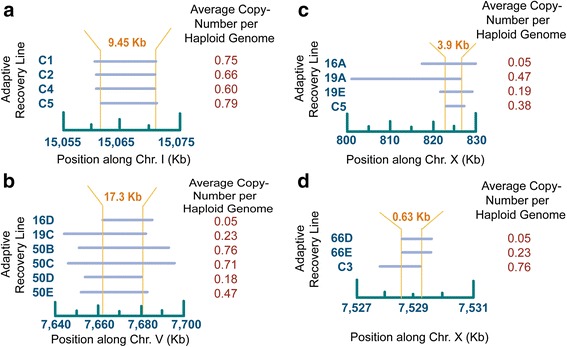
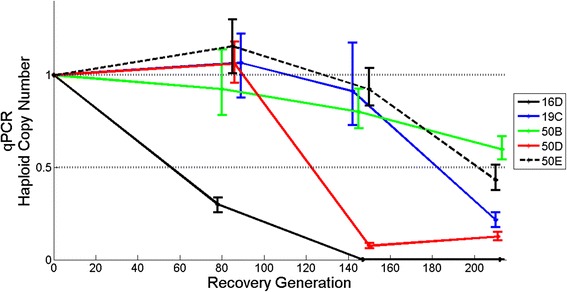
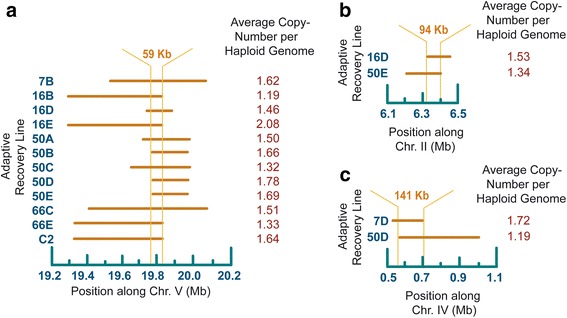
Multiple duplications and deletions rose to intermediate or high frequencies in independent populations. Several lines of evidence suggest that these changes were adaptive: (i) copy-number changes reached high frequency or were fixed in a short time, (ii) many independent populations harbored CNVs spanning the same genes, and (iii) larger average size of CNVs in adapting populations relative to spontaneous CNVs. The latter is expected if larger CNVs are more likely to encompass genes under selection for a change in gene dosage. Several convergent CNVs originated in populations descended from different low fitness ancestors as well as high fitness controls.
We show that gene copy-number changes are a common class of adaptive genetic change. Due to the high rates of origin of spontaneous duplications and deletions, copy-number changes containing the same genes arose readily in independent populations. Duplications that reached high frequencies in these adapting populations were significantly larger in span. Many convergent CNVs may be general adaptations to laboratory conditions. These results demonstrate the great potential borne by CNVs for evolutionary adaptation.
基因拷贝数变异(CNV)为新基因的进化提供了原材料,在自然种群中广泛存在。我们研究了在实验性秀丽隐杆线虫种群适应过程中,CNV是否构成遗传变化的常见机制。对适应度低的杂交秀丽隐杆线虫种群进行了超过200代的进化。通过寡核苷酸阵列比较基因组杂交、定量PCR、PCR、跨断点的DNA测序以及单虫PCR分析了这些种群中CNV的频率。
多个重复和缺失在独立种群中上升到中等或高频率。几条证据表明这些变化是适应性的:(i)拷贝数变化在短时间内达到高频率或被固定;(ii)许多独立种群含有跨越相同基因的CNV;(iii)相对于自发CNV,适应种群中CNV的平均大小更大。如果更大的CNV更有可能包含因基因剂量变化而受到选择的基因,那么就会出现后者这种情况。几个趋同的CNV起源于不同低适应度祖先以及高适应度对照的后代种群。
我们表明基因拷贝数变化是一类常见的适应性遗传变化。由于自发重复和缺失的发生率很高,含有相同基因的拷贝数变化在独立种群中很容易出现。在这些适应种群中达到高频率的重复在跨度上明显更大。许多趋同的CNV可能是对实验室条件的普遍适应。这些结果证明了CNV在进化适应方面的巨大潜力。