Carey Lucas B
Department of Experimental and Health Sciences, Universitat Pompeu Fabra, Barcelona, Spain.
Elife. 2015 Dec 10;4:e09945. doi: 10.7554/eLife.09945.
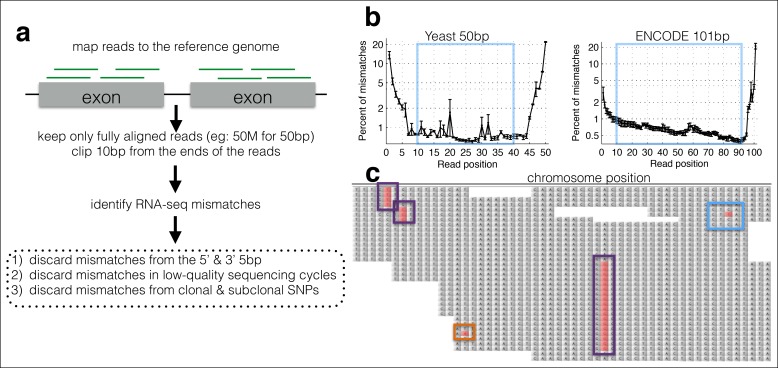
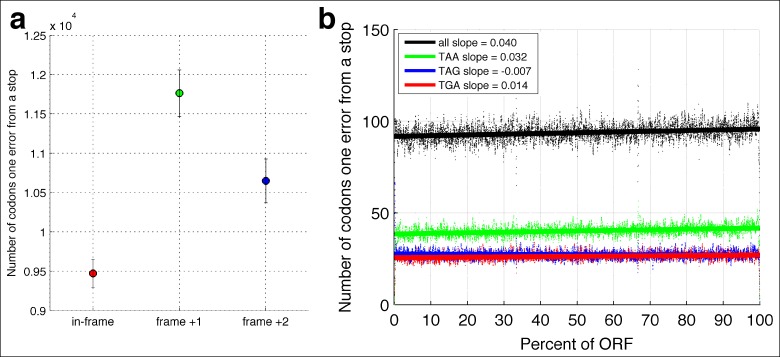
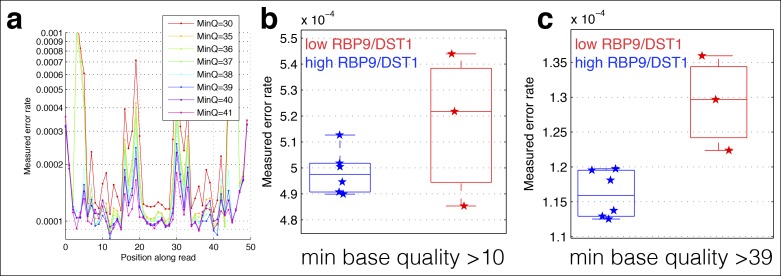
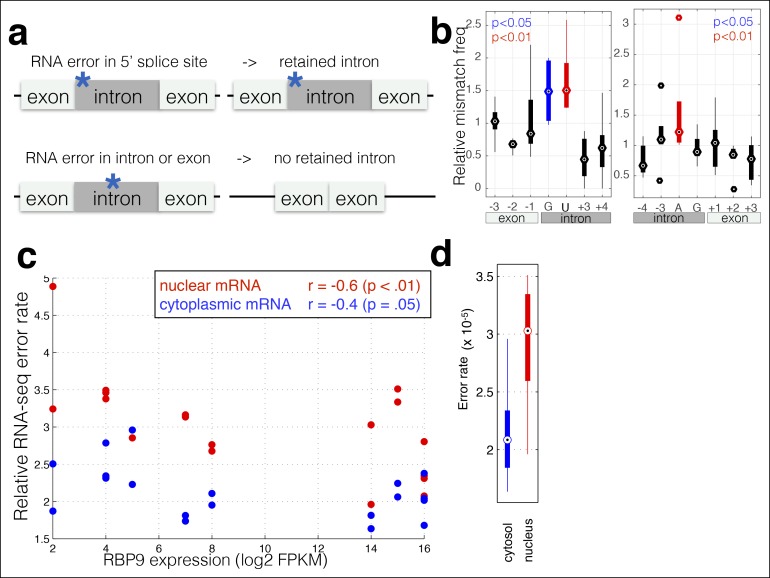
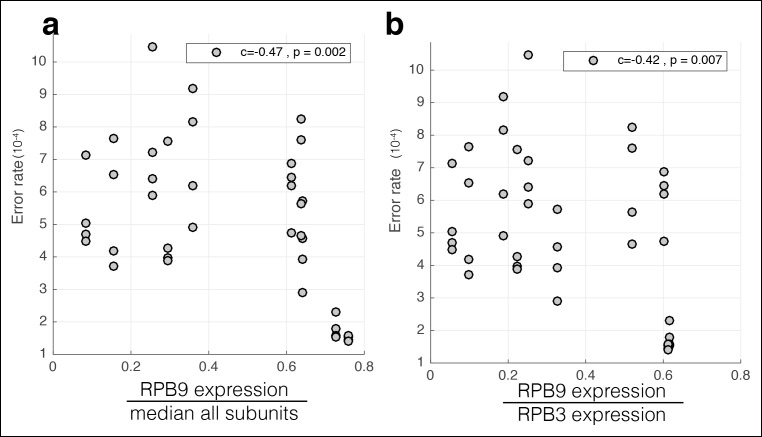
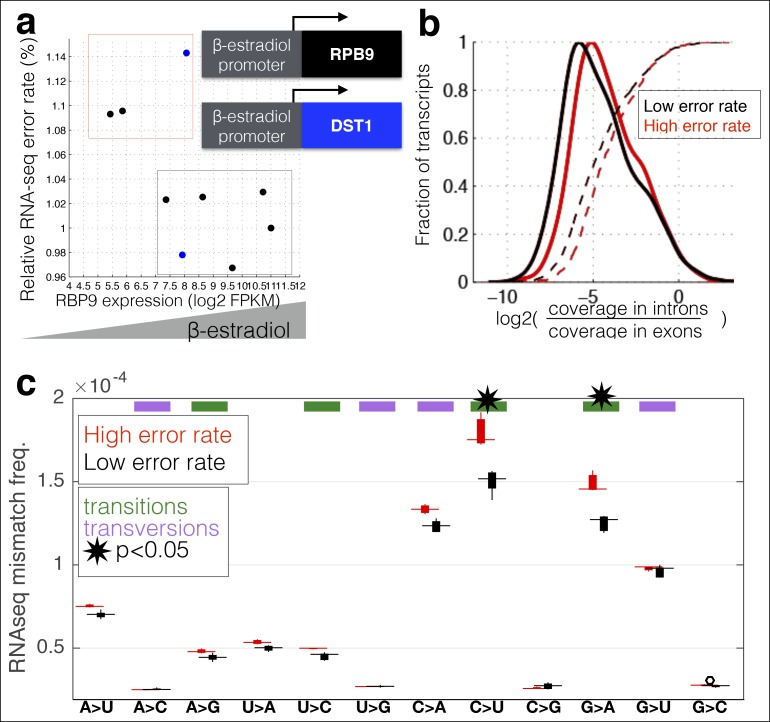
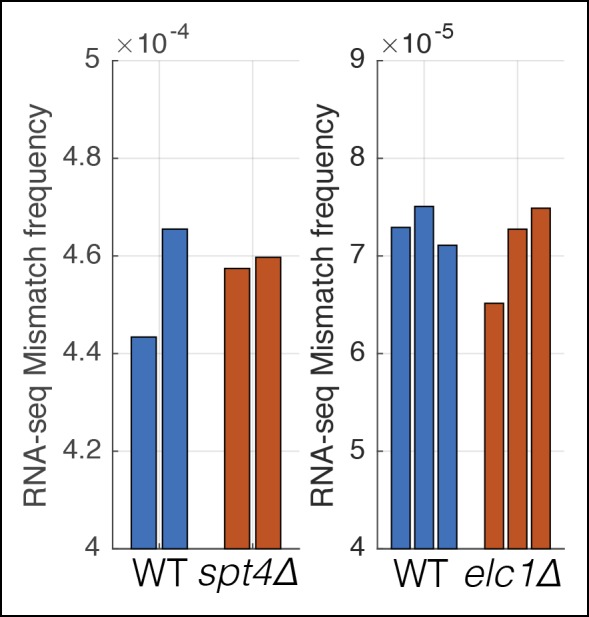
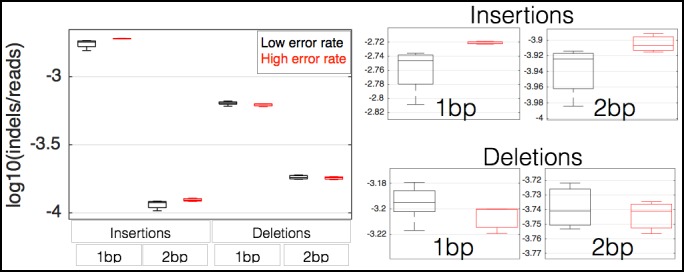
Errors during transcription may play an important role in determining cellular phenotypes: the RNA polymerase error rate is >4 orders of magnitude higher than that of DNA polymerase and errors are amplified >1000-fold due to translation. However, current methods to measure RNA polymerase fidelity are low-throughout, technically challenging, and organism specific. Here I show that changes in RNA polymerase fidelity can be measured using standard RNA sequencing protocols. I find that RNA polymerase is error-prone, and these errors can result in splicing defects. Furthermore, I find that differential expression of RNA polymerase subunits causes changes in RNA polymerase fidelity, and that coding sequences may have evolved to minimize the effect of these errors. These results suggest that errors caused by RNA polymerase may be a major source of stochastic variability at the level of single cells.
RNA聚合酶的错误率比DNA聚合酶高4个数量级以上,并且由于翻译,错误会被放大1000倍以上。然而,目前测量RNA聚合酶保真度的方法通量低、技术上具有挑战性且具有物种特异性。在这里,我表明可以使用标准的RNA测序方案来测量RNA聚合酶保真度的变化。我发现RNA聚合酶容易出错,这些错误会导致剪接缺陷。此外,我发现RNA聚合酶亚基的差异表达会导致RNA聚合酶保真度的变化,并且编码序列可能已经进化以最小化这些错误的影响。这些结果表明,RNA聚合酶引起的错误可能是单细胞水平上随机变异的主要来源。