Liu Min, Xu Youwei, Han Xu, Yin Lianhong, Xu Lina, Qi Yan, Zhao Yanyan, Liu Kexin, Peng Jinyong
College of Pharmacy, Dalian Medical University, No. 9 West Part of Lvshunnan Road, Dalian 116044, China.
Sci Rep. 2015 Dec 10;5:18038. doi: 10.1038/srep18038.
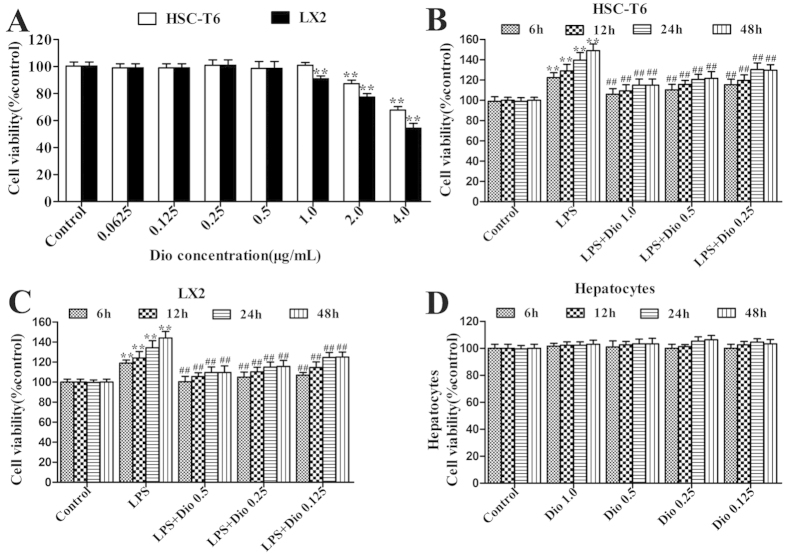
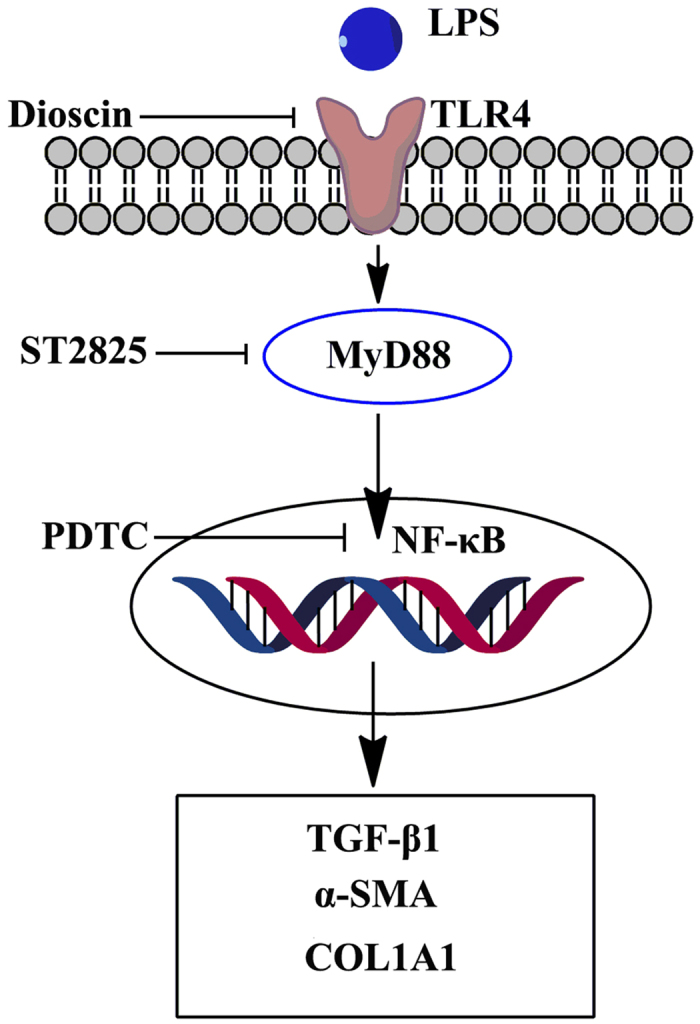
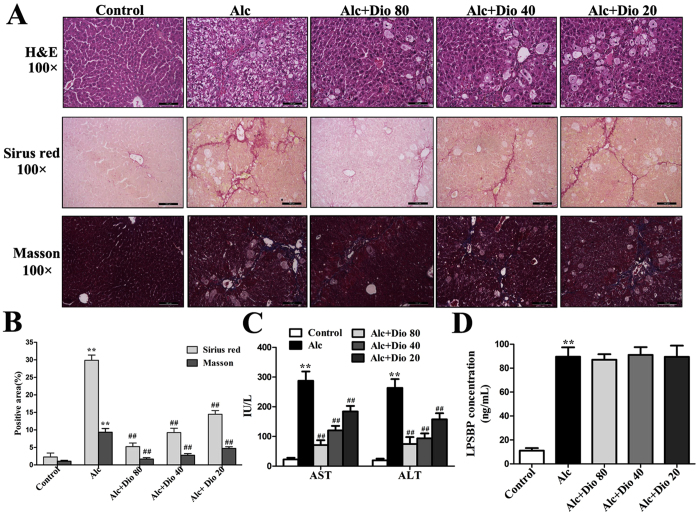
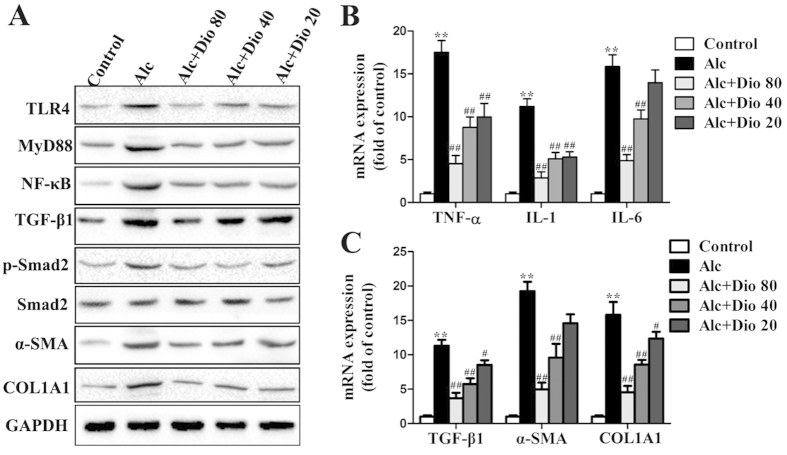
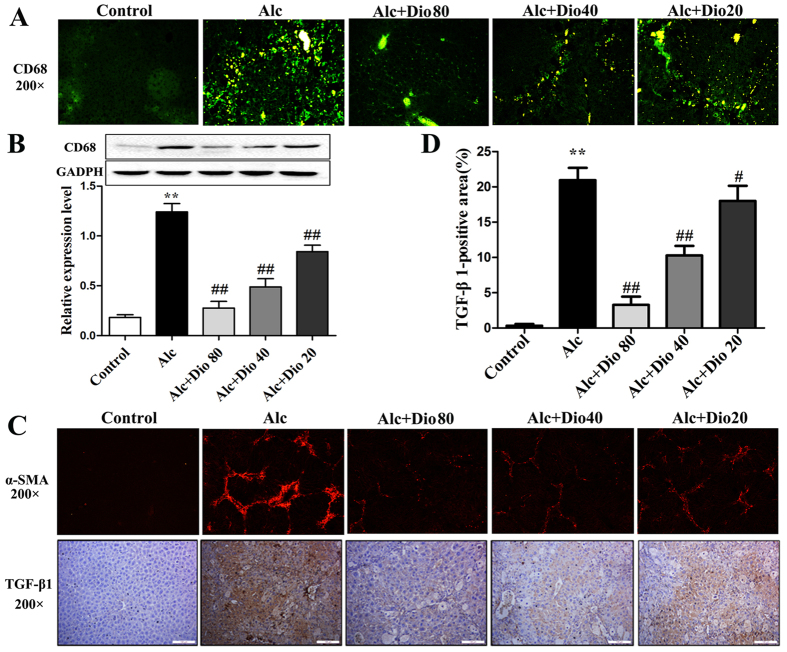
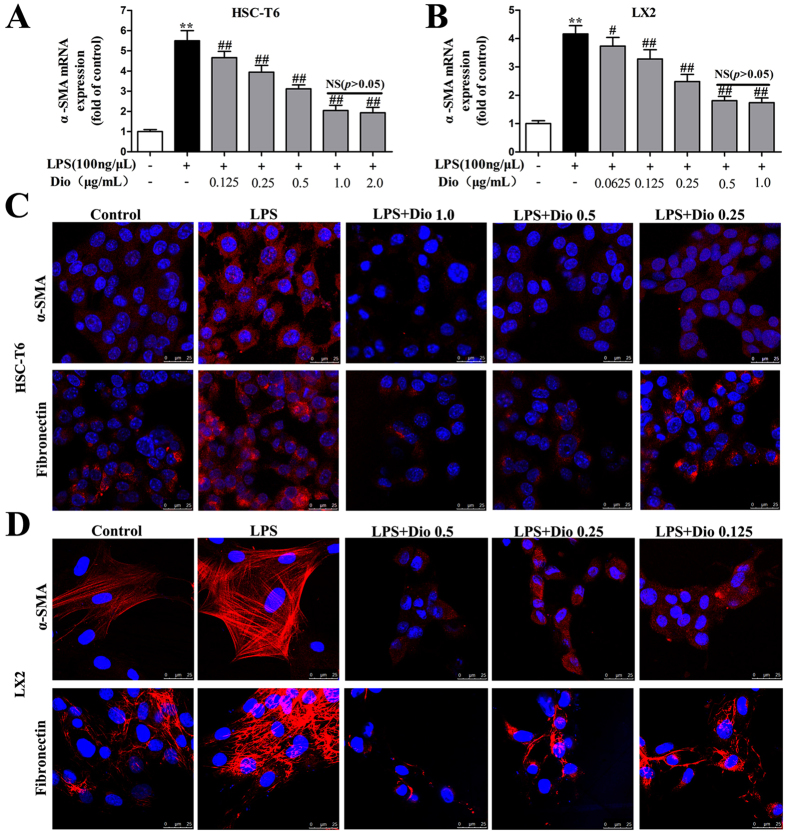
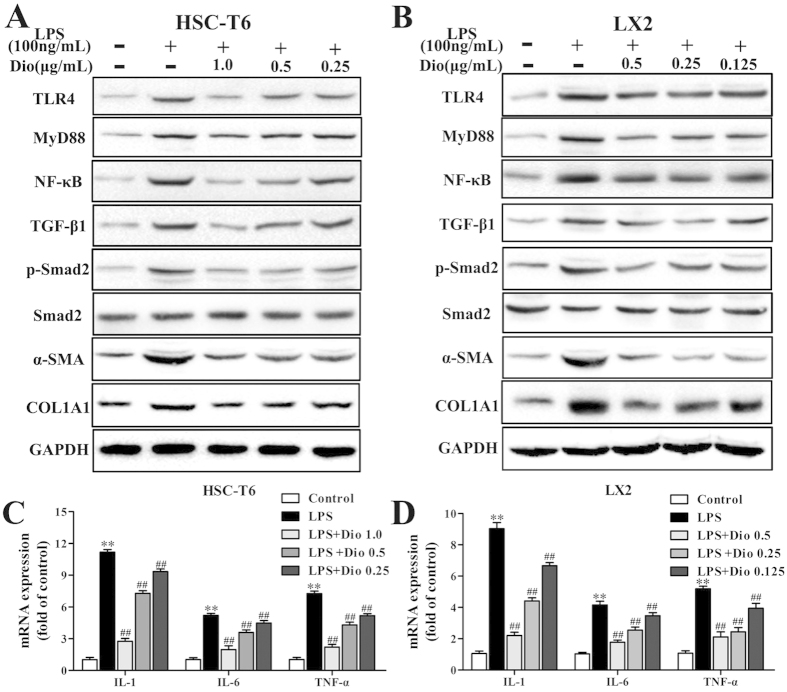
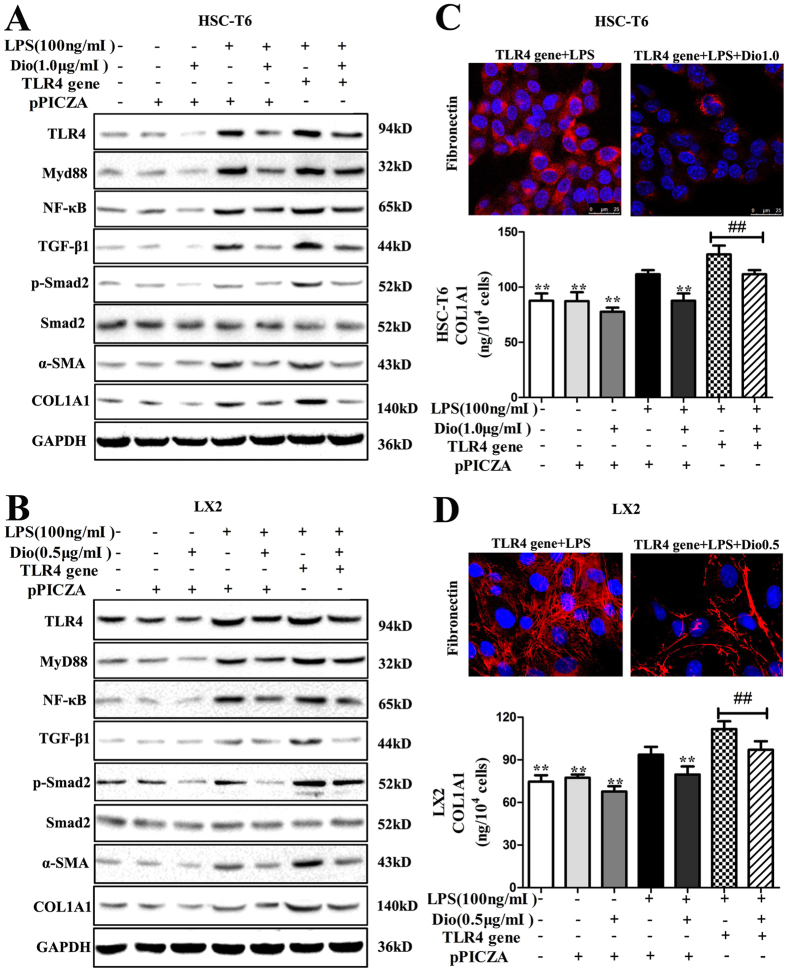
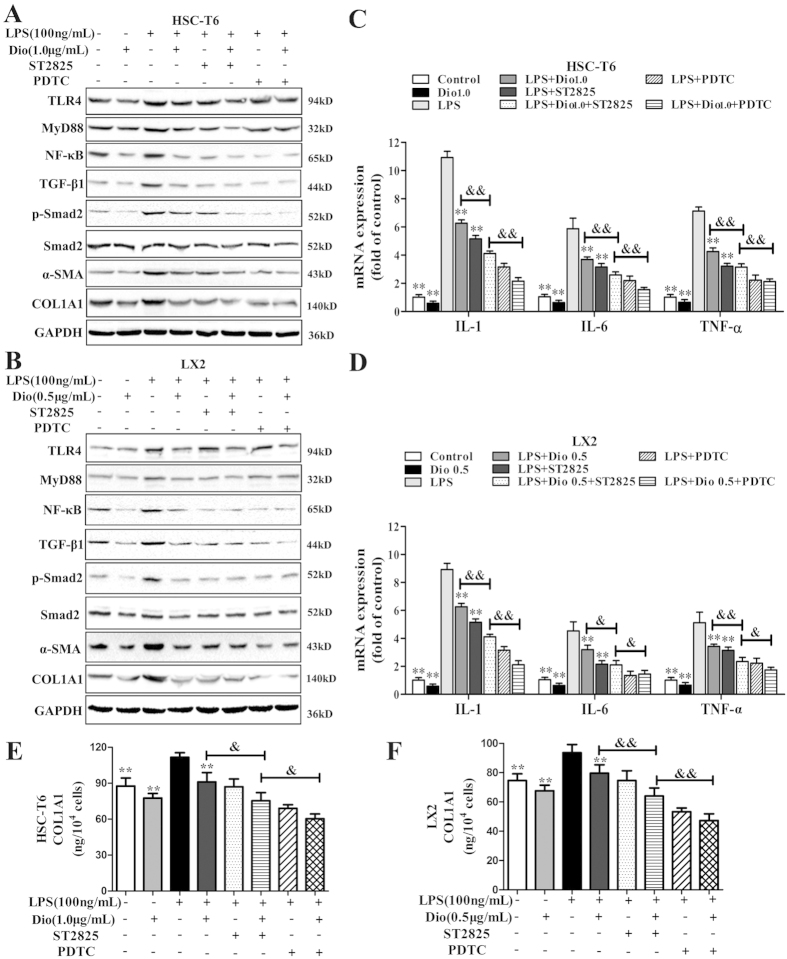
The present work aimed to investigate the activities and underlying mechanisms of dioscin against alcoholic liver fibrosis (ALF). In vivo liver fibrosis in mice was induced by an alcoholic liquid diet, and in vitro studies were performed on activated HSC-T6 and LX2 cells treated with lipopolysaccharide. Our results showed that dioscin significantly attenuated hepatic stellate cells (HSCs) activation, improved collagen accumulation, and attenuated inflammation through down-regulating the levels of myeloid differentiation factor 88 (MyD88), nuclear factor κB (NF-κB), interleukin (IL)-1, IL-6 and tumour necrosis factor-α by decreasing Toll-like receptor (TLR)4 expression both in vivo and in vitro. TLR4 overexpression was also decreased by dioscin, leading to the markedly down-regulated levels of MyD88, NF-κB, transforming growth factor-β1 (TGF-β1), α-smooth muscle actin (α-SMA) and type I collagen (COL1A1) in cultured HSCs. Suppression of cellular MyD88 by ST2825 or abrogation of NF-κB by pyrrolidine dithiocarbamate eliminated the inhibitory effects of dioscin on the levels of TGF-β1, α-SMA and COL1A1. In a word, dioscin exhibited potent effects against ALF via altering TLR4/MyD88/NF-κB signaling pathway, which provided novel insights into the mechanisms of this compound as an antifibrogenic candidate for the treatment of ALF in the future.
本研究旨在探讨薯蓣皂苷对酒精性肝纤维化(ALF)的作用及其潜在机制。采用酒精性液体饲料诱导小鼠体内肝纤维化,并对脂多糖处理的活化HSC-T6和LX2细胞进行体外研究。结果表明,薯蓣皂苷可通过下调髓样分化因子88(MyD88)、核因子κB(NF-κB)、白细胞介素(IL)-1、IL-6和肿瘤坏死因子-α的水平,显著减轻肝星状细胞(HSCs)活化,改善胶原沉积,并减轻炎症,这一作用在体内和体外均可通过降低Toll样受体(TLR)4表达来实现。薯蓣皂苷还可降低TLR4的过表达,导致培养的HSCs中MyD88、NF-κB、转化生长因子-β1(TGF-β1)、α-平滑肌肌动蛋白(α-SMA)和I型胶原(COL1A1)的水平显著下调。用ST2825抑制细胞MyD88或用吡咯烷二硫代氨基甲酸盐消除NF-κB可消除薯蓣皂苷对TGF-β1、α-SMA和COL1A1水平的抑制作用。总之,薯蓣皂苷通过改变TLR4/MyD88/NF-κB信号通路对ALF具有显著作用,这为该化合物作为未来治疗ALF的抗纤维化候选药物的作用机制提供了新的见解。