Dolabela Maria Fâni, Póvoa Marinete Marins, Brandão Geraldo Célio, Rocha Fabíola Dutra, Soares Luciana Ferreira, de Paula Renata Cristina, de Oliveira Alaíde Braga
Programa de Pós-Graduação em Ciências Farmacêuticas, Instituto de Ciências da Saúde, Universidade Federal do Pará, Belém, PA, 66075-110, Brazil.
Laboratório de Malária, Seção de Parasitologia, Instituto Evandro Chagas, Br-316, Km 7, s/n, B. Levilândia, Ananindeua, PA, CEP 67030-000, Brazil.
Malar J. 2015 Dec 10;13 Suppl 1:498. doi: 10.1186/s12936-015-0997-4.
Several species of the genus Aspidosperma (Apocynaceae) are used for the treatment of human malaria in Brazil and other meso- and South American countries.
Ethanol extract from Aspidosperma parvifolium trunk bark was submitted to acid-base extractions leading to alkaloid and neutral fractions. The alkaloid fraction was chromatographed over a silica gel column. Ethanol extract, fractions and uleine were analysed by HPLC-DAD, UPLC-ESI-MS/MS and HPLC-ESI-MicroTOF-MS. The anti-malarial activity was assayed against resistant and sensitive chloroquine Plasmodium falciparum strains by microscopic, [(3)H]-hypoxanthine incorporation and HRPII techniques. Cytotoxicity (CC50) was evaluated against Vero and HepG2 cell lines by the MTT technique; selectivity indexes (SI = CC50/IC50) were calculated.
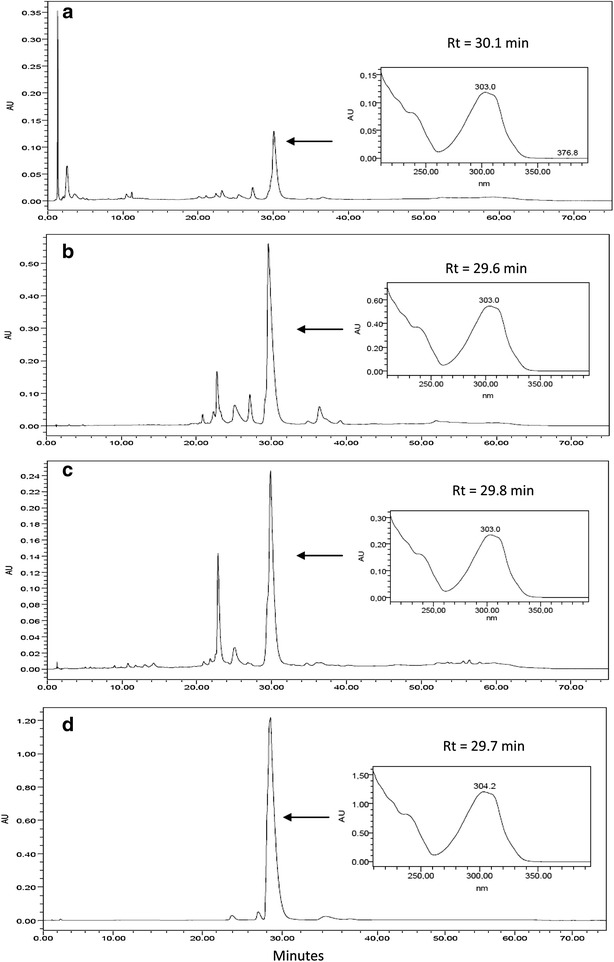
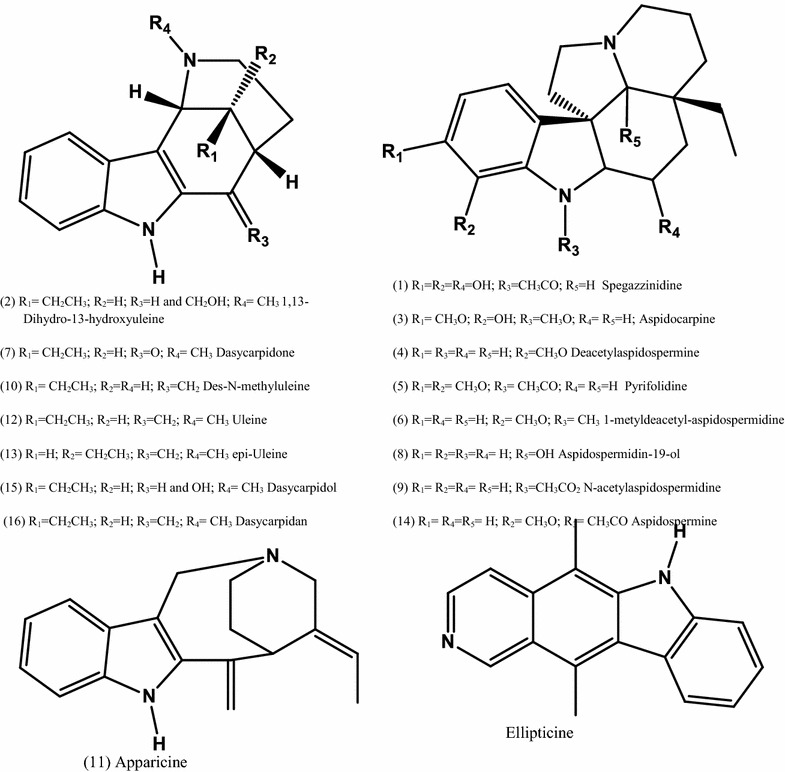
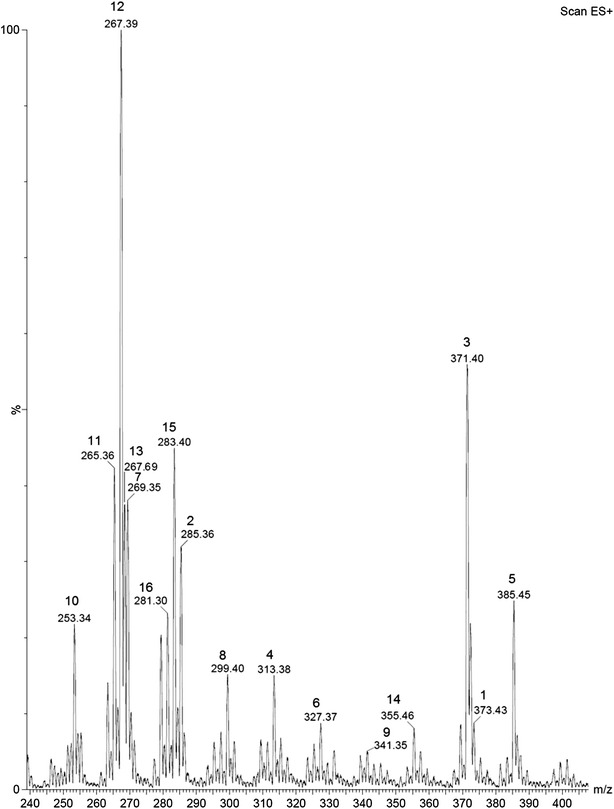
The major peak in the HPLC-DAD chromatograms of the ethanol extract, alkaloid and neutral fractions suggested the presence of uleine that was isolated from the alkaloid fraction by column chromatography and was characterized by spectroscopic methods. A total of 15 alkaloids, besides uleine, were identified in the alkaloid fraction by UPLC-DAD-ESI-MS/MS and HPLC-ESI-MicroTOF-MS. The ethanol extract from Aspidosperma parvifolium and the neutral fraction were moderately active against P. falciparum strains. The alkaloid fraction and uleine disclosed high anti-malarial activity against chloroquine-resistant P. falciparum strain (IC50 < 1 µg/mL). The ethanol extract, neutral fraction and uleine showed low cytotoxicity against Vero and HepG2 cell lines (CC50 > 300 µg/mL). The alkaloid fraction showed moderate cytotoxicity to HepG2 cell line (CC50 = 74.4 µg/mL). High SI values (>10) were determined for all samples.
Ethanol extract from Aspidosperma parvifolium trunk bark afforded uleine that is the major constituent of the alkaloid fraction and disclosed a good in vitro anti-malarial activity. Moreover, 15 other indole alkaloids have been identified along with uleine.
在巴西以及其他中美洲和南美洲国家,几种白坚木属(夹竹桃科)植物被用于治疗人类疟疾。
对小叶白坚木树干树皮的乙醇提取物进行酸碱萃取,得到生物碱部分和中性部分。生物碱部分在硅胶柱上进行色谱分离。采用高效液相色谱 - 二极管阵列检测法(HPLC - DAD)、超高效液相色谱 - 电喷雾串联质谱法(UPLC - ESI - MS/MS)和高效液相色谱 - 电喷雾微流控飞行时间质谱法(HPLC - ESI - MicroTOF - MS)对乙醇提取物、各部分及乌来宁进行分析。通过显微镜观察、[³H] - 次黄嘌呤掺入法和HRPII技术,针对耐氯喹和敏感氯喹的恶性疟原虫菌株测定抗疟活性。采用MTT法评估对Vero和HepG2细胞系的细胞毒性(CC50);计算选择性指数(SI = CC50/IC50)。
乙醇提取物、生物碱部分和中性部分的HPLC - DAD色谱图中的主峰表明存在乌来宁,通过柱色谱从生物碱部分分离出乌来宁,并采用光谱方法对其进行表征。通过UPLC - DAD - ESI - MS/MS和HPLC - ESI - MicroTOF - MS在生物碱部分共鉴定出除乌来宁外的15种生物碱。小叶白坚木的乙醇提取物和中性部分对恶性疟原虫菌株具有中等活性。生物碱部分和乌来宁对耐氯喹的恶性疟原虫菌株显示出高抗疟活性(IC50 < 1μg/mL)。乙醇提取物、中性部分和乌来宁对Vero和HepG2细胞系显示出低细胞毒性(CC50 > 300μg/mL)。生物碱部分对HepG2细胞系显示出中等细胞毒性(CC50 = 74.4μg/mL)。所有样品的选择性指数均较高(>10)。
小叶白坚木树干树皮的乙醇提取物得到了乌来宁,它是生物碱部分的主要成分,并显示出良好的体外抗疟活性。此外,除乌来宁外还鉴定出了15种其他吲哚生物碱。