Matsuhisa M, Koyama M, Cheng X, Takahashi Y, Riddle M C, Bolli G B, Hirose T
Tokushima University, Tokushima, Japan.
Sanofi, Tokyo, Japan.
Diabetes Obes Metab. 2016 Apr;18(4):375-83. doi: 10.1111/dom.12619. Epub 2016 Feb 1.
To compare efficacy and safety of new insulin glargine 300 U/ml (Gla-300) with that of insulin glargine 100 U/ml (Gla-100) in Japanese adults with type 1 diabetes.
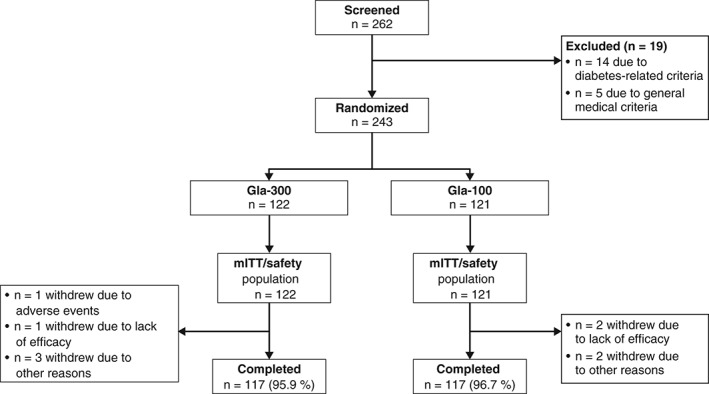
The EDITION JP 1 study (NCT01689129) was a 6-month, multicentre, open-label, phase III study. Participants (n = 243) were randomized to Gla-300 or Gla-100 while continuing mealtime insulin. Basal insulin was titrated with the aim of achieving a fasting self-monitored plasma glucose target of 4.4-7.2 mmol/l. The primary endpoint was change in glycated haemoglobin (HbA1c) over 6 months. Safety measures included hypoglycaemia and change in body weight.
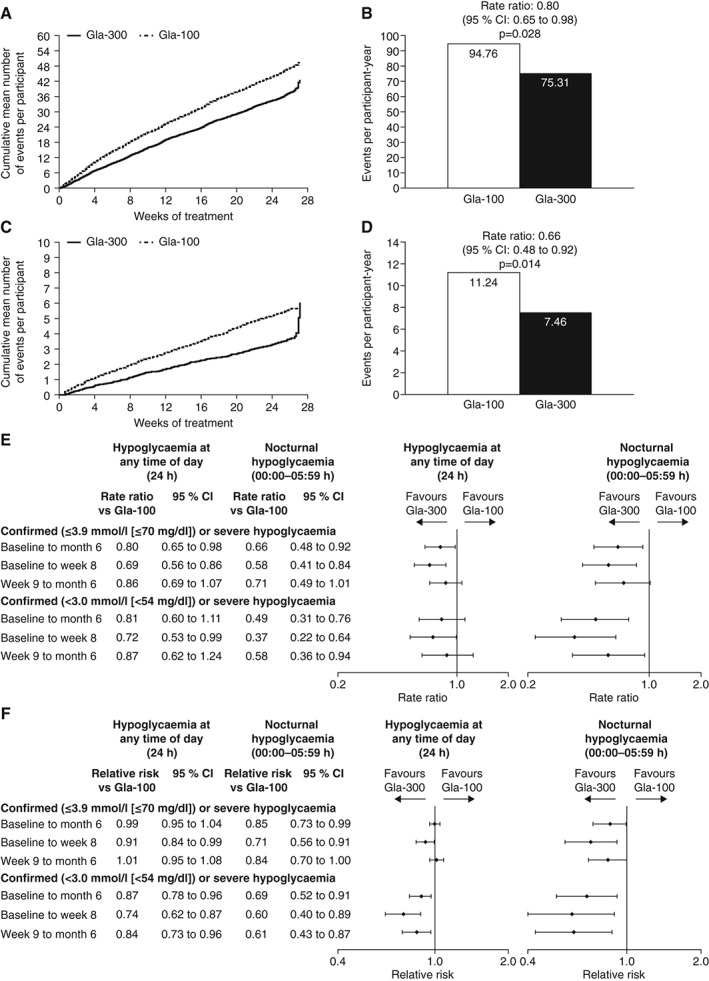
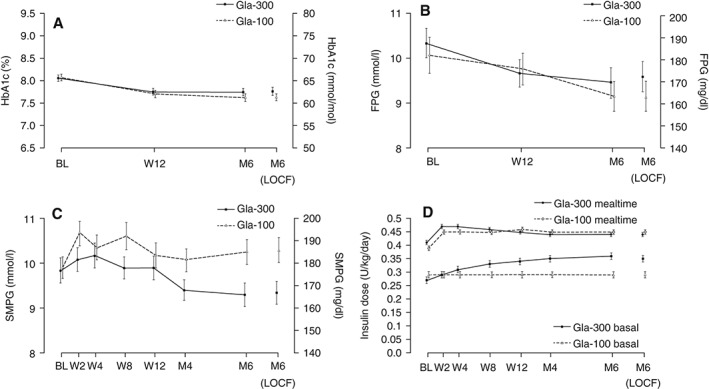
Gla-300 was non-inferior to Gla-100 for the primary endpoint of HbA1c change over the 6-month period {least squares [LS] mean difference 0.13 % [95 % confidence interval (CI) -0.03 to 0.29]}. The annualized rate of confirmed (≤3.9 mmol/l) or severe hypoglycaemic events was 34 % lower with Gla-300 than with Gla-100 at night [rate ratio 0.66 (95 % CI 0.48-0.92)] and 20 % lower at any time of day [24 h; rate ratio 0.80 (95 % CI 0.65-0.98)]; this difference was most pronounced during the first 8 weeks of treatment. Severe hypoglycaemia was infrequent. The basal insulin dose increased in both groups (month 6 dose: Gla-300 0.35 U/kg/day, Gla-100 0.29 U/kg/day). A between-treatment difference in body weight change over 6 months favouring Gla-300 was observed [LS mean difference -0.6 kg (95 % CI -1.1 to -0.0); p = 0.035]. Adverse event rates were comparable between the groups.
In Japanese adults with type 1 diabetes using basal plus mealtime insulin, less hypoglycaemia was observed with Gla-300 than with Gla-100, particularly during the night, while glycaemic control did not differ.
比较新型300 U/ml甘精胰岛素(Gla-300)与100 U/ml甘精胰岛素(Gla-100)在日本1型糖尿病成年患者中的疗效和安全性。
EDITION JP 1研究(NCT01689129)是一项为期6个月的多中心、开放标签的III期研究。参与者(n = 243)被随机分配至Gla-300或Gla-100组,同时继续使用餐时胰岛素。基础胰岛素进行滴定,目标是使自我监测的空腹血糖达到4.4 - 7.2 mmol/l。主要终点是6个月内糖化血红蛋白(HbA1c)的变化。安全指标包括低血糖和体重变化。
在6个月期间,Gla-300在HbA1c变化这一主要终点上不劣于Gla-100{最小二乘法[LS]平均差异0.13%[95%置信区间(CI)-0.03至0.29]}。Gla-300组夜间确诊(≤3.9 mmol/l)或严重低血糖事件的年化发生率比Gla-100组低34%[率比0.66(95%CI 0.48 - 0.92)],全天任何时间(24小时)低20%[率比0.80(95%CI 0.65 - 0.98)];这种差异在治疗的前8周最为明显。严重低血糖很少见。两组基础胰岛素剂量均增加(第6个月剂量:Gla-300 0.35 U/kg/天,Gla-100 0.29 U/kg/天)。观察到6个月内体重变化的组间差异有利于Gla-300[LS平均差异-0.6 kg(95%CI -1.1至-0.0);p = 0.035]。两组不良事件发生率相当。
在使用基础胰岛素加餐时胰岛素的日本1型糖尿病成年患者中,Gla-300导致的低血糖比Gla-100少,尤其是在夜间,而血糖控制无差异。