Tampubolon Gindo
Cathie Marsh Institute for Social Research, University of Manchester, Manchester, United Kingdom.
PLoS One. 2015 Dec 16;10(12):e0144722. doi: 10.1371/journal.pone.0144722. eCollection 2015.
The ageing population poses a tremendous challenge in understanding the sources of inequalities in health. Though they appear to be far removed, childhood conditions are known to be inextricably linked with adult health, and in turn on health in later life. The long arm of childhood conditions hypothesis is often tested using recollection of childhood circumstances, but such subjective recall can yield potentially inaccurate or possibly biased inferences. We tested the long arm hypothesis on three outcomes in later life, arrayed from objective to subjective health, namely: gait speed, episodic memory and mental health.
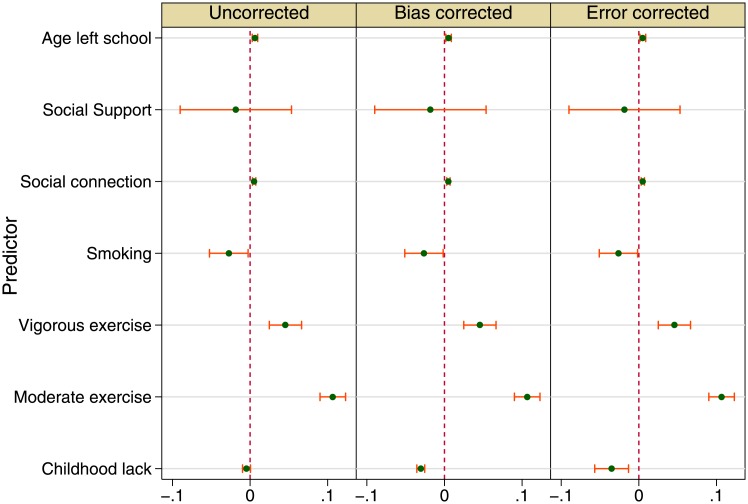
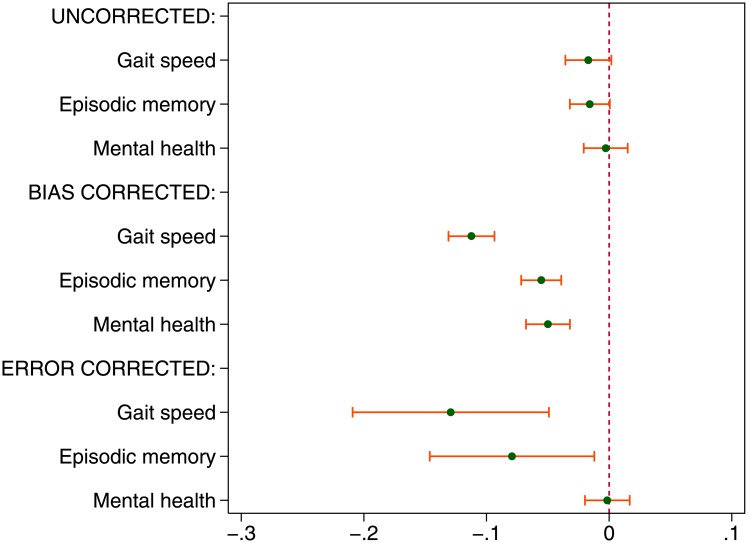
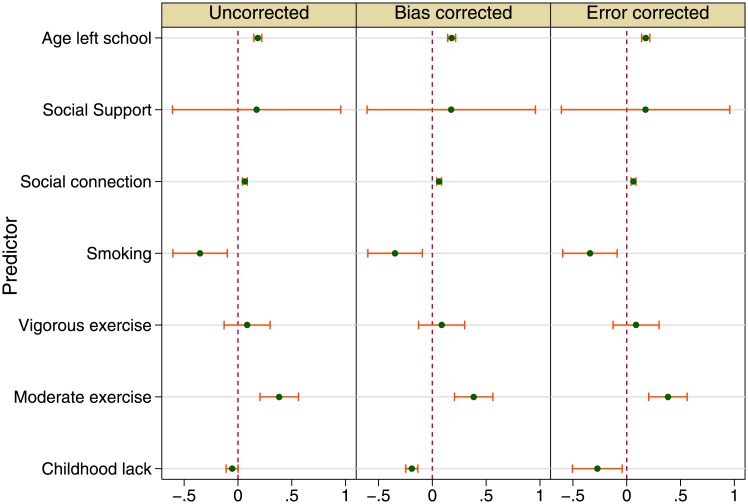
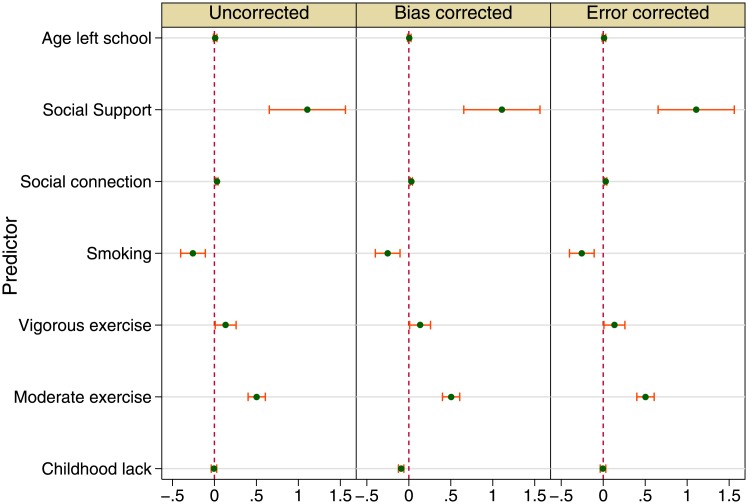
We used the English Longitudinal Study of Ageing 2006 enriched with retrospective life history (N = 5,913). To deal with recall problems two solutions, covariate measurement and endogenous treatment models, were applied. Retrospective childhood material lack includes growing up without running hot or cold water, fixed bath, indoor lavatory and central heating. Adjustment is made for an extensive set of confounders including sex, age, adult health, wealth, education, occupation, social support, social connections, chronic conditions, smoking, drinking, and physical exercise. It is found that material poverty when growing up shows no association with health when growing old, assuming accurate recall. Once recall problems are controlled, we found that childhood material poverty changes inversely with later life health.
A poorer childhood goes with slower gait, poorer memory and more depression in later life. This result provides a further impetus to eliminate child poverty.
人口老龄化对理解健康不平等的根源构成了巨大挑战。尽管童年状况看似与成年健康相去甚远,但众所周知,童年状况与成年健康紧密相连,进而又与晚年健康相关。童年状况假设的深远影响通常通过对童年经历的回忆来检验,但这种主观回忆可能会产生潜在不准确或有偏差的推断。我们针对晚年的三个结果(从客观健康到主观健康依次为:步速、情景记忆和心理健康)检验了童年状况假设。
我们使用了2006年英国老龄化纵向研究,并丰富了回顾性生活史(N = 5913)。为解决回忆问题,应用了两种方法,即协变量测量和内生处理模型。童年物质匮乏的回顾内容包括成长过程中没有冷热水、固定浴缸、室内厕所和中央供暖。对一系列广泛的混杂因素进行了调整,包括性别、年龄、成年健康状况、财富、教育程度、职业、社会支持、社会关系、慢性病、吸烟、饮酒和体育锻炼。结果发现,假设回忆准确,成长过程中的物质贫困与老年健康状况无关。一旦控制了回忆问题,我们发现童年物质贫困与晚年健康呈负相关。
童年贫困与晚年较慢的步速、较差的记忆力和更多的抑郁情绪相关。这一结果为消除儿童贫困提供了进一步的动力。