Medical Residency in Dermatology, Hospital Irmandade Santa Casa de Misericórdia de Curitiba, Curitiba, PR, Brazil.
Escola de Medicina, Pontifícia Universidade Católica do Paraná, Curitiba, PR, Brazil.
An Bras Dermatol. 2022 Jul-Aug;97(4):478-490. doi: 10.1016/j.abd.2021.09.008. Epub 2022 May 25.
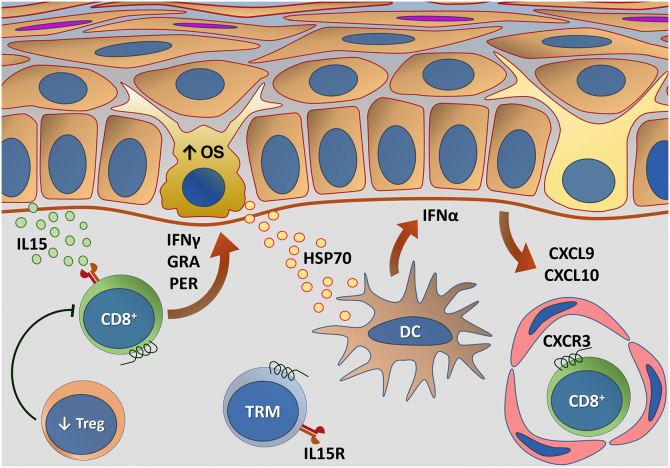
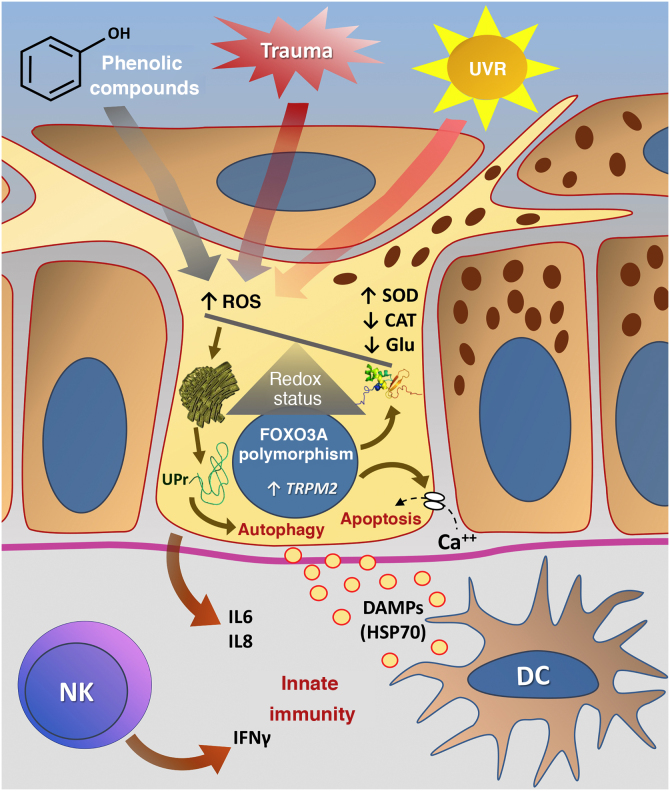
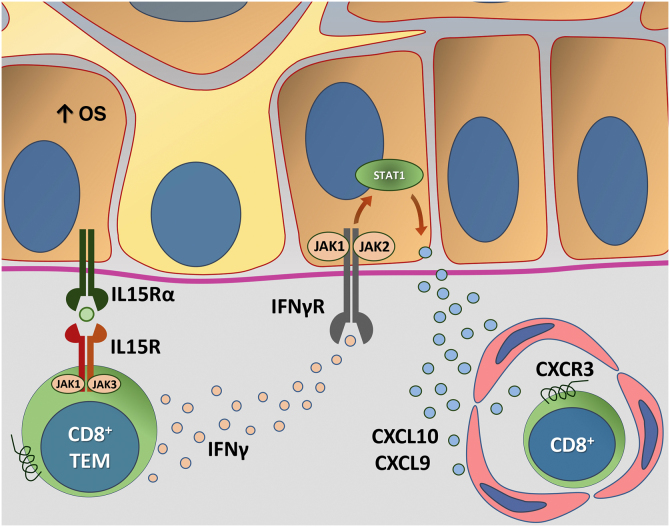
Vitiligo is a complex disease whose pathogenesis results from the interaction of genetic components, metabolic factors linked to cellular oxidative stress, melanocyte adhesion to the epithelium, and immunity (innate and adaptive), which culminate in aggression against melanocytes. In vitiligo, melanocytes are more sensitive to oxidative damage, leading to the increased expression of proinflammatory proteins such as HSP70. The lower expression of epithelial adhesion molecules, such as DDR1 and E-cadherin, facilitates damage to melanocytes and exposure of antigens that favor autoimmunity. Activation of the type 1-IFN pathway perpetuates the direct action of CD8+ cells against melanocytes, facilitated by regulatory T-cell dysfunction. The identification of several genes involved in these processes sets the stage for disease development and maintenance. However, the relationship of vitiligo with environmental factors, psychological stress, comorbidities, and the elements that define individual susceptibility to the disease are a challenge to the integration of theories related to its pathogenesis.
白癜风是一种复杂的疾病,其发病机制源于遗传成分、与细胞氧化应激相关的代谢因素、黑素细胞与上皮细胞的黏附以及免疫(先天和适应性)的相互作用,最终导致对黑素细胞的攻击。在白癜风中,黑素细胞对氧化损伤更敏感,导致促炎蛋白如 HSP70 的表达增加。上皮细胞黏附分子(如 DDR1 和 E-钙黏蛋白)的表达降低,促进了黑素细胞的损伤和有利于自身免疫的抗原暴露。I 型干扰素通路的激活使 CD8+细胞对黑素细胞的直接作用持续存在,这一过程受到调节性 T 细胞功能障碍的促进。涉及这些过程的几个基因的鉴定为疾病的发展和维持奠定了基础。然而,白癜风与环境因素、心理压力、合并症以及定义个体对疾病易感性的因素之间的关系,对其发病机制相关理论的整合提出了挑战。