Sriram N, Mills Jennifer, Lang Edward, Dickson Holli K, Hamann Heidi A, Nosek Brian A, Schiller Joan H
Psychology Department, University of Virginia, Charlottesville, Virginia, United States of America.
Genentech, Inc., South San Francisco, California, United States of America.
PLoS One. 2015 Dec 23;10(12):e0145715. doi: 10.1371/journal.pone.0145715. eCollection 2015.
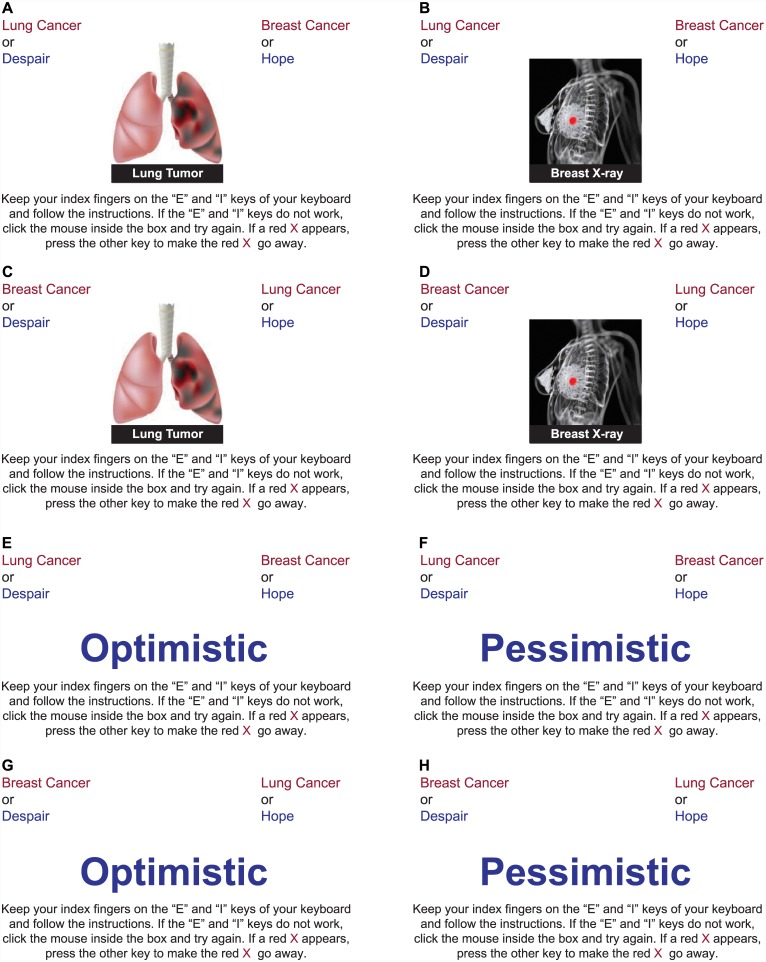
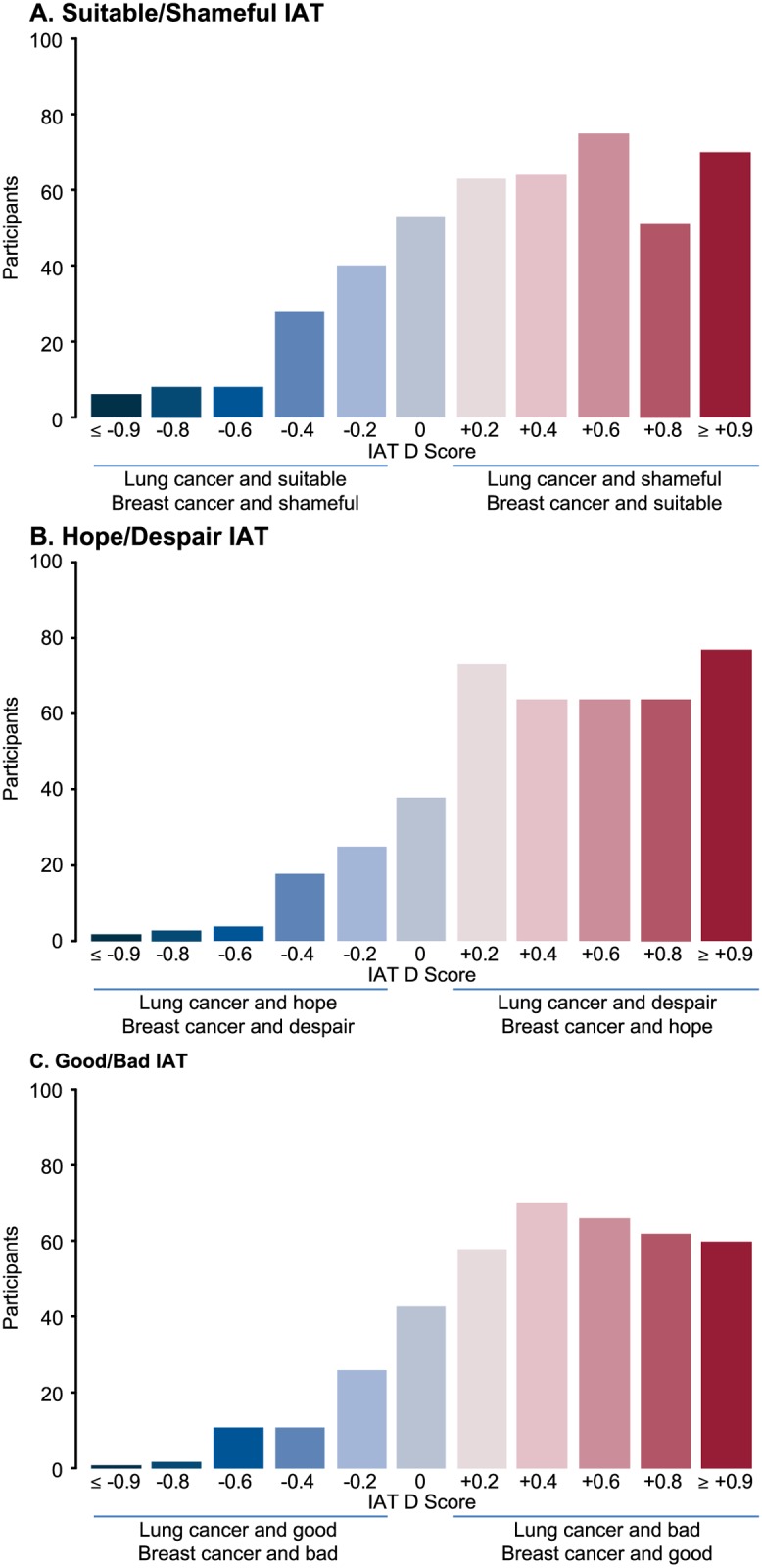
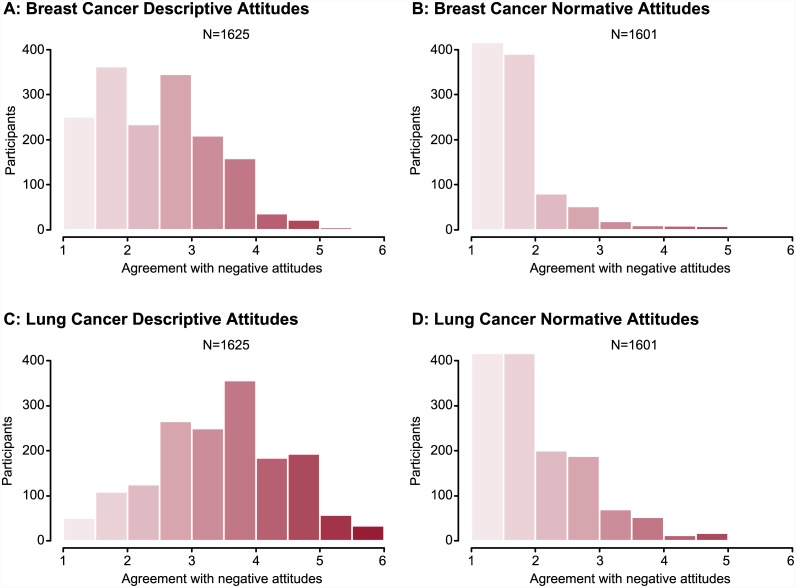
Societal perceptions may factor into the high rates of nontreatment in patients with lung cancer. To determine whether bias exists toward lung cancer, a study using the Implicit Association Test method of inferring subconscious attitudes and stereotypes from participant reaction times to visual cues was initiated. Participants were primarily recruited from an online survey panel based on US census data. Explicit attitudes regarding lung and breast cancer were derived from participants' ratings (n = 1778) regarding what they thought patients experienced in terms of guilt, shame, and hope (descriptive statements) and from participants' opinions regarding whether patients ought to experience such feelings (normative statements). Participants' responses to descriptive and normative statements about lung cancer were compared with responses to statements about breast cancer. Analyses of responses revealed that the participants were more likely to agree with negative descriptive and normative statements about lung cancer than breast cancer (P<0.001). Furthermore, participants had significantly stronger implicit negative associations with lung cancer compared with breast cancer; mean response times in the lung cancer/negative conditions were significantly shorter than in the lung cancer/positive conditions (P<0.001). Patients, caregivers, healthcare providers, and members of the general public had comparable levels of negative implicit attitudes toward lung cancer. These results show that lung cancer was stigmatized by patients, caregivers, healthcare professionals, and the general public. Further research is needed to investigate whether implicit and explicit attitudes and stereotypes affect patient care.
社会认知可能是肺癌患者高未治疗率的一个因素。为了确定是否存在对肺癌的偏见,一项研究启动了,该研究使用内隐联想测验方法,从参与者对视觉线索的反应时间推断潜意识态度和刻板印象。参与者主要从基于美国人口普查数据的在线调查小组中招募。关于肺癌和乳腺癌的明确态度来自参与者对他们认为患者在内疚、羞耻和希望方面的经历(描述性陈述)的评分(n = 1778),以及来自参与者对患者是否应该有这种感受的看法(规范性陈述)。将参与者对关于肺癌的描述性和规范性陈述的回答与对关于乳腺癌的陈述的回答进行比较。对回答的分析表明,参与者更有可能同意关于肺癌的负面描述性和规范性陈述,而不是关于乳腺癌的陈述(P<0.001)。此外,与乳腺癌相比,参与者与肺癌有明显更强的内隐负面关联;肺癌/负面条件下的平均反应时间明显短于肺癌/正面条件下的平均反应时间(P<0.001)。患者、护理人员、医疗保健提供者和普通公众对肺癌的负面内隐态度水平相当。这些结果表明,肺癌受到患者、护理人员、医疗专业人员和普通公众的污名化。需要进一步研究以调查内隐和明确的态度及刻板印象是否会影响患者护理。