Patterson Sophie E, Milloy M-J, Ogilvie Gina, Greene Saara, Nicholson Valerie, Vonn Micheal, Hogg Robert, Kaida Angela
Faculty of Health Sciences, Simon Fraser University, Burnaby, BC, Canada.
BC Centre for Excellence in HIV/AIDS, St Paul's Hospital, Vancouver, BC, Canada.
J Int AIDS Soc. 2015 Dec 22;18(1):20572. doi: 10.7448/IAS.18.1.20572. eCollection 2015.
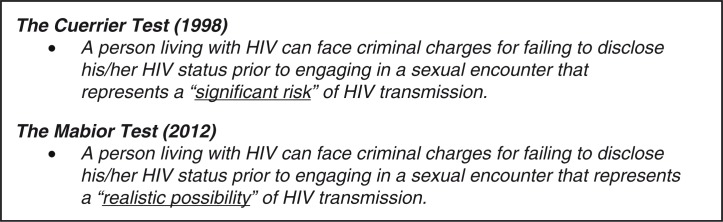
In 2012, the Supreme Court of Canada ruled that people living with HIV (PLWH) must disclose their HIV status to sexual partners prior to sexual activity that poses a "realistic possibility" of HIV transmission for consent to sex to be valid. The Supreme Court deemed that the duty to disclose could be averted if a person living with HIV both uses a condom and has a low plasma HIV-1 RNA viral load during vaginal sex. This is one of the strictest legal standards criminalizing HIV non-disclosure worldwide and has resulted in a high rate of prosecutions of PLWH in Canada. Public health advocates argue that the overly broad use of the criminal law against PLWH undermines efforts to engage individuals in healthcare and complicates gendered barriers to linkage and retention in care experienced by women living with HIV (WLWH).
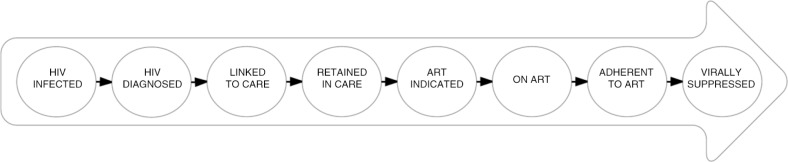
We conducted a comprehensive review of peer-reviewed and non-peer-reviewed evidence published between 1998 and 2015 evaluating the impact of the criminalization of HIV non-disclosure on healthcare engagement of WLWH in Canada across key stages of the cascade of HIV care, specifically: HIV testing and diagnosis, linkage and retention in care, and adherence to antiretroviral therapy. Where available, evidence pertaining specifically to women was examined. Where these data were lacking, evidence relating to all PLWH in Canada or other international jurisdictions were included.
Evidence suggests that criminalization of HIV non-disclosure may create barriers to engagement and retention within the cascade of HIV care for PLWH in Canada, discouraging access to HIV testing for some people due to fears of legal implications following a positive diagnosis, and compromising linkage and retention in healthcare through concerns of exposure of confidential medical information. There is a lack of published empirical evidence focused specifically on women, which is a concern given the growing population of WLWH in Canada, among whom marginalized and vulnerable women are overrepresented.
The threat of HIV non-disclosure prosecution combined with a heightened perception of surveillance may alter the environment within which women engage with healthcare services. Fully exploring the extent to which HIV criminalization represents a barrier to the healthcare engagement of WLWH is a public health priority.
2012年,加拿大最高法院裁定,感染艾滋病毒者(PLWH)在进行存在“现实可能性”的艾滋病毒传播的性行为之前,必须向性伴侣披露其艾滋病毒感染状况,以使性行为同意有效。最高法院认为,如果感染艾滋病毒者在阴道性行为期间使用避孕套且血浆艾滋病毒-1 RNA病毒载量较低,则可以避免披露义务。这是全世界将不披露艾滋病毒定为犯罪的最严格法律标准之一,导致加拿大对感染艾滋病毒者的起诉率很高。公共卫生倡导者认为,过度广泛地对感染艾滋病毒者适用刑法会破坏促使个人参与医疗保健的努力,并使感染艾滋病毒的女性(WLWH)在获得和持续接受护理方面面临的性别障碍更加复杂。
我们对1998年至2015年期间发表的同行评审和非同行评审证据进行了全面审查,评估将不披露艾滋病毒定为犯罪对加拿大感染艾滋病毒的女性在艾滋病毒护理连续统一体关键阶段的医疗保健参与情况的影响,具体包括:艾滋病毒检测和诊断、获得和持续接受护理以及坚持抗逆转录病毒治疗。如有可用,会审查专门针对女性的证据。在缺乏这些数据的情况下,会纳入与加拿大所有感染艾滋病毒者或其他国际司法管辖区相关的证据。
有证据表明,将不披露艾滋病毒定为犯罪可能会给加拿大感染艾滋病毒者在艾滋病毒护理连续统一体中的参与和持续接受护理造成障碍,由于担心阳性诊断后的法律后果,一些人不愿进行艾滋病毒检测,并且由于担心机密医疗信息被泄露,影响了获得和持续接受医疗保健的情况。缺乏专门针对女性的已发表实证证据,鉴于加拿大感染艾滋病毒的女性人口不断增加,其中边缘化和弱势女性占比过高,这令人担忧。
对不披露艾滋病毒的起诉威胁以及对监测的更高认知可能会改变女性与医疗保健服务机构接触的环境。充分探究将艾滋病毒定为犯罪在多大程度上成为感染艾滋病毒的女性参与医疗保健的障碍是一项公共卫生优先事项。