Darfour-Oduro Kwame A, Megens Hendrik-Jan, Roca Alfred, Groenen Martien A M, Schook Lawrence B
Department of Animal Sciences, University of Illinois, Urbana-Champaign, IL, 61801, USA.
Animal Breeding and Genomics Centre, Wageningen University, Droevendaalsesteeg 1, Wageningen, 6708 PB, The Netherlands.
Immunogenetics. 2016 Mar;68(3):179-89. doi: 10.1007/s00251-015-0892-8. Epub 2015 Dec 23.
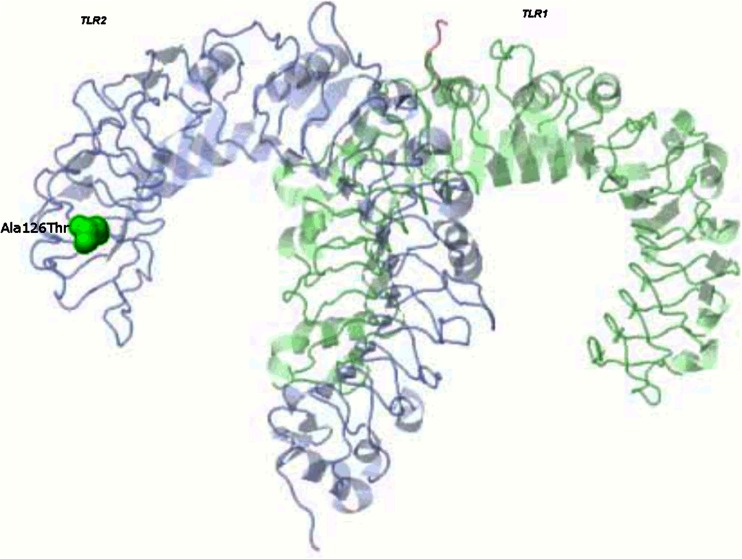
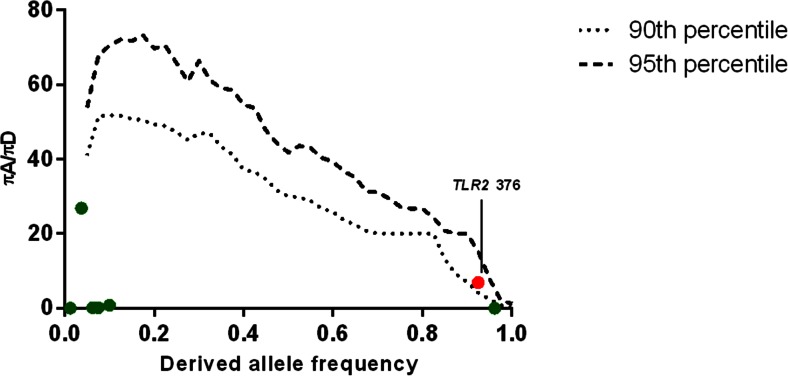
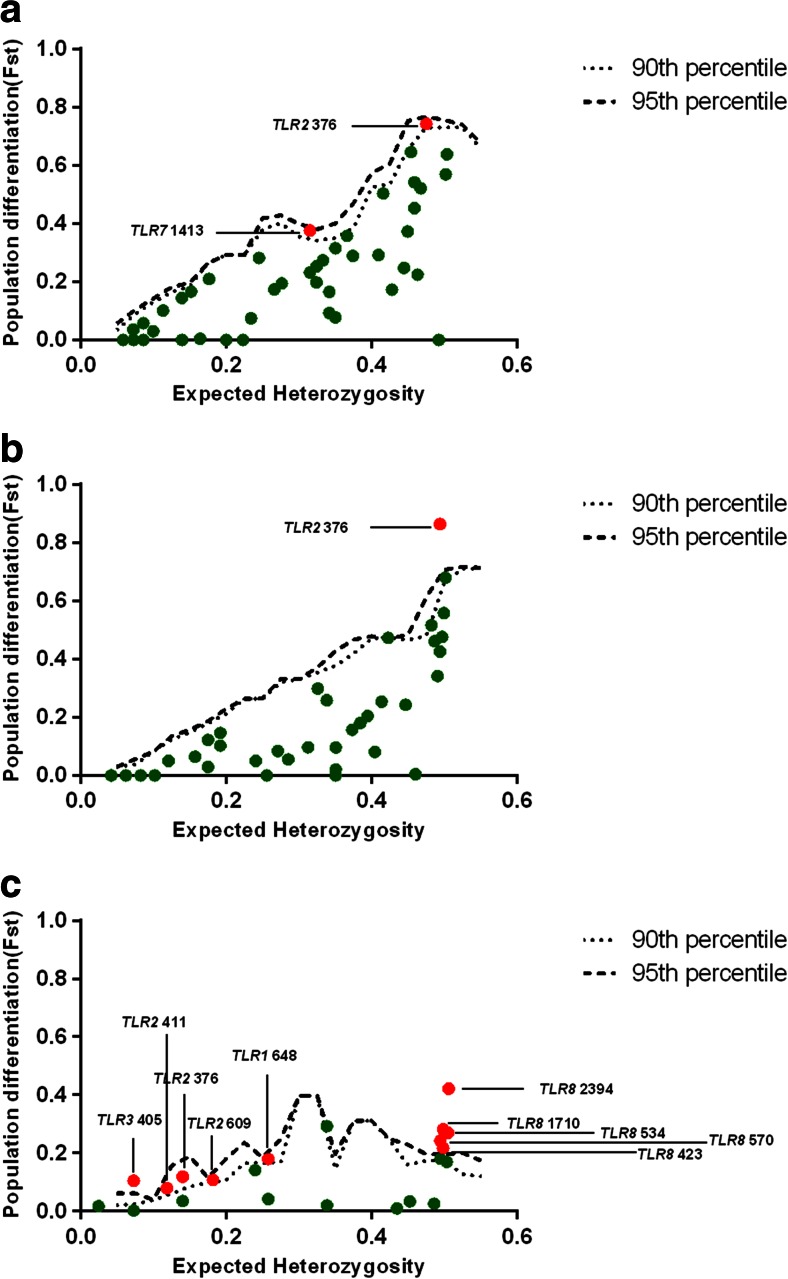
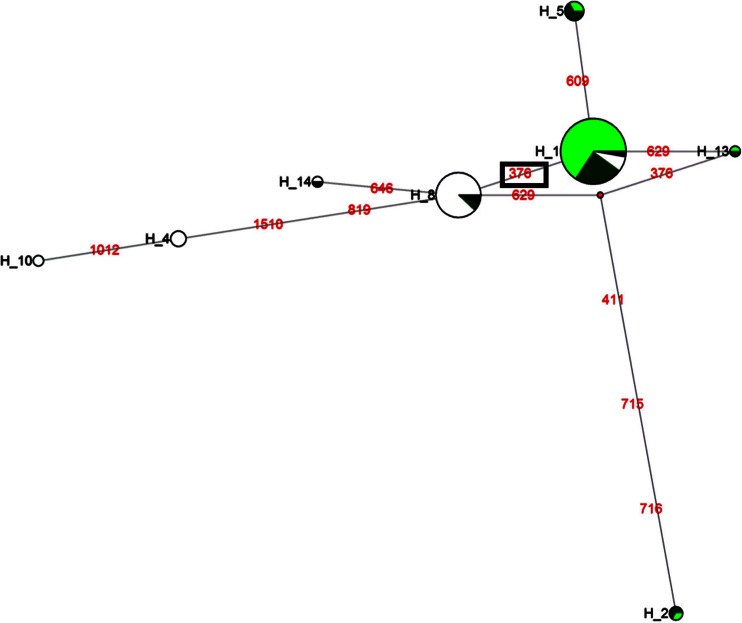
Naturally endemic infectious diseases provide selective pressures for pig populations. Toll-like receptors (TLRs) represent the first line of immune defense against pathogens and are likely to play a crucial adaptive role for pig populations. This study was done to determine whether wild and domestic pig populations representing diverse global environments demonstrate local TLR adaptation. The genomic sequence encoding the ectodomain, responsible for interacting with pathogen ligands of bacterial (TLR1, TLR2 and TLR6) and viral (TLR3, TLR7 and TLR8) receptors, was obtained. Mitochondrial D-loop region sequences were obtained and a phylogenetic analysis using these sequences revealed a clear separation of animals into Asian (n = 27) and European (n = 40) clades. The TLR sequences were then analyzed for population-specific positive selection signatures within wild boars and domesticated pig populations derived from Asian and European clades. Using within-population and between-population tests for positive selection, a TLR2-derived variant 376A (126Thr), estimated to have arisen in 163,000 years ago with a frequency of 83.33% within European wild boars, 98.00% within domestic pig breeds of European origin, 40.00% within Asian wild boars, and 11.36% within Asian domestic pigs, was identified to be under positive selection in pigs of European origin. The variant is located within the N terminal domain of the TLR2 protein 3D crystal structure and could affect ligand binding. This study suggests the TLR2 gene contributing to responses to bacterial pathogens has been crucial in adaptation of pigs to pathogens.
自然地方性传染病对猪群构成了选择性压力。Toll样受体(TLRs)是抵御病原体的第一道免疫防线,可能对猪群起着至关重要的适应性作用。本研究旨在确定代表全球不同环境的野生和家养猪群是否表现出局部TLR适应性。获取了编码胞外域的基因组序列,该胞外域负责与细菌(TLR1、TLR2和TLR6)和病毒(TLR3、TLR7和TLR8)受体的病原体配体相互作用。获得了线粒体D-loop区域序列,使用这些序列进行的系统发育分析表明,动物明显分为亚洲(n = 27)和欧洲(n = 40)分支。然后分析了TLR序列在源自亚洲和欧洲分支的野猪和家养猪种群中的种群特异性正选择特征。通过种群内和种群间的正选择测试,鉴定出一个TLR2衍生变体376A(126Thr)在欧洲起源的猪中受到正选择,估计该变体出现在163,000年前,在欧洲野猪中的频率为83.33%,在欧洲起源的家猪品种中的频率为98.00%,在亚洲野猪中的频率为40.00%,在亚洲家猪中的频率为11.36%。该变体位于TLR2蛋白3D晶体结构的N末端结构域内,可能影响配体结合。本研究表明,TLR2基因在猪对病原体的适应过程中对细菌病原体反应起关键作用。