Lewinska Anna, Zebrowski Jacek, Duda Magdalena, Gorka Anna, Wnuk Maciej
Department of Biochemistry and Cell Biology, University of Rzeszow, Zelwerowicza 4, 35-601 Rzeszow, Poland.
Department of Plant Physiology, University of Rzeszow, Werynia 502, 36-100 Kolbuszowa, Poland.
Molecules. 2015 Dec 21;20(12):22872-80. doi: 10.3390/molecules201219887.
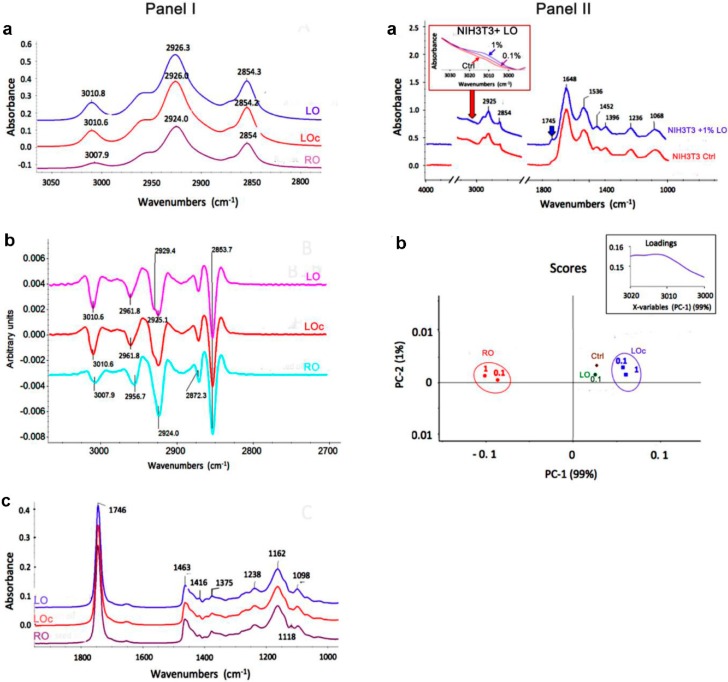
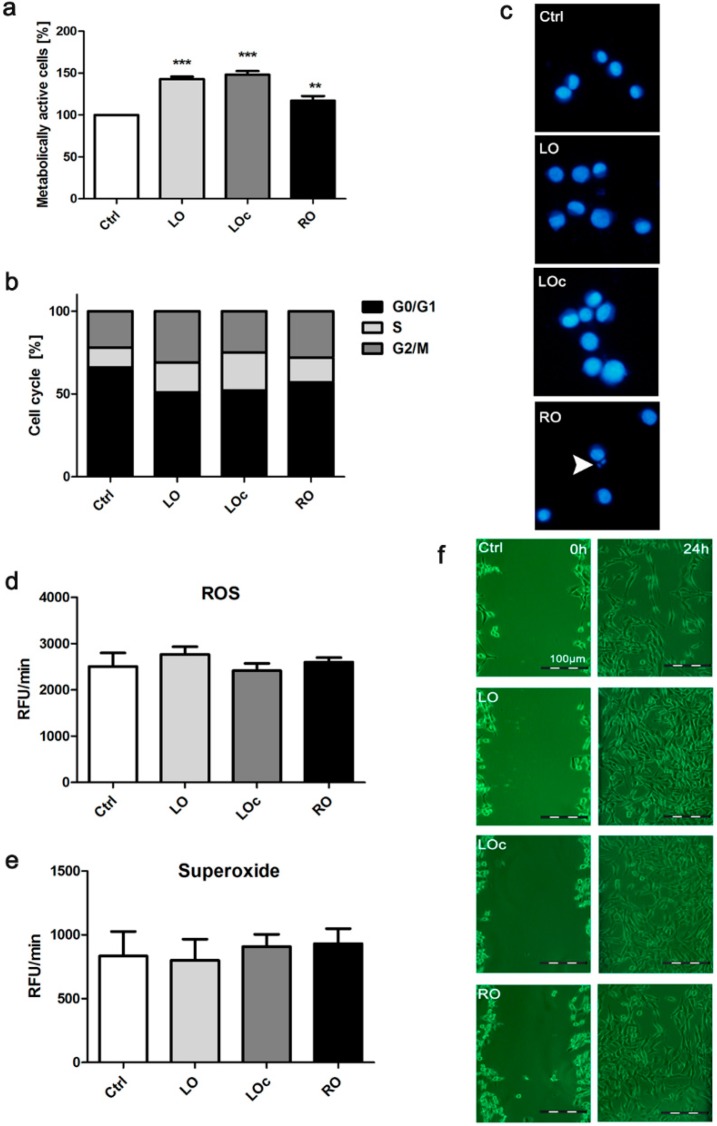
It has been postulated that fatty acids found in edible oils may exert beneficial health effects by the modulation of signaling pathways regulating cell differentiation and proliferation, especially in the treatment of cardiovascular diseases. In the present study, the biological effects of selected edible oils--linseed (LO) and rapeseed (RO) oils--were tested in vitro on fibroblast cells. The fatty acid profile of the oils was determined using gas chromatography and FTIR spectroscopy. LO was found to be rich in α-linolenic acid (ALA), whereas oleic acid was the most abundant species in RO. Fatty acids were taken up by the cells and promoted cell proliferation. No oxidative stress-mediated cytotoxic or genotoxic effects were observed after oil stimulation. Oils ameliorated the process of wound healing as judged by improved migration of fibroblasts to the wounding area. As ALA-rich LO exhibited the most potent wound healing activity, ALA may be considered a candidate for promoting the observed effect.
据推测,食用油中的脂肪酸可能通过调节细胞分化和增殖的信号通路发挥有益的健康作用,尤其是在心血管疾病的治疗中。在本研究中,选用亚麻籽油(LO)和菜籽油(RO)在成纤维细胞上进行体外生物学效应测试。采用气相色谱法和傅里叶变换红外光谱法测定了这些油的脂肪酸谱。发现LO富含α-亚麻酸(ALA),而油酸是RO中含量最丰富的成分。脂肪酸被细胞摄取并促进细胞增殖。油刺激后未观察到氧化应激介导的细胞毒性或遗传毒性作用。通过成纤维细胞向伤口区域迁移的改善判断,油改善了伤口愈合过程。由于富含ALA的LO表现出最有效的伤口愈合活性,ALA可被视为促进观察到的效果的候选物质。