Department of Agricultural Food, and Nutritional Science, University of Alberta, Edmonton, AB T6G 2P5 Canada.
J Anim Sci Technol. 2015 Dec 23;57:46. doi: 10.1186/s40781-015-0079-8. eCollection 2015.
This study examined whether activation of innate immunity and alterations of carbohydrate and lipid metabolism precede development of subclinical mastitis (SCM).
Blood samples were collected from the coccygeal vein from 100 Holstein dairy cows at -8, -4, disease diagnosis week, and +4 weeks postpartum. Six healthy cows (controls - CON) and six cows that showed clinical signs of SCM were selected for serum analyses. All serum samples were analyzed for acute phase proteins (APP) haptoglobin (Hp) and serum amyloid A (SAA); proinflammatory cytokines including interleukin 1 (IL-1), IL-6, and tumor necrosis factor (TNF) and serum lactate, BHBA, and NEFA concentration. Data of DMI, milk production, and milk composition were recorded and analyzed.
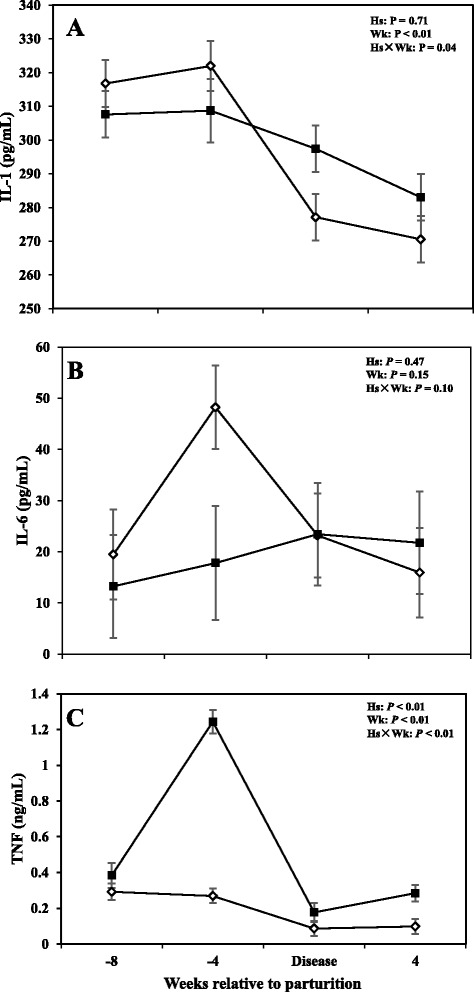
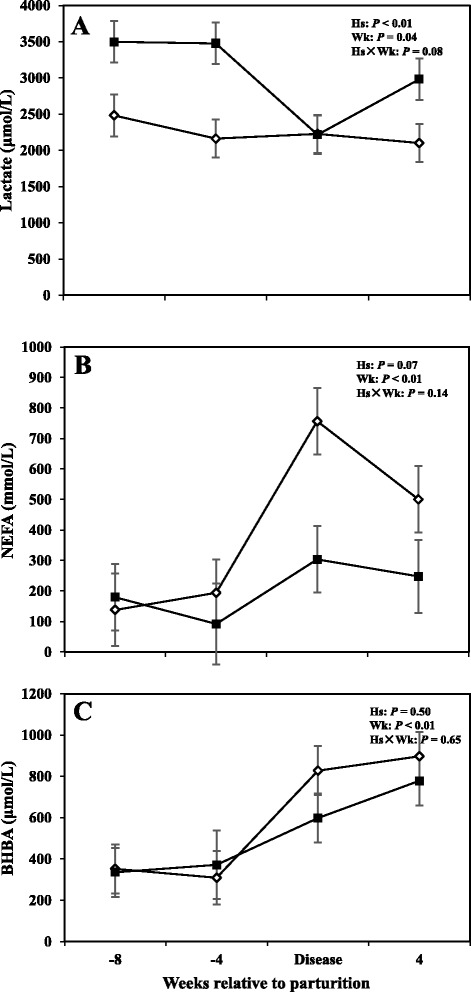
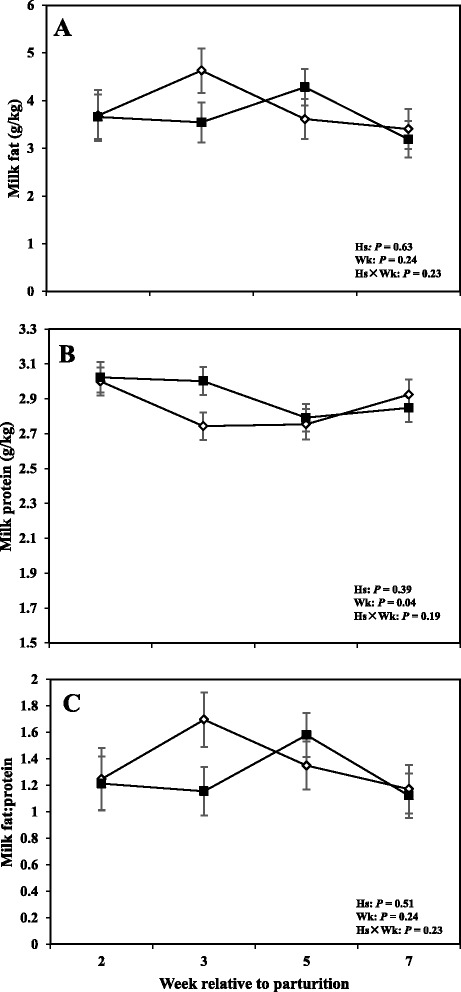
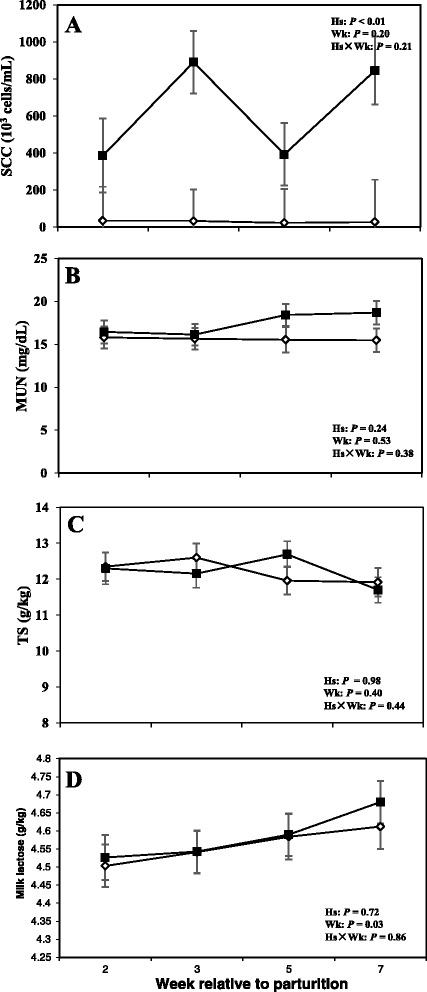
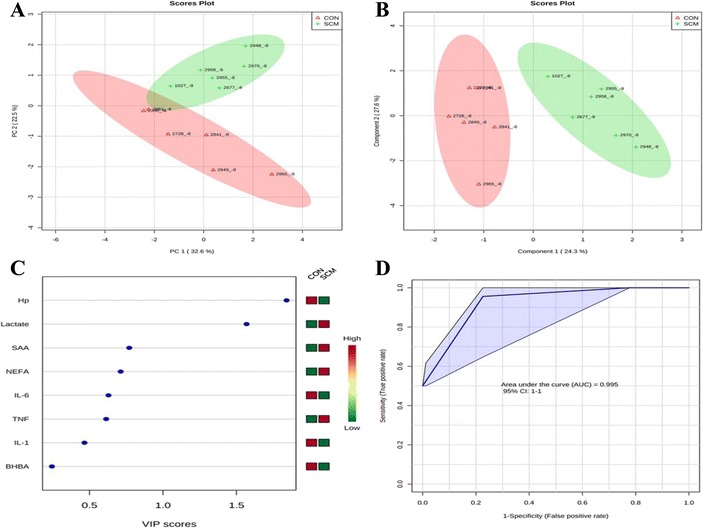
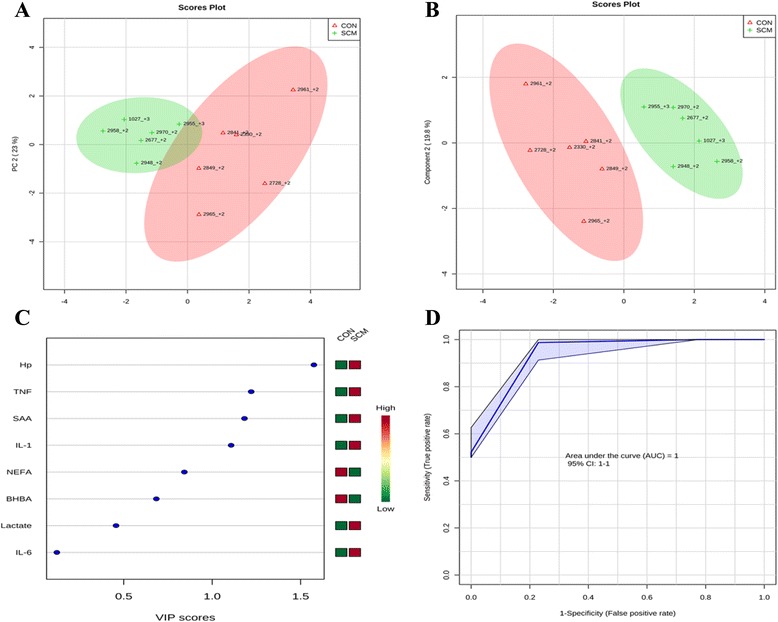
The results showed that cows with SCM had greater concentrations of SAA, TNF (P < 0.01), and lactate before expected day of parturition (P < 0.05) compared to CON cows. Cows with SCM showed greater concentrations of lactate starting at -8 weeks (P < 0.05) and TNF starting at -4 weeks prior to the expected day of parturition (P < 0.01). Interestingly, at -4 weeks, concentrations of IL-1 and Hp were lower in cows with SCM compared to healthy cows (P < 0.01) followed by an increase during the week of disease diagnosis (P < 0.05). Subclinical mastitis was associated with lower DMI, at -4 weeks before calving, milk production (P < 0.05) and increased somatic cell counts (SCC) (P < 0.01).
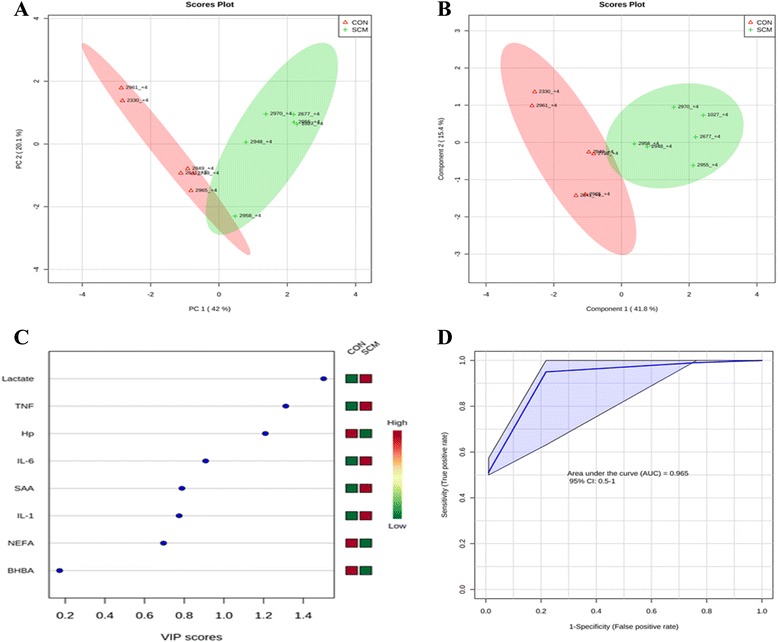
Results of this study suggest that SCM is preceded by activated innate immunity and altered carbohydrate metabolism in transition dairy cows. Moreover the results support the idea that Hp, lactate, and SAA, at -8 weeks, and TNF and IL-1 at -4 weeks can be used as early indicators to screen cows during dry off for disease state.
本研究旨在探讨固有免疫的激活和碳水化合物与脂质代谢的改变是否先于亚临床乳腺炎(SCM)的发生。
从 100 头荷斯坦奶牛的尾静脉采集血液样本,分别在-8、-4、疾病诊断周和产后 4 周采集。选择 6 头健康奶牛(对照组 - CON)和 6 头出现 SCM 临床症状的奶牛进行血清分析。所有血清样本均用于分析急性相蛋白(APP)触珠蛋白(Hp)和血清淀粉样蛋白 A(SAA);炎性细胞因子,包括白细胞介素 1(IL-1)、IL-6 和肿瘤坏死因子(TNF)以及血清乳酸、BHBA 和 NEFA 浓度。记录和分析 DMI、产奶量和乳成分的数据。
结果表明,与 CON 奶牛相比,患有 SCM 的奶牛在预计分娩前一天(P < 0.05)具有更高的 SAA、TNF(P < 0.01)和乳酸浓度。患有 SCM 的奶牛从-8 周开始(P < 0.05)和从预计分娩前 4 周开始(P < 0.01)具有更高的 TNF 浓度。有趣的是,在-4 周时,患有 SCM 的奶牛的 IL-1 和 Hp 浓度低于健康奶牛(P < 0.01),随后在疾病诊断周时增加(P < 0.05)。亚临床乳腺炎与产犊前 4 周的 DMI 降低、产奶量降低(P < 0.05)和体细胞计数升高(P < 0.01)有关。
本研究结果表明,SCM 发生之前,过渡奶牛固有免疫被激活且碳水化合物代谢发生改变。此外,结果支持这样的观点,即在-8 周时 Hp、乳酸和 SAA,以及在-4 周时 TNF 和 IL-1 可用作在干奶期筛查奶牛疾病状态的早期指标。