Vaillancourt Katy, LeBel Geneviève, Frenette Michel, Fittipaldi Nahuel, Gottschalk Marcelo, Grenier Daniel
Groupe de Recherche en Écologie Buccale (GREB), Faculté de Médecine Dentaire, Université Laval, Quebec City, Quebec, Canada.
Centre de Recherche en Infectiologie Porcine et Avicole (CRIPA), Fonds de Recherche du Québec - Nature et Technologies (FQRNT), Saint-Hyacinthe, Quebec, Canada.
PLoS One. 2015 Dec 28;10(12):e0145854. doi: 10.1371/journal.pone.0145854. eCollection 2015.
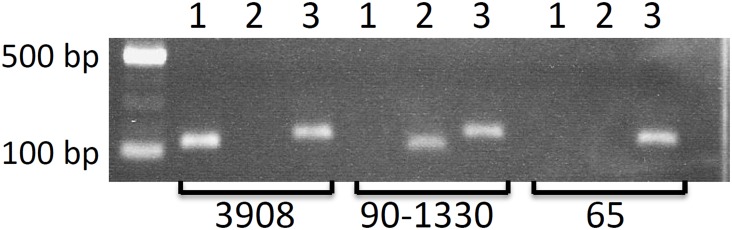
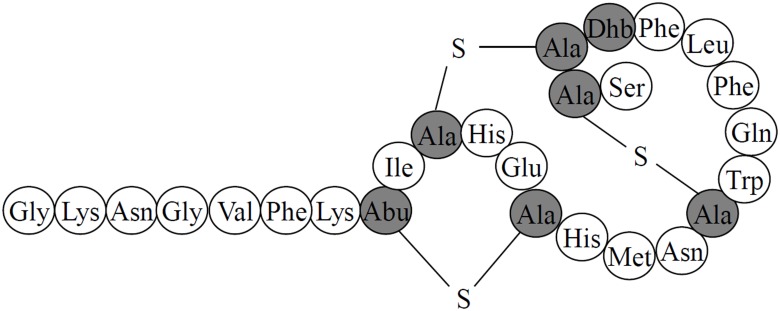
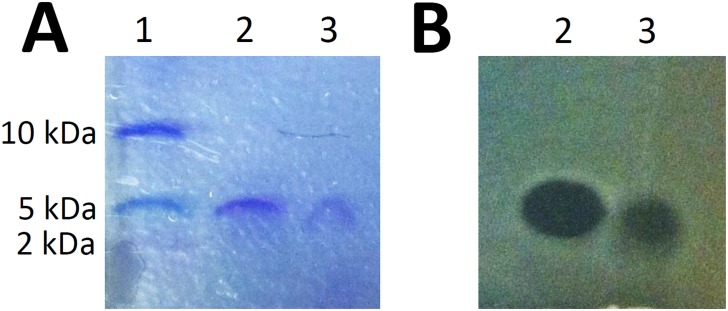
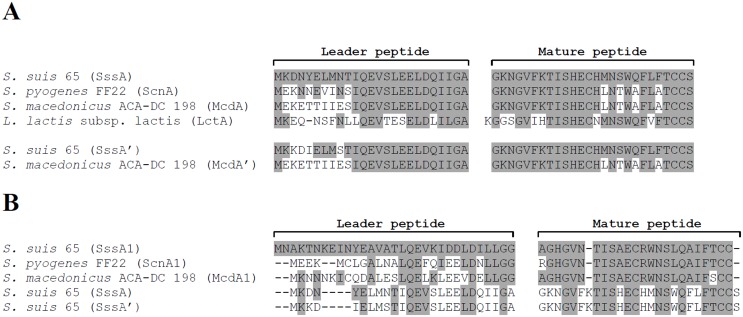
Bacteriocins are antimicrobial peptides of bacterial origin that are considered as a promising alternative to the use of conventional antibiotics. Recently, our laboratory reported the purification and characterization of two lantibiotics, suicin 90-1330 and suicin 3908, produced by the swine pathogen and zoonotic agent Streptococcus suis (serotype 2). In this study, a novel bacteriocin produced by S. suis has been identified and characterized. The producing strain S. suis 65 (serotype 2) was found to belong to the sequence type 28, that includes strains known to be weakly or avirulent in a mouse model. The bacteriocin, whose production was only possible following growth on solid culture medium, was purified to homogeneity by cationic exchange and reversed-phase high-pressure liquid chromatography. The bacteriocin, named suicin 65, was heat, pH and protease resistant. Suicin 65 was active against all S. suis isolates tested, including antibiotic resistant strains. Amino acid sequencing of the purified bacteriocin by Edman degradation revealed the presence of modified amino acids suggesting a lantibiotic. Using the partial sequence obtained, a blast was performed against published genomes of S. suis and allowed to identify a putative lantibiotic locus in the genome of S. suis 89-1591. From this genome, primers were designed and the gene cluster involved in the production of suicin 65 by S. suis 65 was amplified by PCR. Sequence analysis revealed the presence of ten open reading frames, including a duplicate of the structural gene. The structural genes (sssA and sssA') of suicin 65 encodes a 25-amino acid residue leader peptide and a 26-amino acid residue mature peptide yielding an active bacteriocin with a deducted molecular mass of 3,005 Da. Mature suicin 65 showed a high degree of identity with class I type B lantibiotics (globular structure) produced by Streptococcus pyogenes (streptococcin FF22; 84.6%), Streptococcus macedonicus (macedocin ACA-DC 198; 84.6%), and Lactococcus lactis subsp. lactis (lacticin 481; 74.1%). Further studies will evaluate the ability of suicin 65 or the producing strain to prevent experimental S. suis infections in pigs.
细菌素是源自细菌的抗菌肽,被认为是使用传统抗生素的一种有前景的替代物。最近,我们实验室报道了由猪病原体及人畜共患病原体猪链球菌(2型血清型)产生的两种羊毛硫抗生素——猪链球菌素90 - 1330和猪链球菌素3908的纯化及特性鉴定。在本研究中,一种由猪链球菌产生的新型细菌素已被鉴定和表征。产细菌素的菌株猪链球菌65(2型血清型)被发现属于序列型28,该序列型包括在小鼠模型中已知为弱毒或无毒的菌株。这种细菌素只有在固体培养基上生长后才能产生,通过阳离子交换和反相高压液相色谱法将其纯化至同质。这种细菌素名为猪链球菌素65,具有耐热、耐pH和耐蛋白酶的特性。猪链球菌素65对所有测试的猪链球菌分离株均有活性,包括耐药菌株。通过埃德曼降解法对纯化的细菌素进行氨基酸测序,结果显示存在修饰氨基酸,表明其为羊毛硫抗生素。利用获得的部分序列,针对已发表的猪链球菌基因组进行了比对,从而在猪链球菌89 - 1591的基因组中鉴定出一个假定的羊毛硫抗生素基因座。从该基因组中设计引物,通过PCR扩增出猪链球菌65产生猪链球菌素65所涉及的基因簇。序列分析显示存在十个开放阅读框,包括结构基因的一个重复拷贝。猪链球菌素65的结构基因(sssA和sssA')编码一个25个氨基酸残基的前导肽和一个26个氨基酸残基的成熟肽,产生一种推测分子量为3005 Da的活性细菌素。成熟的猪链球菌素65与化脓性链球菌(链球菌素FF22;84.6%)、马其顿链球菌(马其顿菌素ACA - DC 198;84.6%)和乳酸乳球菌乳酸亚种(乳酸乳球菌素481;74.1%)产生的I类B型羊毛硫抗生素(球状结构)具有高度同源性。进一步的研究将评估猪链球菌素65或产细菌素菌株预防猪实验性猪链球菌感染的能力。