Ha Sungji, Sohn In-Jung, Kim Namwook, Sim Hyeon Jeong, Cheon Keun-Ah
Department of Psychiatry, Institute of Behavioral Science in Medicine and Yonsei Autism Laboratory, Yonsei University College of Medicine, Seoul 03722, Korea.
Department of Psychiatry, Institute of Behavioral Science in Medicine and Yonsei Autism Laboratory, Yonsei University College of Medicine, Seoul 03722, Korea. ; Division of Child and Adolescent Psychiatry, Severance Children's Hospital, Yonsei University College of Medicine, Seoul 03722, Korea.
Exp Neurobiol. 2015 Dec;24(4):273-84. doi: 10.5607/en.2015.24.4.273. Epub 2015 Dec 16.
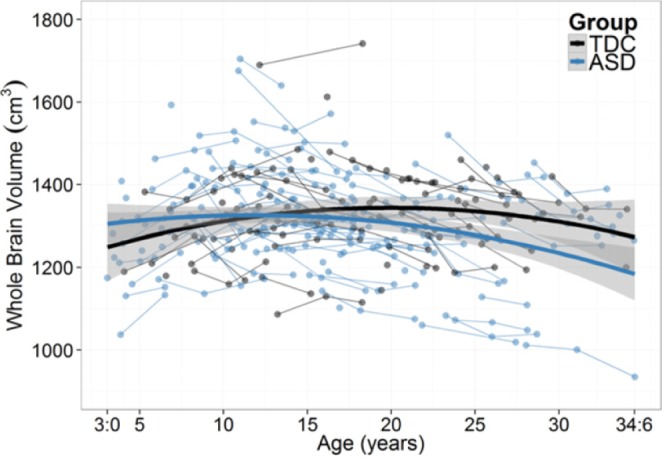
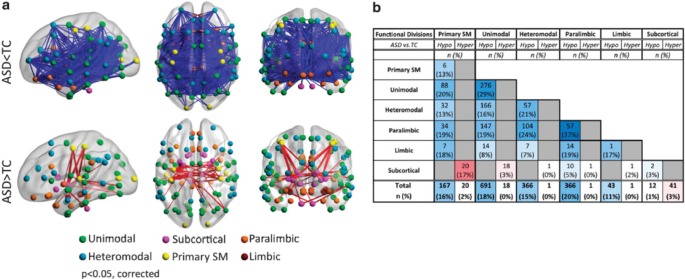
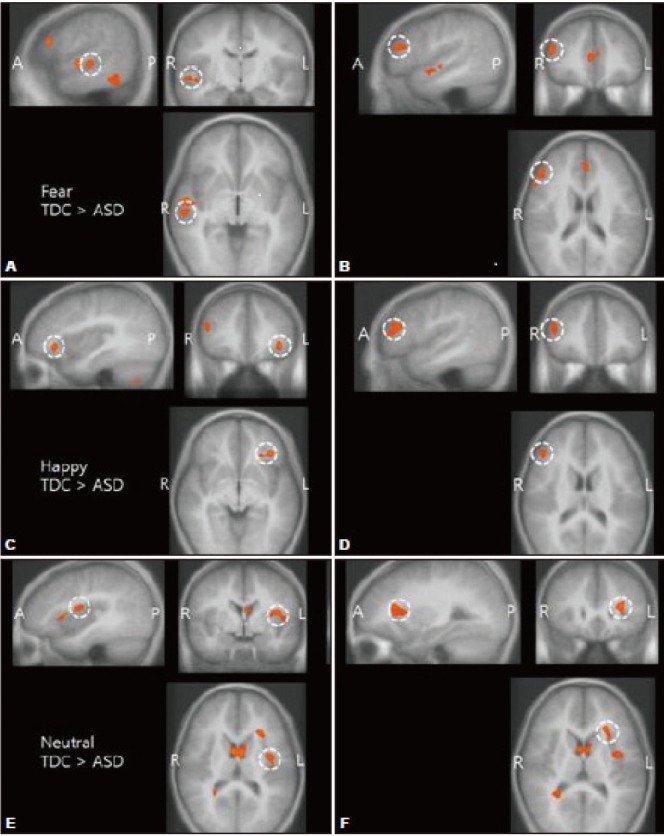
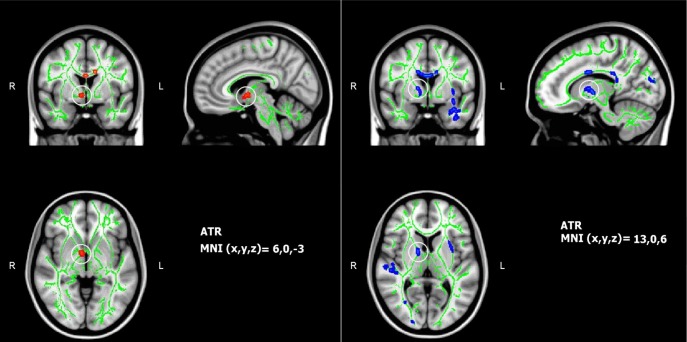
Autism spectrum disorder (ASD) is a highly prevalent neurodevelopmental disorder characterized by impaired social communication and restricted and repetitive behaviors (RRBs). Over the past decade, neuroimaging studies have provided considerable insights underlying neurobiological mechanisms of ASD. In this review, we introduce recent findings from brain imaging studies to characterize the brains of ASD across the human lifespan. Results of structural Magnetic Resonance Imaging (MRI) studies dealing with total brain volume, regional brain structure and cortical area are summarized. Using task-based functional MRI (fMRI), many studies have shown dysfunctional activation in critical areas of social communication and RRBs. We also describe several data to show abnormal connectivity in the ASD brains. Finally, we suggest the possible strategies to study ASD brains in the future.
自闭症谱系障碍(ASD)是一种高度普遍的神经发育障碍,其特征为社交沟通受损以及存在局限的重复行为(RRBs)。在过去十年中,神经影像学研究为ASD的神经生物学机制提供了相当多的见解。在本综述中,我们介绍了来自脑成像研究的最新发现,以描述人类整个生命周期中ASD患者的大脑特征。总结了有关全脑体积、脑区结构和皮质面积的结构磁共振成像(MRI)研究结果。使用基于任务的功能磁共振成像(fMRI),许多研究表明社交沟通和RRBs关键区域存在功能失调的激活。我们还描述了一些数据,以显示ASD患者大脑中存在的异常连接。最后,我们提出了未来研究ASD患者大脑的可能策略。