Zhao Huanbin, Liu Ping, Zhang Ruihong, Wu Min, Li Donghe, Zhao Xuemei, Zhang Chun, Jiao Bo, Chen Bing, Chen Zhu, Ren Ruibao
State Key Laboratory of Medical Genomics, Institute of Health Sciences, Shanghai Institutes for Biological Sciences and Graduate School, Chinese Academy of Sciences, Shanghai Institute of Hematology, Collaborative Innovation Center of Hematology, Ruijin Hospital affiliated to Shanghai Jiao Tong University School of Medicine, 200025, Shanghai, China.
State Key Laboratory of Medical Genomics, Shanghai Institute of Hematology, Collaborative Innovation Center of Hematology, Ruijin Hospital affiliated to Shanghai Jiao Tong University School of Medicine, 200025, Shanghai, China.
J Hematol Oncol. 2015 Dec 30;8:132. doi: 10.1186/s13045-015-0226-1.
We have previously shown that palmitoylation is essential for NRAS leukemogenesis, suggesting that targeting RAS palmitoylation may be an effective therapy for NRAS-related cancers. For KRAS-driven cancer, although much research has been focused on the KRAS4B splice variant, which does not undergo palmitoylation, KRAS4A has recently been shown to play an essential role in the development of carcinogen-induced lung cancer in mice and to be widely expressed in human cancers. However, the role of palmitoylation in KRAS4A tumorigenesis is not clear.
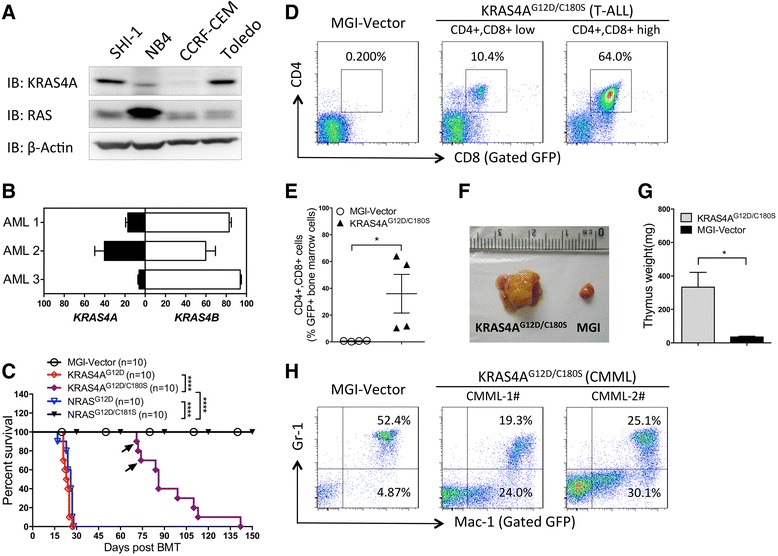
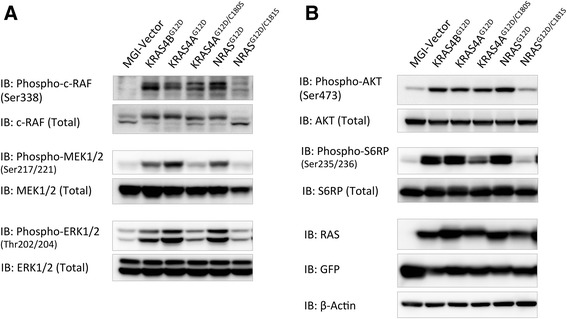
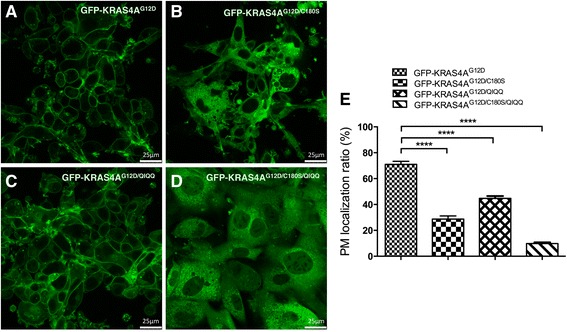
The expression of KRAS4A in KRAS-mutated leukemia cell lines and acute myeloid leukemia (AML) cells were checked using western blotting and reverse transcriptions-quantitative polymerase chain reaction (RT-qPCR) analysis, respectively. The leukemogenic potentials of oncogenic KRAS4A and its palmitoylation-defective mutants were examined by a mouse bone marrow transduction and transplantation model and the in vitro transformation assays. The activation of the RAS downstream signaling pathways and the membrane localizations of the KRAS4A and its mutants were analyzed via western blot analysis and confocal microscopy, respectively.
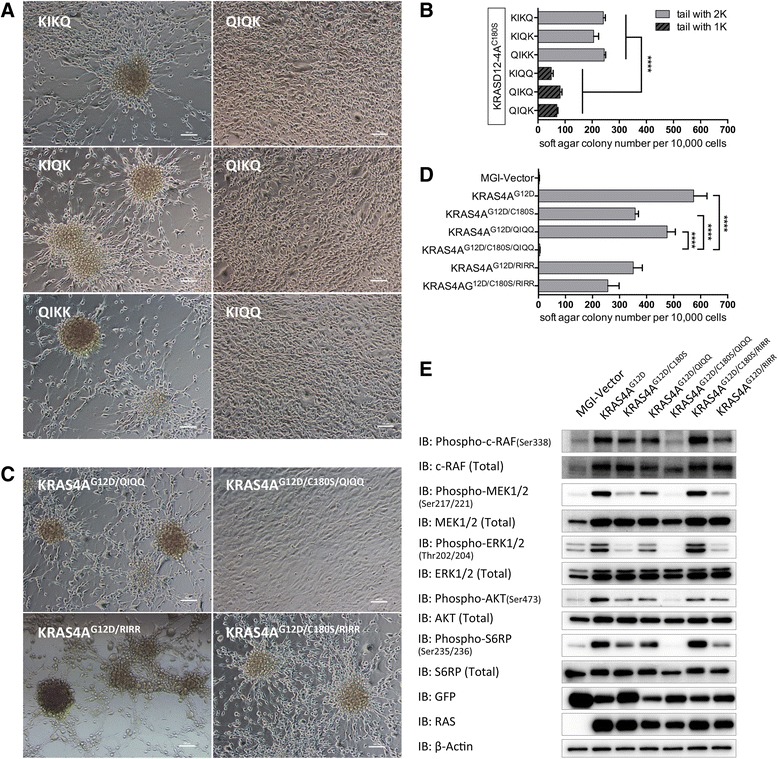
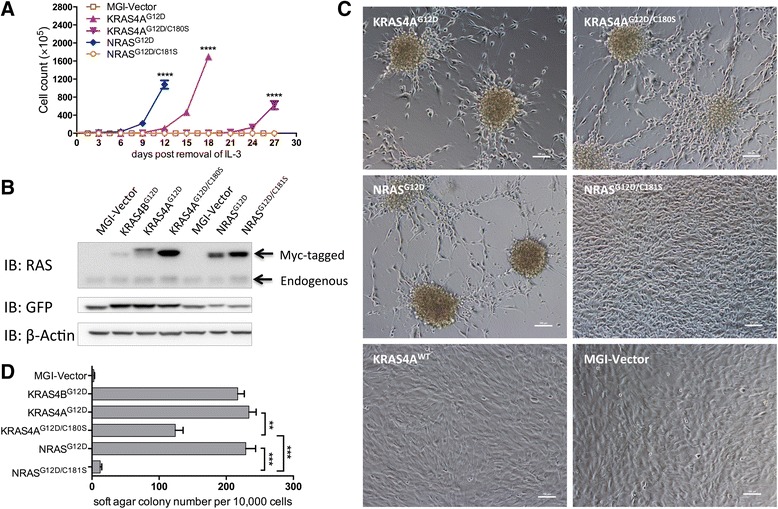
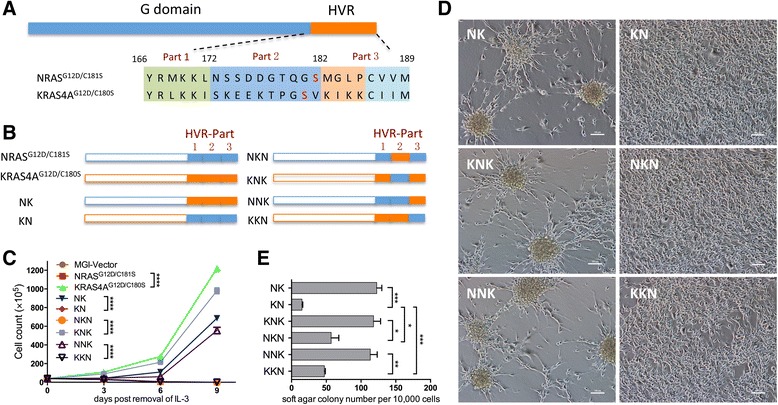
We show here that KRAS4A is expressed in human leukemia cell lines and in AML cells harboring KRAS mutations and that mutation at the palmitoylation site of oncogenic KRAS4A significantly abrogates its leukemogenic potential. However, unlike NRAS, palmitoylation-defective KRAS4A still induces leukemia in mice, albeit with a much longer latency. Using NRAS/KRAS4A chimeric constructs, we found that the KIKK motif of KRAS4A contributes to the transforming activity of KRAS4A. Mutations at both palmitoylation site and the KIKK motif abolish the ability of oncogenic KRAS4A to induce leukemia in mice.
Our studies suggest that therapies targeting RAS palmitoylation may also be effective in treating KRAS4A associated malignancies and that interfering the KIKK membrane-targeting motif would enhance the therapeutic effectiveness.
我们之前已经表明,棕榈酰化对于NRAS白血病发生至关重要,这表明靶向RAS棕榈酰化可能是治疗NRAS相关癌症的有效方法。对于KRAS驱动的癌症,尽管许多研究集中在不发生棕榈酰化的KRAS4B剪接变体上,但最近发现KRAS4A在小鼠致癌物诱导的肺癌发生中起重要作用,并且在人类癌症中广泛表达。然而,棕榈酰化在KRAS4A肿瘤发生中的作用尚不清楚。
分别使用蛋白质免疫印迹法和逆转录-定量聚合酶链反应(RT-qPCR)分析检测KRAS突变白血病细胞系和急性髓细胞白血病(AML)细胞中KRAS4A的表达。通过小鼠骨髓转导和移植模型以及体外转化试验检测致癌性KRAS4A及其棕榈酰化缺陷突变体的白血病发生潜能。分别通过蛋白质免疫印迹分析和共聚焦显微镜分析RAS下游信号通路的激活以及KRAS4A及其突变体的膜定位。
我们在此表明,KRAS4A在人白血病细胞系和携带KRAS突变的AML细胞中表达,致癌性KRAS4A棕榈酰化位点的突变显著消除其白血病发生潜能。然而,与NRAS不同,棕榈酰化缺陷的KRAS4A仍能在小鼠中诱发白血病,尽管潜伏期长得多。使用NRAS/KRAS4A嵌合构建体,我们发现KRAS4A的KIKK基序有助于KRAS4A的转化活性。棕榈酰化位点和KIKK基序的突变均消除了致癌性KRAS4A在小鼠中诱发白血病的能力。
我们的研究表明,靶向RAS棕榈酰化的疗法可能也对治疗KRAS4A相关恶性肿瘤有效,并且干扰KIKK膜靶向基序将提高治疗效果。