Gunderson Andrew J, Kaneda Megan M, Tsujikawa Takahiro, Nguyen Abraham V, Affara Nesrine I, Ruffell Brian, Gorjestani Sara, Liudahl Shannon M, Truitt Morgan, Olson Peter, Kim Grace, Hanahan Douglas, Tempero Margaret A, Sheppard Brett, Irving Bryan, Chang Betty Y, Varner Judith A, Coussens Lisa M
Department of Cell, Developmental and Cancer Biology, Oregon Health and Science University, Portland, Oregon.
Moores Cancer Center, University of California, San Diego, La Jolla, California.
Cancer Discov. 2016 Mar;6(3):270-85. doi: 10.1158/2159-8290.CD-15-0827. Epub 2015 Dec 29.
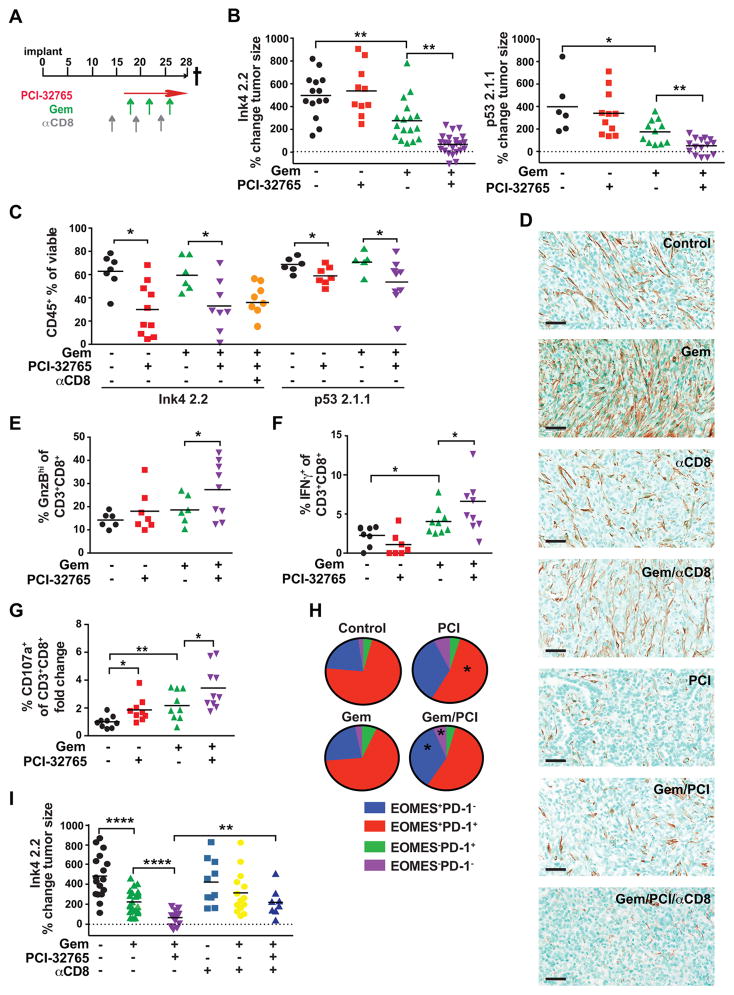
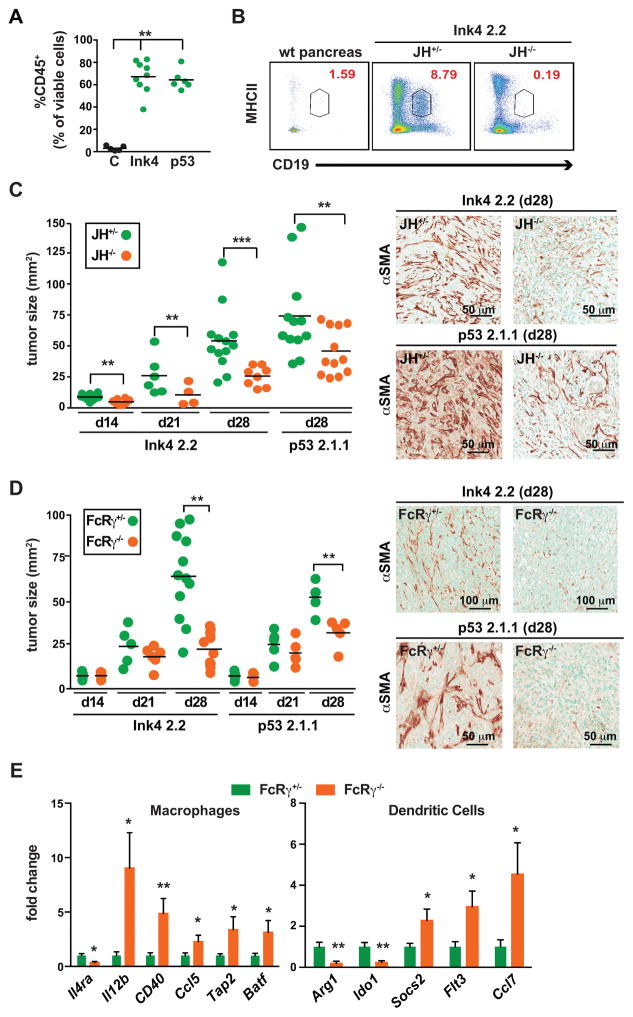
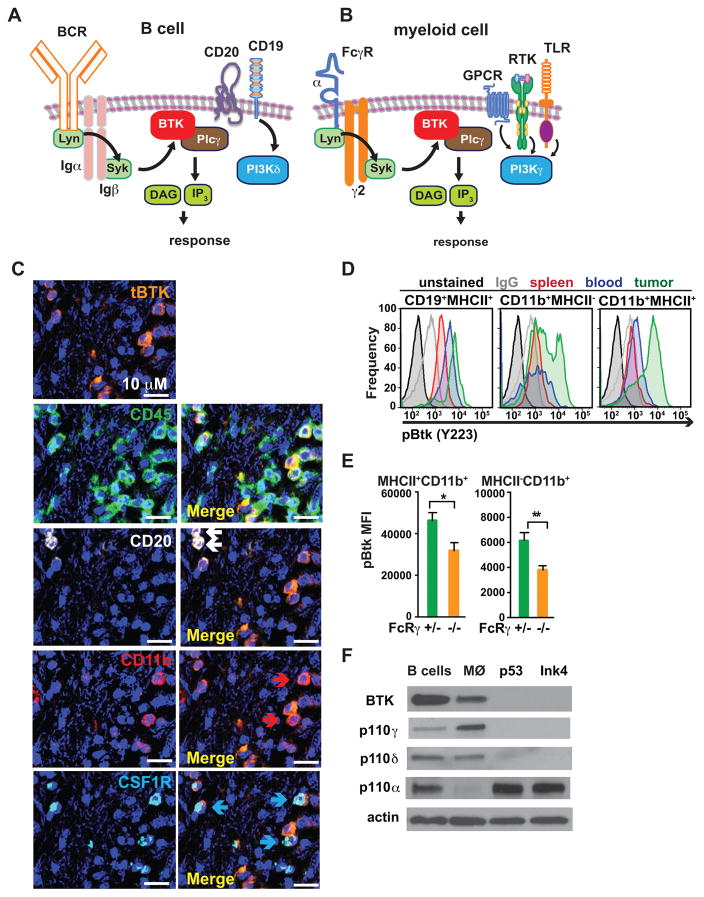
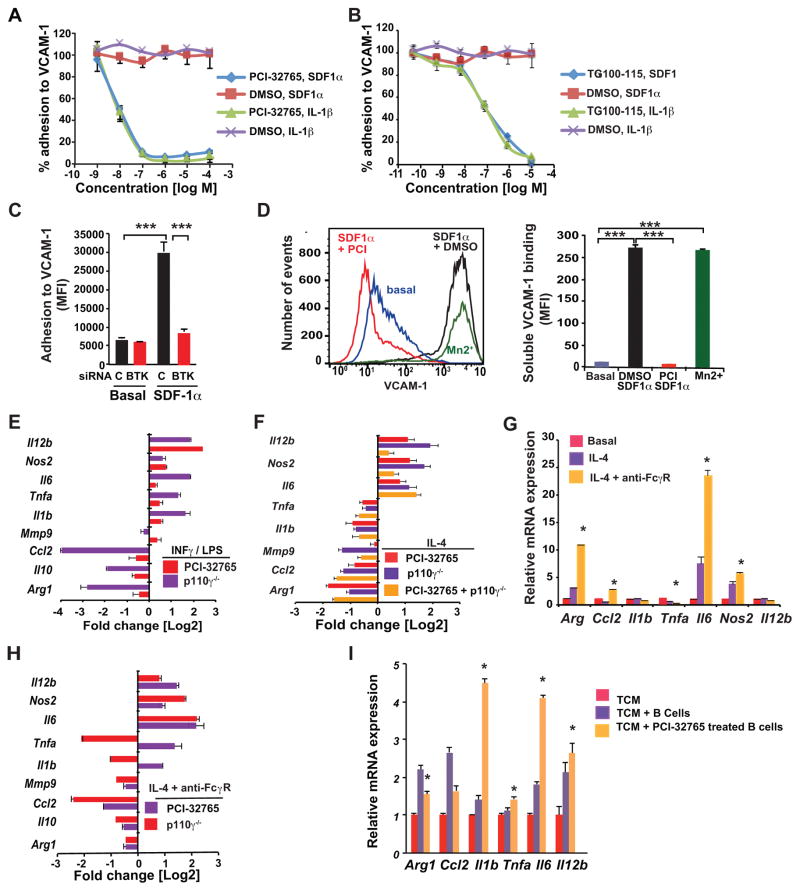
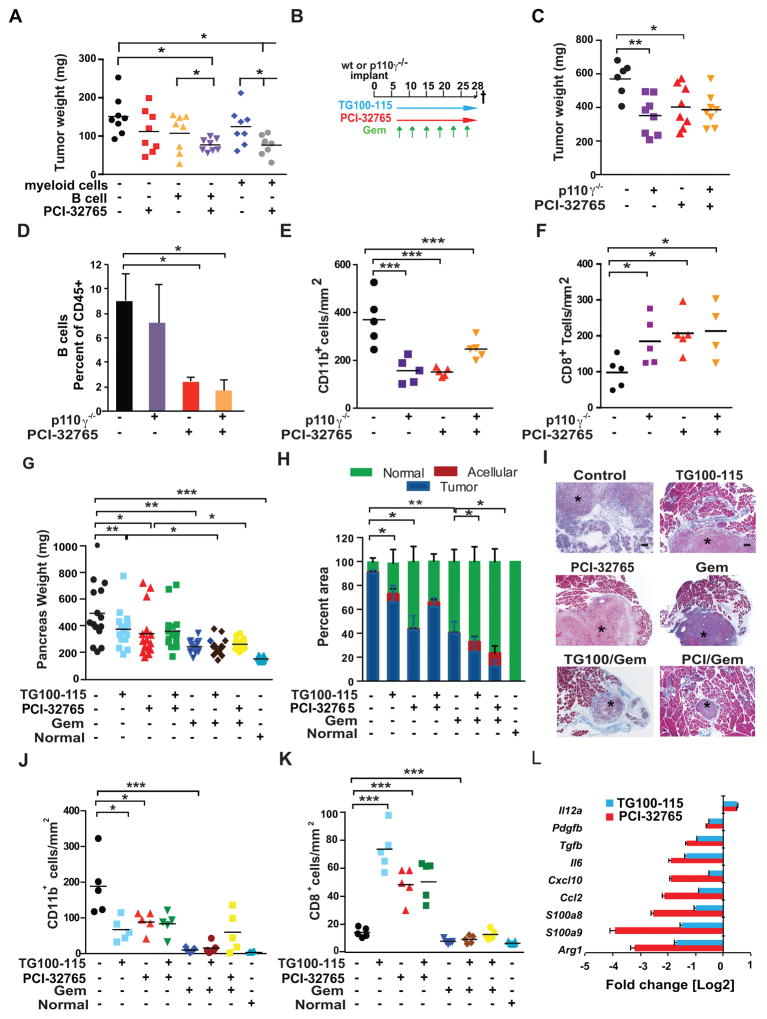
Pancreas ductal adenocarcinoma (PDAC) has one of the worst 5-year survival rates of all solid tumors, and thus new treatment strategies are urgently needed. Here, we report that targeting Bruton tyrosine kinase (BTK), a key B-cell and macrophage kinase, restores T cell-dependent antitumor immune responses, thereby inhibiting PDAC growth and improving responsiveness to standard-of-care chemotherapy. We report that PDAC tumor growth depends on cross-talk between B cells and FcRγ(+) tumor-associated macrophages, resulting in T(H)2-type macrophage programming via BTK activation in a PI3Kγ-dependent manner. Treatment of PDAC-bearing mice with the BTK inhibitor PCI32765 (ibrutinib) or by PI3Kγ inhibition reprogrammed macrophages toward a T(H)1 phenotype that fostered CD8(+) T-cell cytotoxicity, and suppressed PDAC growth, indicating that BTK signaling mediates PDAC immunosuppression. These data indicate that pharmacologic inhibition of BTK in PDAC can reactivate adaptive immune responses, presenting a new therapeutic modality for this devastating tumor type.
We report that BTK regulates B-cell and macrophage-mediated T-cell suppression in pancreas adenocarcinomas. Inhibition of BTK with the FDA-approved inhibitor ibrutinib restores T cell-dependent antitumor immune responses to inhibit PDAC growth and improves responsiveness to chemotherapy, presenting a new therapeutic modality for pancreas cancer.
胰腺导管腺癌(PDAC)是所有实体瘤中5年生存率最差的肿瘤之一,因此迫切需要新的治疗策略。在此,我们报告靶向布鲁顿酪氨酸激酶(BTK),一种关键的B细胞和巨噬细胞激酶,可恢复T细胞依赖性抗肿瘤免疫反应,从而抑制PDAC生长并提高对标准护理化疗的反应性。我们报告PDAC肿瘤生长依赖于B细胞与FcRγ(+)肿瘤相关巨噬细胞之间的相互作用,通过PI3Kγ依赖性方式激活BTK导致TH2型巨噬细胞编程。用BTK抑制剂PCI32765(依鲁替尼)治疗荷PDAC小鼠或通过抑制PI3Kγ可将巨噬细胞重编程为促进CD8(+) T细胞细胞毒性的TH1表型,并抑制PDAC生长,表明BTK信号传导介导PDAC免疫抑制。这些数据表明,在PDAC中对BTK进行药理抑制可重新激活适应性免疫反应,为这种毁灭性肿瘤类型提供了一种新的治疗方式。
我们报告BTK调节胰腺腺癌中B细胞和巨噬细胞介导的T细胞抑制。用FDA批准的抑制剂依鲁替尼抑制BTK可恢复T细胞依赖性抗肿瘤免疫反应以抑制PDAC生长并提高对化疗的反应性,为胰腺癌提供了一种新的治疗方式。