Oates Angela, McBain Andrew J
a Manchester Pharmacy School , The University of Manchester , Manchester , UK.
Biofouling. 2016;32(1):25-33. doi: 10.1080/08927014.2015.1117607.
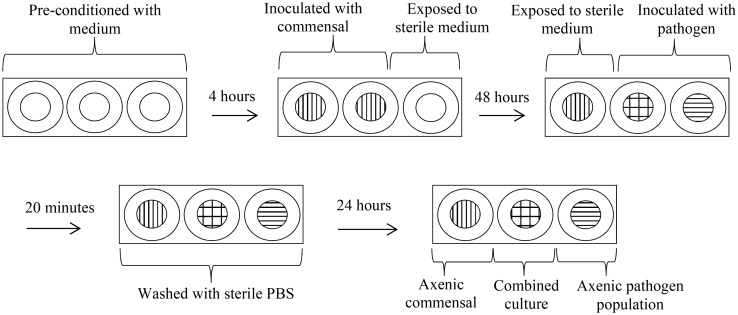
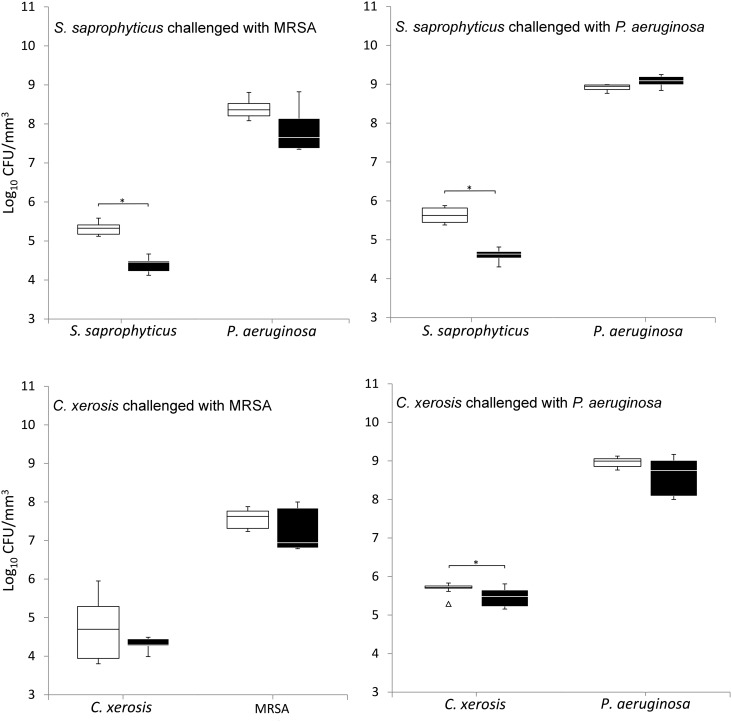
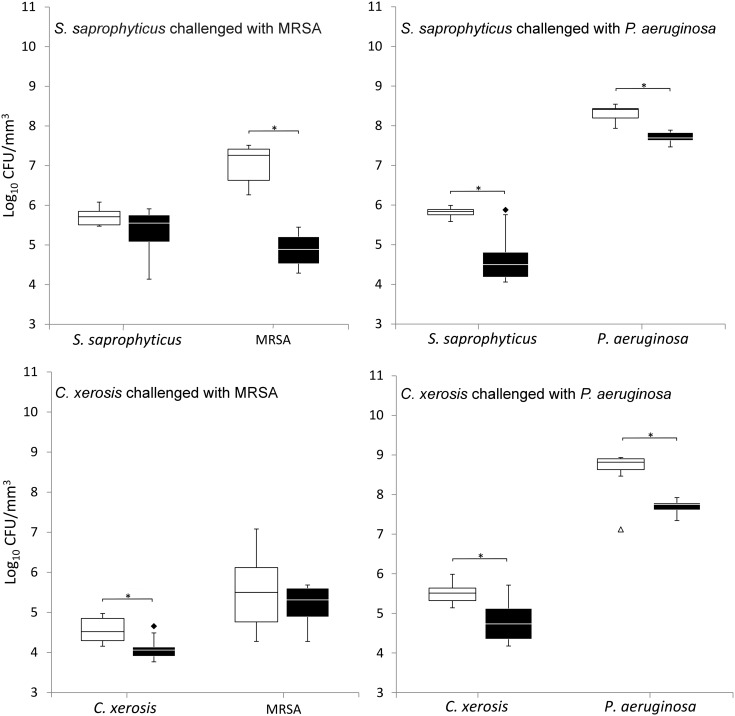
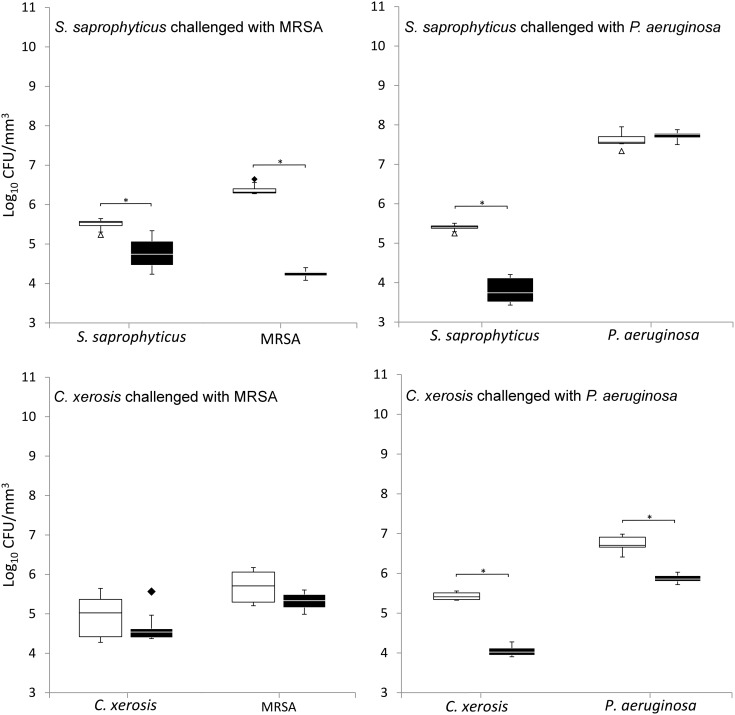
Sessile cultures of the skin bacteria Staphylococcus saprophyticus and Corynebacterium xerosis were grown using novel fine-celled foam substrata to test the outcome of challenge by methicillin-resistant Staphylococcus aureus or Pseudomonas aeruginosa under three growth medium regimens (simulated sweat, simulated serum or simulated sweat substituted with simulated serum during the microbial challenge). S. saprophyticus and C. xerosis significantly limited MRSA and P. aeruginosa immigration respectively, under the simulated sweat and serum medium regimes. Under the substitution medium regime however, MRSA and P. aeruginosa integrated into pre-established biofilms to a significantly greater extent, attaining cell densities similar to the axenic controls. The outcome of challenge was influenced by the medium composition and test organism but could not be predicted based on planktonic competition assays or growth dynamics. Interactions between skin and wound isolates could be modelled using the fine-celled foam-based system. This model could be used to further investigate interactions and also in preclinical studies of antimicrobial wound care regimens.
使用新型细孔泡沫基质培养皮肤细菌腐生葡萄球菌和干燥棒状杆菌的贴壁培养物,以测试在三种生长培养基方案(模拟汗液、模拟血清或在微生物攻击期间用模拟血清替代模拟汗液)下耐甲氧西林金黄色葡萄球菌或铜绿假单胞菌攻击的结果。在模拟汗液和血清培养基方案下,腐生葡萄球菌和干燥棒状杆菌分别显著限制了耐甲氧西林金黄色葡萄球菌和铜绿假单胞菌的迁移。然而,在替代培养基方案下,耐甲氧西林金黄色葡萄球菌和铜绿假单胞菌在更大程度上整合到预先形成的生物膜中,达到与无菌对照相似的细胞密度。攻击结果受培养基组成和测试生物体的影响,但不能根据浮游竞争试验或生长动力学来预测。皮肤和伤口分离株之间的相互作用可以使用基于细孔泡沫的系统进行建模。该模型可用于进一步研究相互作用,也可用于抗菌伤口护理方案的临床前研究。