Guillory Ashley N, Clayton Robert P, Herndon David N, Finnerty Celeste C
Department of Surgery, University of Texas Medical Branch, 301 University Blvd., Galveston, TX 77555, USA.
Shriners Hospitals for Children<sup>®</sup>-Galveston, 815 Market St. Galveston, TX 77550, USA.
Int J Mol Sci. 2016 Jan 2;17(1):53. doi: 10.3390/ijms17010053.
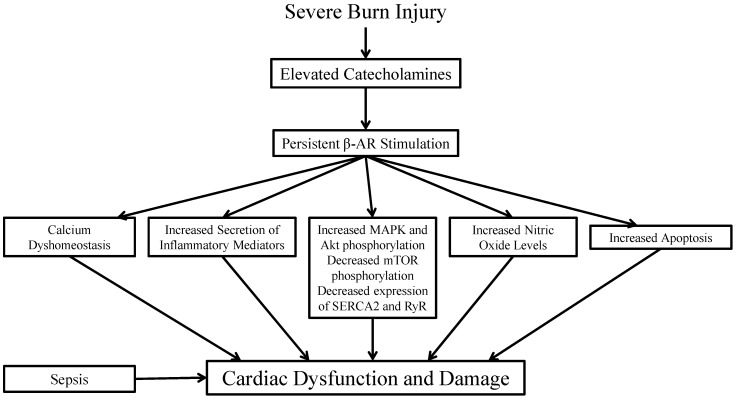
Severe burn profoundly affects organs both proximal and distal to the actual burn site. Cardiovascular dysfunction is a well-documented phenomenon that increases morbidity and mortality following a massive thermal trauma. Beginning immediately post-burn, during the ebb phase, cardiac function is severely depressed. By 48 h post-injury, cardiac function rebounds and the post-burn myocardium becomes tachycardic and hyperinflammatory. While current clinical trials are investigating a variety of drugs targeted at reducing aspects of the post-burn hypermetabolic response such as heart rate and cardiac work, there is still a paucity of knowledge regarding the underlying mechanisms that induce cardiac dysfunction in the severely burned. There are many animal models of burn injury, from rodents, to sheep or swine, but the majority of burn related cardiovascular investigations have occurred in rat and mouse models. This literature review consolidates the data supporting the prevalent role that β-adrenergic receptors play in mediating post-burn cardiac dysfunction and the idea that pharmacological modulation of this receptor family is a viable therapeutic target for resolving burn-induced cardiac deficits.
严重烧伤会对实际烧伤部位近端和远端的器官产生深远影响。心血管功能障碍是一种有充分文献记载的现象,在严重热创伤后会增加发病率和死亡率。烧伤后立即开始,在低潮期,心脏功能会严重受损。受伤后48小时,心脏功能反弹,烧伤后的心肌会出现心动过速和炎症反应增强。虽然目前的临床试验正在研究各种旨在减轻烧伤后高代谢反应(如心率和心脏做功)的药物,但对于严重烧伤导致心脏功能障碍的潜在机制仍知之甚少。有许多烧伤损伤的动物模型,从啮齿动物到绵羊或猪,但大多数与烧伤相关的心血管研究都在大鼠和小鼠模型中进行。这篇文献综述整合了支持β-肾上腺素能受体在介导烧伤后心脏功能障碍中普遍作用的数据,以及对该受体家族进行药理调节是解决烧伤引起的心脏缺陷的可行治疗靶点这一观点。