Okutsu Noriya, Morohoshi Tomohiro, Xie Xiaonan, Kato Norihiro, Ikeda Tsukasa
Department of Material and Environmental Chemistry, Graduate School of Engineering, Utsunomiya University, 7-1-2 Yoto, Utsunomiya, Tochigi 321-8585, Japan.
Center for Bioscience Research and Education, Utsunomiya University, 350 Mine-machi, Utsunomiya, Tochigi 321-8505, Japan.
Sensors (Basel). 2015 Dec 30;16(1):44. doi: 10.3390/s16010044.
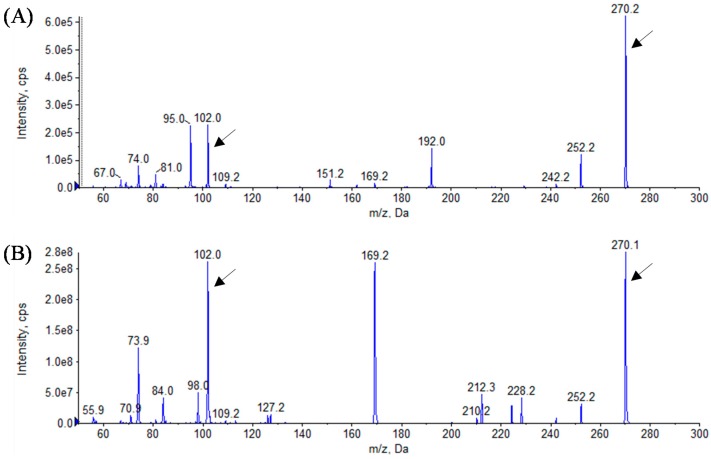
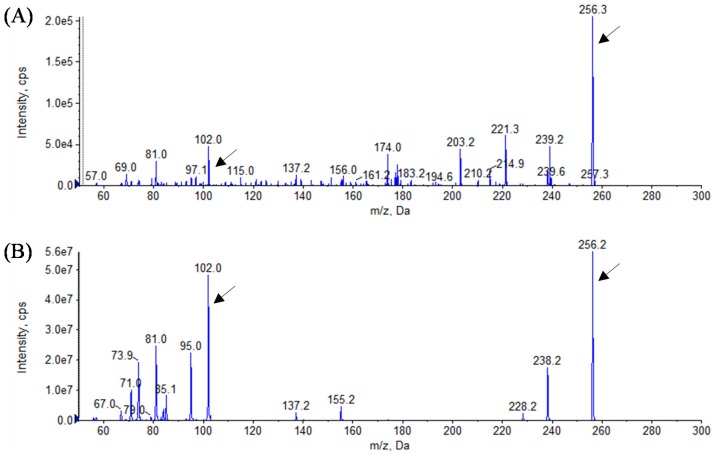
The cooling water systems are used to remove heat generated in the various industries. Biofouling of the cooling water systems causes blocking of condenser pipes and the heat exchanger tubes. In many Gram-negative bacteria, N-acylhomoserine lactone (AHL) are used as quorum-sensing signal molecule and associated with biofilm formation. To investigate the relationship between quorum sensing and biofouling in the cooling water system, we isolated a total of 192 bacterial strains from the five cooling water systems, and screened for AHL production. Seven isolates stimulated AHL-mediated purple pigment production in AHL reporter strain Chromobacterium violaceum CV026 or VIR07. Based on their 16S rRNA gene sequences, AHL-producing isolates were assigned to Aeromonas hydrophila, Lysobacter sp., Methylobacterium oryzae, and Bosea massiliensis. To the best of our knowledge, B. massiliensis and Lysobacter sp. have not been reported as AHL-producing species in the previous researches. AHLs extracted from the culture supernatants of B. massiliensis and Lysobacter sp. were identified by liquid chromatography-mass spectrometry. AHLs produced by B. massiliensis were assigned as N-hexanoyl-L-homoserine lactone (C6-HSL), N-(3-oxohexanoyl)-L-homoserine lactone (3-oxo-C6-HSL), and N-(3-oxooctanoyl)-L-homoserine lactone (3-oxo-C8-HSL). AHLs produced by Lysobacter sp. were assigned as N-decanoyl-L-homoserine lactone (C10-HSL) and N-(3-oxodecanoyl)-L-homoserine lactone (3-oxo-C10-HSL). This is the first report of identification of AHLs produced by B. massiliensis and Lysobacter sp. isolated from the cooling water system.
冷却水系统用于去除各行业产生的热量。冷却水系统的生物污垢会导致冷凝器管道和热交换器管道堵塞。在许多革兰氏阴性细菌中,N-酰基高丝氨酸内酯(AHL)用作群体感应信号分子,并与生物膜形成有关。为了研究群体感应与冷却水系统生物污垢之间的关系,我们从五个冷却水系统中总共分离出192株细菌菌株,并筛选AHL的产生情况。七株分离株刺激AHL报告菌株紫色色杆菌CV026或VIR07产生AHL介导的紫色色素。根据它们的16S rRNA基因序列,产生AHL的分离株被鉴定为嗜水气单胞菌、溶杆菌属、水稻甲基杆菌和马赛博斯氏菌。据我们所知,马赛博斯氏菌和溶杆菌属在以往研究中尚未被报道为产生AHL的物种。通过液相色谱-质谱法鉴定了从马赛博斯氏菌和溶杆菌属培养上清液中提取的AHL。马赛博斯氏菌产生的AHL被鉴定为N-己酰基-L-高丝氨酸内酯(C6-HSL)、N-(3-氧代己酰基)-L-高丝氨酸内酯(3-氧代-C6-HSL)和N-(3-氧代辛酰基)-L-高丝氨酸内酯(3-氧代-C8-HSL)。溶杆菌属产生的AHL被鉴定为N-癸酰基-L-高丝氨酸内酯(C10-HSL)和N-(3-氧代癸酰基)-L-高丝氨酸内酯(3-氧代-C10-HSL)。这是首次报道从冷却水系统中分离出的马赛博斯氏菌和溶杆菌属产生的AHL的鉴定情况。