Wang Jianchang, Liu Libing, Li Ruiwen, Wang Jinfeng, Fu Qi, Yuan Wanzhe
Inspection and Quarantine Technical Center of Hebei Entry-Exit Inspection and Quarantine Bureau, 318 Heping West Rd, Xinhua District, Shijiazhuang, 050051, Hebei, China.
College of Veterinary Medicine, Agricultural University of Hebei, 38 Lingyusi Street, Baoding, 071001, Hebei, China.
Arch Virol. 2016 Apr;161(4):1015-8. doi: 10.1007/s00705-015-2738-y. Epub 2016 Jan 5.
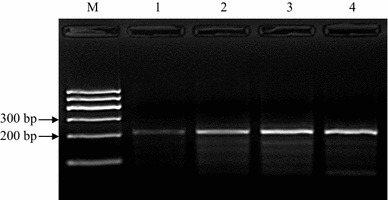
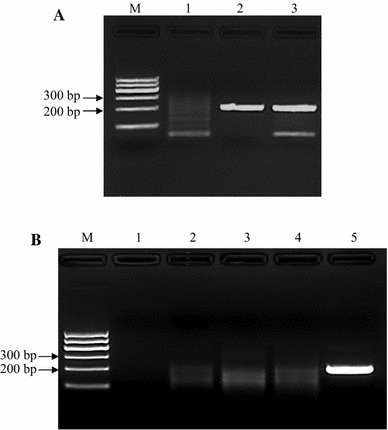
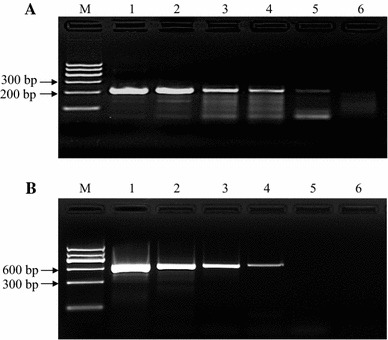
A novel recombinase polymerase amplification (RPA)-based method for detection of canine parvovirus type 2 (CPV-2) was developed. Sensitivity analysis showed that the detection limit of RPA was 10 copies of CPV-2 genomic DNA. RPA amplified both CPV-2a and -2b DNA but did not amplify the template of other important dog viruses (CCoV, PRV or CDV), demonstrating high specificity. The method was further validated with 57 canine fecal samples. An outstanding advantage of RPA is that it is an isothermal reaction and can be performed in a water bath, making RPA a potential alternative method for CPV-2 detection in resource-limited settings.
开发了一种基于新型重组酶聚合酶扩增(RPA)的检测犬细小病毒2型(CPV-2)的方法。敏感性分析表明,RPA的检测限为10拷贝的CPV-2基因组DNA。RPA可扩增CPV-2a和-2b DNA,但不扩增其他重要犬病毒(犬冠状病毒、伪狂犬病病毒或犬瘟热病毒)的模板,显示出高特异性。该方法用57份犬粪便样本进一步验证。RPA的一个突出优点是它是等温反应,可在水浴中进行,这使得RPA成为资源有限环境中CPV-2检测的一种潜在替代方法。