Moosavi Fatemeh, Hosseini Razieh, Saso Luciano, Firuzi Omidreza
Medicinal and Natural Products Chemistry Research Center, Shiraz University of Medical Sciences, Shiraz, Iran; Department of Pharmacology, School of Veterinary Medicine, Shiraz University, Shiraz, Iran.
Department of Physiology and Pharmacology "Vittorio Erspamer", Sapienza University of Rome, Rome, Italy.
Drug Des Devel Ther. 2015 Dec 21;10:23-42. doi: 10.2147/DDDT.S96936. eCollection 2016.
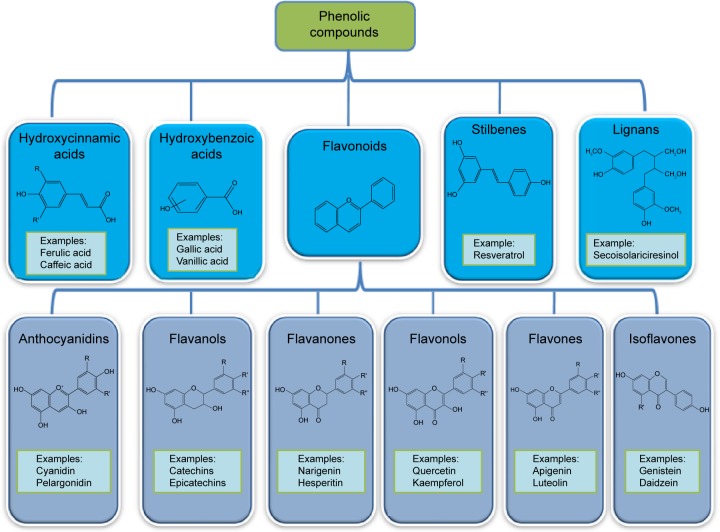
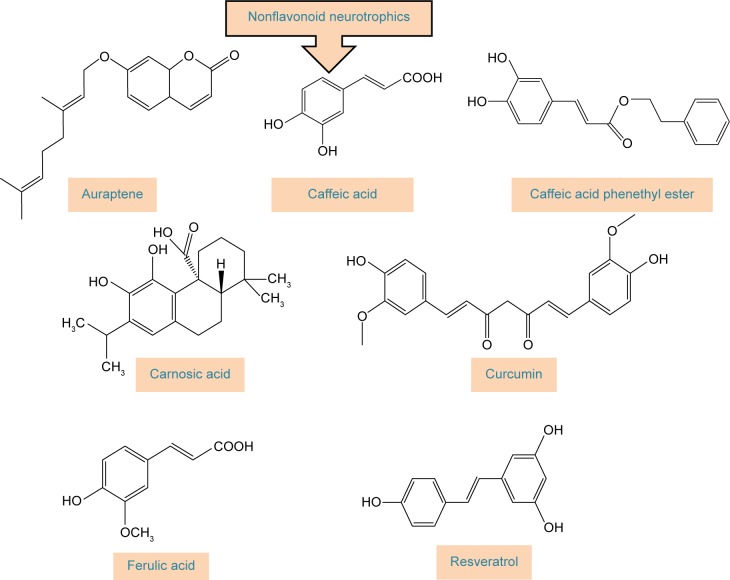
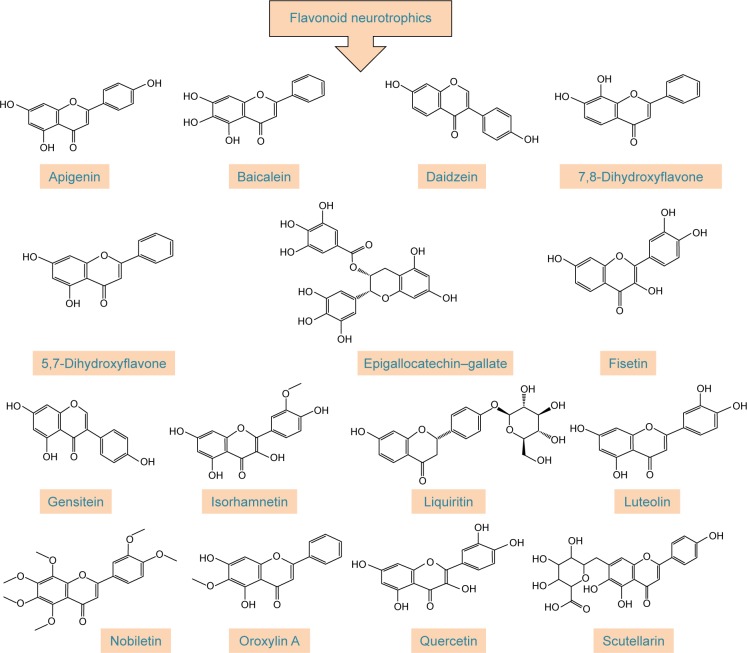
Polyphenols are an important class of phytochemicals, and several lines of evidence have demonstrated their beneficial effects in the context of a number of pathologies including neurodegenerative disorders such as Alzheimer's and Parkinson's disease. In this report, we review the studies on the effects of polyphenols on neuronal survival, growth, proliferation and differentiation, and the signaling pathways involved in these neurotrophic actions. Several polyphenols including flavonoids such as baicalein, daidzein, luteolin, and nobiletin as well as nonflavonoid polyphenols such as auraptene, carnosic acid, curcuminoids, and hydroxycinnamic acid derivatives including caffeic acid phentyl ester enhance neuronal survival and promote neurite outgrowth in vitro, a hallmark of neuronal differentiation. Assessment of underlying mechanisms, especially in PC12 neuronal-like cells, reveals that direct agonistic effect on tropomyosin receptor kinase (Trk) receptors, the main receptors of neurotrophic factors including nerve growth factor (NGF) and brain-derived neurotrophic factor (BDNF) explains the action of few polyphenols such as 7,8-dihydroxyflavone. However, several other polyphenolic compounds activate extracellular signal-regulated kinase (ERK) and phosphoinositide 3-kinase (PI3K)/Akt pathways. Increased expression of neurotrophic factors in vitro and in vivo is the mechanism of neurotrophic action of flavonoids such as scutellarin, daidzein, genistein, and fisetin, while compounds like apigenin and ferulic acid increase cyclic adenosine monophosphate response element-binding protein (CREB) phosphorylation. Finally, the antioxidant activity of polyphenols reflected in the activation of Nrf2 pathway and the consequent upregulation of detoxification enzymes such as heme oxygenase-1 as well as the contribution of these effects to the neurotrophic activity have also been discussed. In conclusion, a better understanding of the neurotrophic effects of polyphenols and the concomitant modulations of signaling pathways is useful for designing more effective agents for management of neurodegenerative diseases.
多酚是一类重要的植物化学物质,多项证据表明它们在包括阿尔茨海默病和帕金森病等神经退行性疾病在内的多种病理情况下具有有益作用。在本报告中,我们综述了关于多酚对神经元存活、生长、增殖和分化的影响以及这些神经营养作用所涉及的信号通路的研究。几种多酚,包括黄酮类化合物如黄芩素、大豆苷元、木犀草素和川陈皮素,以及非黄酮类多酚如金合欢醇、肌醇六磷酸、姜黄素类化合物和包括咖啡酸苯乙酯在内的羟基肉桂酸衍生物,在体外可增强神经元存活并促进神经突生长,这是神经元分化的一个标志。对潜在机制的评估,特别是在PC12神经元样细胞中的评估,揭示了对原肌球蛋白受体激酶(Trk)受体的直接激动作用,神经营养因子(包括神经生长因子(NGF)和脑源性神经营养因子(BDNF))的主要受体,解释了少数多酚如7,8 - 二羟基黄酮的作用。然而,其他几种多酚化合物可激活细胞外信号调节激酶(ERK)和磷脂酰肌醇3 - 激酶(PI3K)/Akt通路。黄酮类化合物如野黄芩苷、大豆苷元、染料木黄酮和漆黄素在体外和体内神经营养因子表达的增加是其神经营养作用的机制,而芹菜素和阿魏酸等化合物可增加环磷酸腺苷反应元件结合蛋白(CREB)的磷酸化。最后,还讨论了多酚在激活Nrf2通路中所反映的抗氧化活性以及随之而来的解毒酶如血红素加氧酶 - 1的上调,以及这些作用对神经营养活性的贡献。总之,更好地理解多酚的神经营养作用以及信号通路的伴随调节,对于设计更有效的神经退行性疾病治疗药物是有用的。