Zhang Jun, Li Rong-Ke, Chen Kee-Hsin, Ge Long, Tian Jin-Hui
School of Nursing, Gansu University of Chinese Medicine, Lanzhou, China.
Department of Nursing, Taipei Municipal Wanfang Hospital, Taipei Medical University, Taipei, Taiwan Evidence-Based Knowledge Translation Center, Taipei Municipal Wanfang Hospital, Taipei Medical University, Taipei, Taiwan School of Nursing, Taipei Medical University, Taipei , Taiwan.
BMJ Open. 2016 Jan 5;6(1):e010264. doi: 10.1136/bmjopen-2015-010264.
Catheter-related infection (CRI) is a difficult clinical problem in renal medicine, with blood stream infections occurring in up to 40% of patients with haemodialysis (HD) catheters, conferring significant rates of morbidity and mortality. Several approaches have been assessed as a means to prevent CRI. Currently, an intervention that is the source of much discussion is the use of antimicrobial lock solutions (ALS). A number of past conventional meta-analyses have compared different ALS with heparin. However, there is no consensus recommendation regarding which type of ALS is best. The purpose of our study is to carry out a network meta-analysis comparing the efficacy of different ALS for prevention of CRI in patients with HD and ranking these ALS for practical consideration.
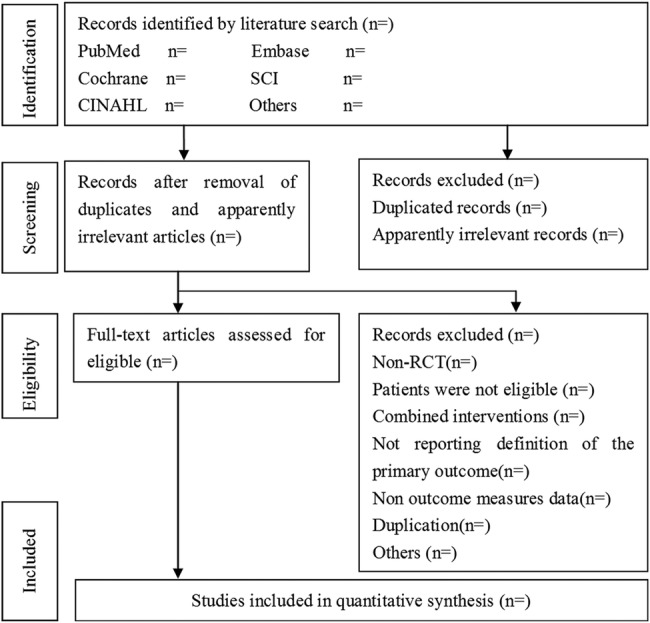
We will search six electronic databases, earlier relevant meta-analyses and reference lists of included studies for randomised controlled trials (RCTs) that compared ALS for preventing episodes of CRI in patients with HD either head-to-head or against control interventions using non-ALS. Study selection and data collection will be performed by two reviewers independently. The Cochrane Risk of Bias Tool will be used to assess the quality of included studies. The primary outcome of efficacy will be catheter-related bloodstream infection (CRBSI). We will perform a Bayesian network meta-analysis to compare the relative efficacy of different ALS by WinBUGS (V.1.4.3) and STATA (V.13.0). The quality of evidence will be assessed by GRADE.
Ethical approval is not required given that this study includes no confidential personal data and no data on interventions on patients. The results of this study will be submitted to a peer-review journal for publication.
CRD42015027010.
导管相关感染(CRI)是肾脏病学中一个棘手的临床问题,高达40%的血液透析(HD)导管患者会发生血流感染,导致显著的发病率和死亡率。已经评估了几种方法来预防CRI。目前,备受讨论的一种干预措施是使用抗菌封管溶液(ALS)。过去一些传统的荟萃分析比较了不同的ALS与肝素。然而,关于哪种类型的ALS最佳尚无共识性建议。我们研究的目的是进行一项网状荟萃分析,比较不同ALS预防HD患者CRI的疗效,并对这些ALS进行排序以供实际参考。
我们将检索六个电子数据库、早期相关的荟萃分析以及纳入研究的参考文献列表,以查找比较ALS预防HD患者CRI发作的随机对照试验(RCT),这些试验采用直接比较或与使用非ALS的对照干预措施进行比较。研究选择和数据收集将由两名审阅者独立进行。将使用Cochrane偏倚风险工具评估纳入研究的质量。疗效的主要结局将是导管相关血流感染(CRBSI)。我们将通过WinBUGS(V.1.4.3)和STATA(V.13.0)进行贝叶斯网状荟萃分析,以比较不同ALS的相对疗效。证据质量将通过GRADE进行评估。
鉴于本研究不包括机密个人数据且不涉及对患者的干预数据,因此无需伦理批准。本研究的结果将提交给同行评审期刊发表。
CRD42015027010。