Xia Liangwei, Yao Shuqiao
Medical Psychological Institute, Second Xiangya Hospital, Central South University Changsha, Hunan, China.
Medical Psychological Institute, Second Xiangya Hospital, Central South UniversityChangsha, Hunan, China; National Technology Institute of PsychiatryChangsha, Hunan, China.
Front Behav Neurosci. 2015 Dec 21;9:329. doi: 10.3389/fnbeh.2015.00329. eCollection 2015.
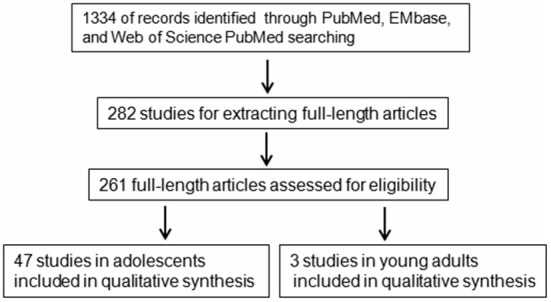
Numerous studies have reported on the roles of genetic factors in the development of depression in adolescents and young adults. However, there are few systematic reviews that update our understanding of adolescent depression with the biological findings identifying the roles of gene expression and/or polymorphism(s). This review systematically summarized the findings that clearly identified the contribution of a gene to the risk of depression in adolescents between the ages of 10 and 19 years old and young adults between the ages of 20 and 25 years old. Data were obtained through searching PubMed, Embase, and Web of Science. A total of 47 studies on early adolescence and three studies on young adults were included in the current review. Most articles studied genes in the serotonergic system (n = 26), dopaminergic system (n = 3), and the Brain-derived neurotropic factor (BDNF) gene (n = 12). 92.3% of studies (24/26) identified positive associations of 5-HTTLPR polymorphism with depressive illness or depressive symptoms. 83.3% of studies (10/12) found positive association between BDNF Val66Met genotype and adolescent depressive symptoms. More studies should be conducted on the 18 genes reported in a few studies to clarify their roles in the risk for adolescent depression.
许多研究报告了遗传因素在青少年和青年抑郁症发展中的作用。然而,很少有系统综述用确定基因表达和/或多态性作用的生物学发现来更新我们对青少年抑郁症的理解。本综述系统总结了明确确定基因对10至19岁青少年和20至25岁青年抑郁症风险贡献的研究结果。通过检索PubMed、Embase和Web of Science获取数据。本综述共纳入了47项关于青春期早期的研究和3项关于青年的研究。大多数文章研究了血清素能系统(n = 26)、多巴胺能系统(n = 3)和脑源性神经营养因子(BDNF)基因(n = 12)中的基因。92.3%的研究(24/26)确定5-HTTLPR多态性与抑郁疾病或抑郁症状呈正相关。83.3%的研究(10/12)发现BDNF Val66Met基因型与青少年抑郁症状呈正相关。对于少数研究中报告的18个基因,应开展更多研究以阐明它们在青少年抑郁症风险中的作用。