Ximénez-Embún Miguel G, Ortego Félix, Castañera Pedro
Department of Environmental Biology, Centro de Investigaciones Biológicas, CSIC, Madrid, Spain.
PLoS One. 2016 Jan 6;11(1):e0145275. doi: 10.1371/journal.pone.0145275. eCollection 2016.
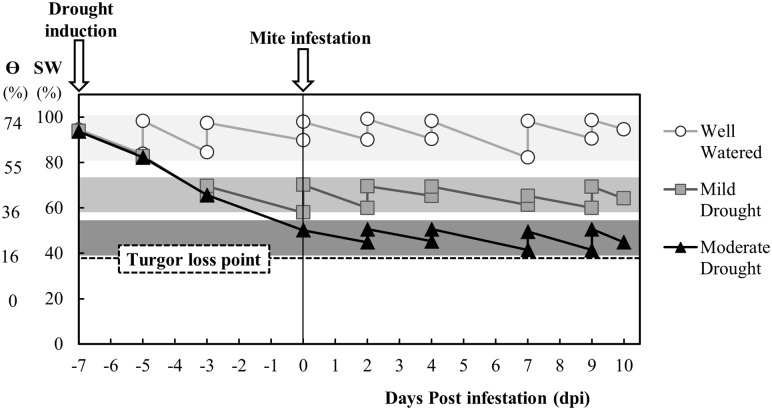
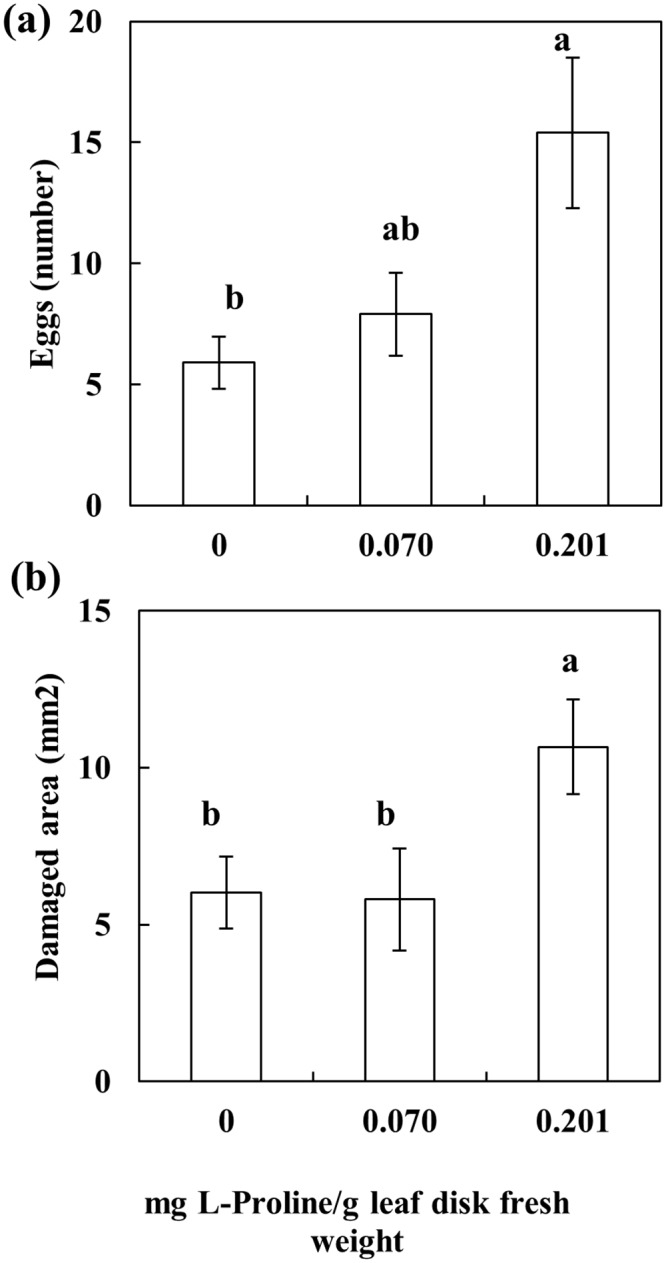
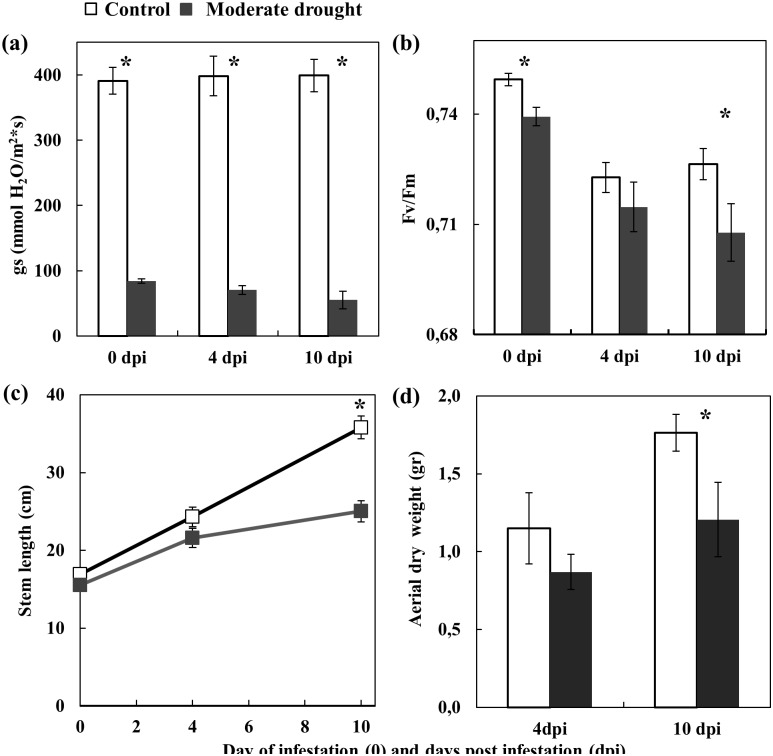
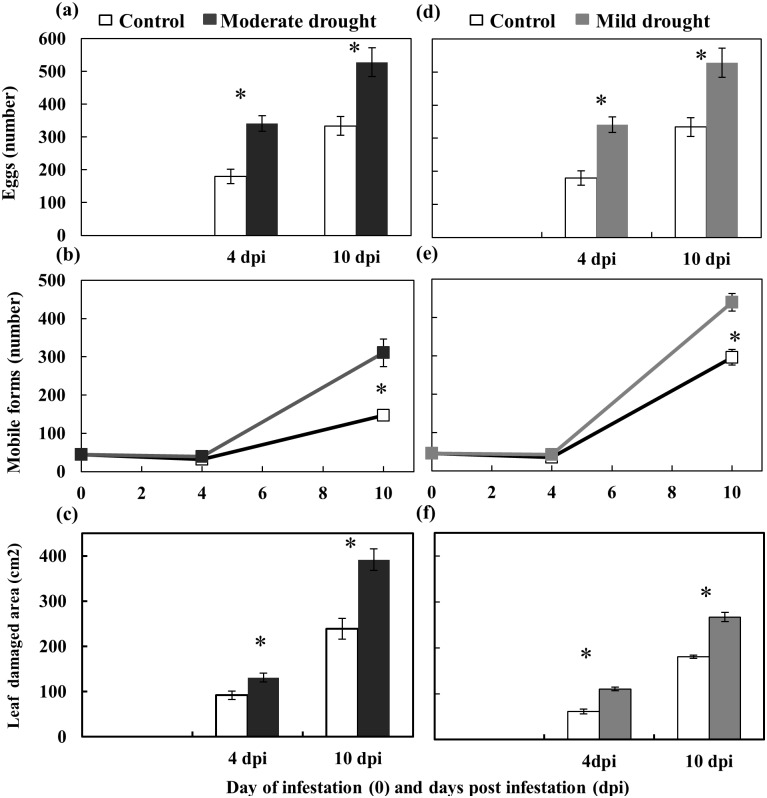
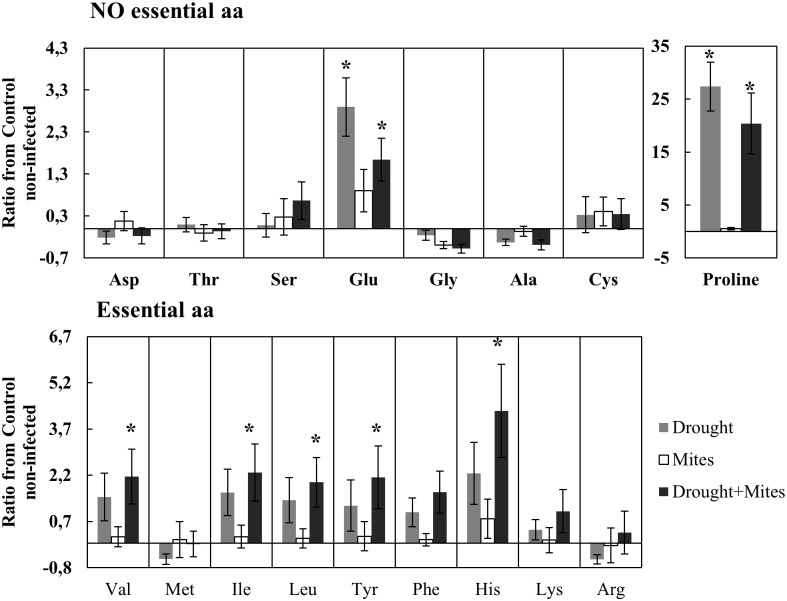
Climate change will bring more drought periods that will have an impact on the irrigation practices of some crops like tomato, from standard water regime to deficit irrigation. This will promote changes in plant metabolism and alter their interactions with biotic stressors. We have tested if mild or moderate drought-stressed tomato plants (simulating deficit irrigation) have an effect on the biological traits of the invasive tomato red spider mite, Tetranychus evansi. Our data reveal that T evansi caused more leaf damage to drought-stressed tomato plants (≥1.5 fold for both drought scenarios). Mite performance was also enhanced, as revealed by significant increases of eggs laid (≥2 fold) at 4 days post infestation (dpi), and of mobile forms (≥2 fold and 1.5 fold for moderate and mild drought, respectively) at 10 dpi. The levels of several essential amino acids (histidine, isoleucine, leucine, tyrosine, valine) and free sugars in tomato leaves were significantly induced by drought in combination with mites. The non-essential amino acid proline was also strongly induced, stimulating mite feeding and egg laying when added to tomato leaf disks at levels equivalent to that estimated on drought-infested tomato plants at 10 dpi. Tomato plant defense proteins were also affected by drought and/or mite infestation, but T. evansi was capable of circumventing their potential adverse effects. Altogether, our data indicate that significant increases of available free sugars and essential amino acids, jointly with their phagostimulant effect, created a favorable environment for a better T. evansi performance on drought-stressed tomato leaves. Thus, drought-stressed tomato plants, even at mild levels, may be more prone to T evansi outbreaks in a climate change scenario, which might negatively affect tomato production on area-wide scales.
气候变化将带来更多干旱期,这将对某些作物(如番茄)的灌溉方式产生影响,使其从标准水分管理转变为亏缺灌溉。这将促使植物新陈代谢发生变化,并改变它们与生物胁迫因子的相互作用。我们测试了轻度或中度干旱胁迫的番茄植株(模拟亏缺灌溉)是否会对入侵性番茄红蜘蛛螨(Tetranychus evansi)的生物学特性产生影响。我们的数据显示,红蜘蛛螨对干旱胁迫的番茄植株造成的叶片损伤更多(两种干旱情况均增加了1.5倍以上)。螨的繁殖能力也有所增强,表现为侵染后4天产卵量显著增加(≥2倍),以及侵染后10天活动型螨数量显著增加(中度和轻度干旱分别增加≥2倍和1.5倍)。干旱与螨共同作用显著诱导了番茄叶片中几种必需氨基酸(组氨酸、异亮氨酸、亮氨酸、酪氨酸、缬氨酸)和游离糖的含量。非必需氨基酸脯氨酸也被强烈诱导,当以相当于侵染后10天干旱胁迫番茄植株上估计的水平添加到番茄叶圆片时,会刺激螨的取食和产卵。番茄植株的防御蛋白也受到干旱和/或螨侵染的影响,但红蜘蛛螨能够规避其潜在的不利影响。总体而言,我们的数据表明,游离糖和必需氨基酸的有效含量显著增加,以及它们的摄食刺激作用,为红蜘蛛螨在干旱胁迫的番茄叶片上更好地生存创造了有利环境。因此,在气候变化的情况下,即使是轻度干旱胁迫的番茄植株也可能更容易爆发红蜘蛛螨虫害,这可能会对大面积的番茄生产产生负面影响。