Department of Biology, University of North Carolina at Chapel Hill, Chapel Hill, NC 27599, USA.
Department of Biology, University of North Carolina at Chapel Hill, Chapel Hill, NC 27599, USA
Biol Open. 2016 Jan 6;5(1):72-82. doi: 10.1242/bio.012922.
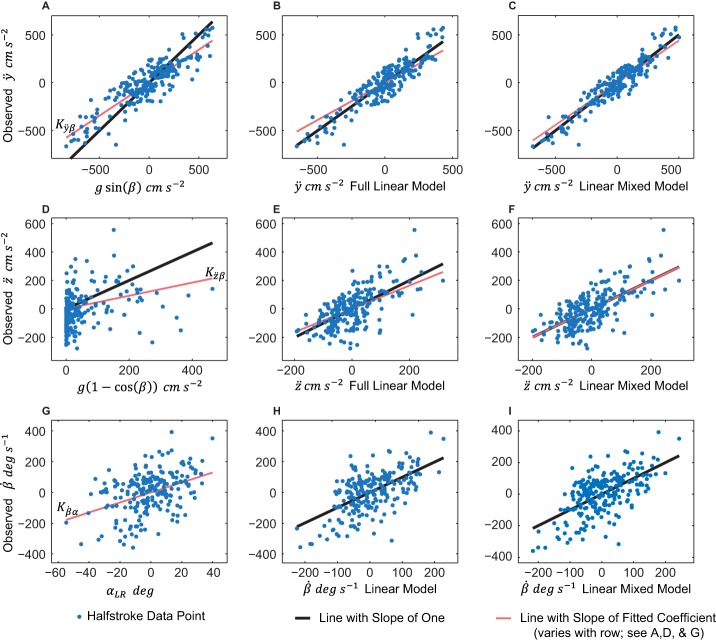
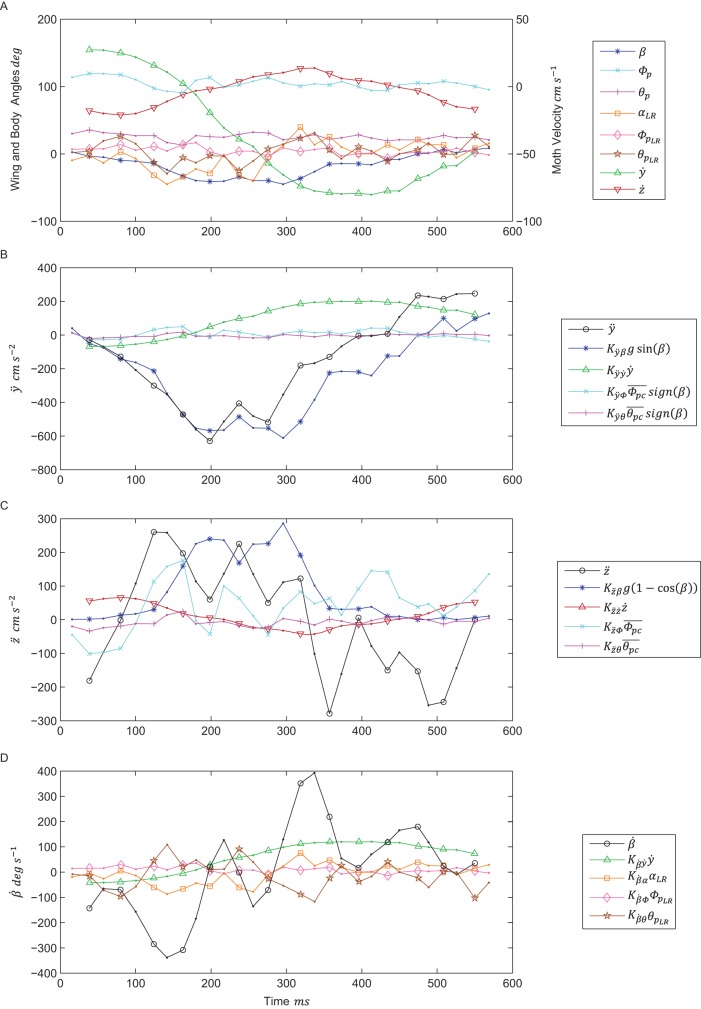
We used videography to investigate direct lateral maneuvers, i.e. 'sideslips', of the hawkmoth Manduca sexta. M. sexta sideslip by rolling their entire body and wings to reorient their net force vector. During sideslip they increase net aerodynamic force by flapping with greater amplitude, (in both wing elevation and sweep), allowing them to continue to support body weight while rolled. To execute the roll maneuver we observed in sideslips, they use an asymmetric wing stroke; increasing the pitch of the roll-contralateral wing pair, while decreasing that of the roll-ipsilateral pair. They also increase the wing sweep amplitude of, and decrease the elevation amplitude of, the contralateral wing pair relative to the ipsilateral pair. The roll maneuver unfolds in a stairstep manner, with orientation changing more during downstroke than upstroke. This is due to smaller upstroke wing pitch angle asymmetries as well as increased upstroke flapping counter-torque from left-right differences in global reference frame wing velocity about the moth's roll axis. Rolls are also opposed by stabilizing aerodynamic moments from lateral motion, such that rightward roll velocity will be opposed by rightward motion. Computational modeling using blade-element approaches confirm the plausibility of a causal linkage between the previously mentioned wing kinematics and roll/sideslip. Model results also predict high degrees of axial and lateral damping. On the time scale of whole and half wing strokes, left-right wing pair asymmetries directly relate to the first, but not second, derivative of roll. Collectively, these results strongly support a roll-based sideslip with a high degree of roll damping in M. sexta.
我们使用录像技术研究了燕尾蝶 Manduca sexta 的直接横向机动,即“侧滑”。M. sexta 通过滚动整个身体和翅膀来重新定位其合力矢量,从而实现侧滑。在侧滑过程中,它们通过更大的幅度拍打翅膀来增加净空气动力,(在翅膀抬高和扫掠方面都增加),从而在滚动时继续支撑体重。为了执行我们在侧滑中观察到的滚动机动,它们使用不对称的翅膀拍打;增加了滚转对侧翅膀对的俯仰幅度,同时减小了滚转同侧翅膀对的俯仰幅度。它们还增加了对侧翅膀对的翅膀扫掠幅度,并减小了同侧翅膀对的翅膀抬高幅度。滚动机动以阶梯式展开,下冲程的方向变化比上冲程大。这是由于上冲程翅膀俯仰角度不对称较小,以及由于左右翅膀在蛾子滚动轴周围的全局参考系中的速度差异,导致上冲程拍打反扭矩增加。滚动还会受到来自横向运动的稳定空气动力力矩的阻碍,因此向右滚动速度将受到向右运动的阻碍。使用叶片元素方法的计算模型证实了先前提到的翅膀运动学与滚动/侧滑之间的因果关系的合理性。模型结果还预测了高度的轴向和横向阻尼。在整个翅膀冲程和半翅膀冲程的时间尺度上,左右翅膀对的不对称性直接与滚动的一阶导数,但不是二阶导数有关。总的来说,这些结果强烈支持 M. sexta 中具有高度滚动阻尼的基于滚动的侧滑。