• 文献检索
  • 文档翻译
  • 深度研究
  • 学术资讯
  • Suppr Zotero 插件Zotero 插件
  • 邀请有礼
  • 套餐&价格
  • 历史记录
应用&插件
Suppr Zotero 插件Zotero 插件浏览器插件Mac 客户端Windows 客户端微信小程序
定价
高级版会员购买积分包购买API积分包
服务
文献检索文档翻译深度研究API 文档MCP 服务
关于我们
关于 Suppr公司介绍联系我们用户协议隐私条款
关注我们

Suppr 超能文献

核心技术专利:CN118964589B侵权必究
粤ICP备2023148730 号-1Suppr @ 2026

文献检索

告别复杂PubMed语法,用中文像聊天一样搜索,搜遍4000万医学文献。AI智能推荐,让科研检索更轻松。

立即免费搜索

文件翻译

保留排版,准确专业,支持PDF/Word/PPT等文件格式,支持 12+语言互译。

免费翻译文档

深度研究

AI帮你快速写综述,25分钟生成高质量综述,智能提取关键信息,辅助科研写作。

立即免费体验

利用诱导多能干细胞模拟肾脏疾病

Modeling Kidney Disease with iPS Cells.

作者信息

Freedman Benjamin S

机构信息

Division of Nephrology, Kidney Research Institute, and Institute for Stem Cell and Regenerative Medicine, Department of Medicine, University of Washington School of Medicine, Seattle, WA, USA.

出版信息

Biomark Insights. 2015 Dec 22;10(Suppl 1):153-69. doi: 10.4137/BMI.S20054. eCollection 2015.

DOI:10.4137/BMI.S20054
PMID:26740740
原文链接:https://pmc.ncbi.nlm.nih.gov/articles/PMC4689367/
Abstract

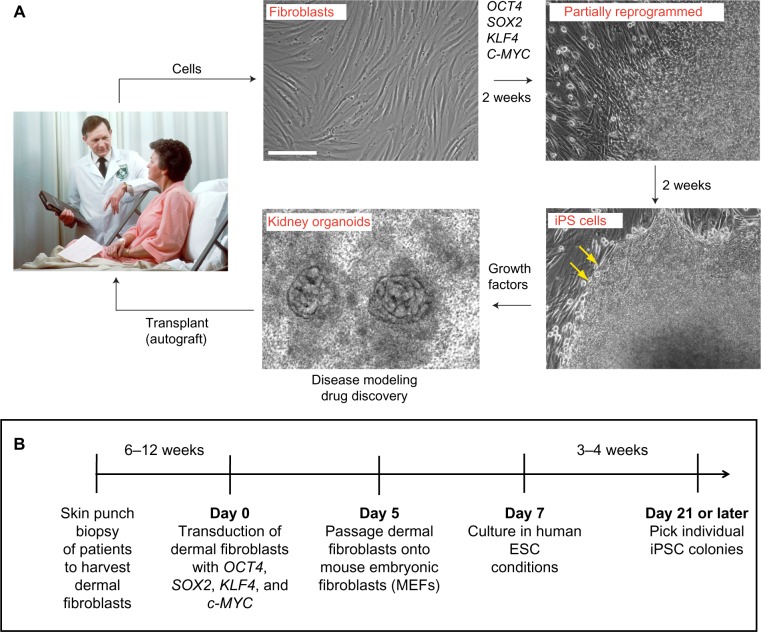
Induced pluripotent stem cells (iPSCs) are somatic cells that have been transcriptionally reprogrammed to an embryonic stem cell (ESC)-like state. iPSCs are a renewable source of diverse somatic cell types and tissues matching the original patient, including nephron-like kidney organoids. iPSCs have been derived representing several kidney disorders, such as ADPKD, ARPKD, Alport syndrome, and lupus nephritis, with the goals of generating replacement tissue and 'disease in a dish' laboratory models. Cellular defects in iPSCs and derived kidney organoids provide functional, personalized biomarkers, which can be correlated with genetic and clinical information. In proof of principle, disease-specific phenotypes have been described in iPSCs and ESCs with mutations linked to polycystic kidney disease or focal segmental glomerulosclerosis. In addition, these cells can be used to model nephrotoxic chemical injury. Recent advances in directed differentiation and CRISPR genome editing enable more specific iPSC models and present new possibilities for diagnostics, disease modeling, therapeutic screens, and tissue regeneration using human cells. This review outlines growth opportunities and design strategies for this rapidly expanding and evolving field.

摘要

诱导多能干细胞(iPSC)是经过转录重编程后进入类似胚胎干细胞(ESC)状态的体细胞。iPSC是与原始患者相匹配的多种体细胞类型和组织的可再生来源,包括类肾单位肾脏类器官。已经获得了代表几种肾脏疾病的iPSC,如常染色体显性多囊肾病(ADPKD)、常染色体隐性多囊肾病(ARPKD)、阿尔波特综合征和狼疮性肾炎,目的是生成替代组织和“培养皿中的疾病”实验室模型。iPSC和衍生的肾脏类器官中的细胞缺陷提供了功能性的、个性化的生物标志物,这些生物标志物可以与遗传和临床信息相关联。在原理验证中,已经在与多囊肾病或局灶节段性肾小球硬化相关突变的iPSC和ESC中描述了疾病特异性表型。此外,这些细胞可用于模拟肾毒性化学损伤。定向分化和CRISPR基因组编辑方面的最新进展使得能够建立更具特异性的iPSC模型,并为使用人类细胞进行诊断、疾病建模、治疗筛选和组织再生带来了新的可能性。本综述概述了这一迅速扩展和发展的领域的发展机遇和设计策略。
https://cdn.ncbi.nlm.nih.gov/pmc/blobs/7bcd/4689367/688fd00fcbbb/bmi-suppl.1-2015-153f5.jpg
https://cdn.ncbi.nlm.nih.gov/pmc/blobs/7bcd/4689367/c2127f42a4a9/bmi-suppl.1-2015-153f1.jpg
https://cdn.ncbi.nlm.nih.gov/pmc/blobs/7bcd/4689367/8f618ddcbc54/bmi-suppl.1-2015-153f2.jpg
https://cdn.ncbi.nlm.nih.gov/pmc/blobs/7bcd/4689367/e6b7e5e2379a/bmi-suppl.1-2015-153f3.jpg
https://cdn.ncbi.nlm.nih.gov/pmc/blobs/7bcd/4689367/cf22c88b85b7/bmi-suppl.1-2015-153f4.jpg
https://cdn.ncbi.nlm.nih.gov/pmc/blobs/7bcd/4689367/688fd00fcbbb/bmi-suppl.1-2015-153f5.jpg
https://cdn.ncbi.nlm.nih.gov/pmc/blobs/7bcd/4689367/c2127f42a4a9/bmi-suppl.1-2015-153f1.jpg
https://cdn.ncbi.nlm.nih.gov/pmc/blobs/7bcd/4689367/8f618ddcbc54/bmi-suppl.1-2015-153f2.jpg
https://cdn.ncbi.nlm.nih.gov/pmc/blobs/7bcd/4689367/e6b7e5e2379a/bmi-suppl.1-2015-153f3.jpg
https://cdn.ncbi.nlm.nih.gov/pmc/blobs/7bcd/4689367/cf22c88b85b7/bmi-suppl.1-2015-153f4.jpg
https://cdn.ncbi.nlm.nih.gov/pmc/blobs/7bcd/4689367/688fd00fcbbb/bmi-suppl.1-2015-153f5.jpg

相似文献

1
Modeling Kidney Disease with iPS Cells.利用诱导多能干细胞模拟肾脏疾病
Biomark Insights. 2015 Dec 22;10(Suppl 1):153-69. doi: 10.4137/BMI.S20054. eCollection 2015.
2
Reverse engineering human neurodegenerative disease using pluripotent stem cell technology.利用多能干细胞技术对人类神经退行性疾病进行逆向工程研究。
Brain Res. 2016 May 1;1638(Pt A):30-41. doi: 10.1016/j.brainres.2015.09.023. Epub 2015 Sep 28.
3
Modelling kidney disease with CRISPR-mutant kidney organoids derived from human pluripotent epiblast spheroids.利用源自人多能性上胚层球体的CRISPR突变肾类器官对肾脏疾病进行建模。
Nat Commun. 2015 Oct 23;6:8715. doi: 10.1038/ncomms9715.
4
Combining Kidney Organoids and Genome Editing Technologies for a Better Understanding of Physiopathological Mechanisms of Renal Diseases: State of the Art.结合肾类器官与基因组编辑技术以更好地理解肾脏疾病的生理病理机制:现状
Front Med (Lausanne). 2020 Feb 4;7:10. doi: 10.3389/fmed.2020.00010. eCollection 2020.
5
Generation of special autosomal dominant polycystic kidney disease iPSCs with the capability of functional kidney-like cell differentiation.生成具有功能性类肾细胞分化能力的特殊常染色体显性遗传性多囊肾病 iPSCs。
Stem Cell Res Ther. 2017 Sep 19;8(1):196. doi: 10.1186/s13287-017-0645-8.
6
Gene-Edited Human Kidney Organoids Reveal Mechanisms of Disease in Podocyte Development.基因编辑人类肾类器官揭示足细胞发育疾病的机制。
Stem Cells. 2017 Dec;35(12):2366-2378. doi: 10.1002/stem.2707. Epub 2017 Sep 29.
7
Gene correction in patient-specific iPSCs for therapy development and disease modeling.用于治疗开发和疾病建模的患者特异性诱导多能干细胞中的基因校正。
Hum Genet. 2016 Sep;135(9):1041-58. doi: 10.1007/s00439-016-1691-5. Epub 2016 Jun 2.
8
Induced Pluripotent Stem Cells and Induced Pluripotent Cancer Cells in Cancer Disease Modeling.诱导多能干细胞和诱导多能癌细胞在癌症疾病建模中的应用。
Adv Exp Med Biol. 2018;1119:169-183. doi: 10.1007/5584_2018_257.
9
Kidney regeneration from human induced pluripotent stem cells.从人类诱导多能干细胞再生肾脏。
Curr Opin Organ Transplant. 2015 Apr;20(2):171-7. doi: 10.1097/MOT.0000000000000170.
10
Comparing ESC and iPSC-Based Models for Human Genetic Disorders.比较用于人类遗传疾病的基于胚胎干细胞和诱导多能干细胞的模型。
J Clin Med. 2014 Oct 24;3(4):1146-62. doi: 10.3390/jcm3041146.

引用本文的文献

1
Modeling of kidney allograft rejection using hiPSC-derived kidney organoids and HLA-mismatched PBMCs: an in vitro co-culture system.使用人诱导多能干细胞衍生的肾类器官和HLA不匹配的外周血单个核细胞建立肾移植排斥反应模型:一种体外共培养系统。
Cell Mol Life Sci. 2025 Sep 2;82(1):333. doi: 10.1007/s00018-025-05867-7.
2
Human fetal kidney organoids model early human nephrogenesis and Notch-driven cell fate.人类胎儿肾脏类器官模拟早期人类肾发生和Notch驱动的细胞命运。
EMBO J. 2025 Jul 21. doi: 10.1038/s44318-025-00504-2.
3
Advances and Challenges in Modeling Autosomal Dominant Polycystic Kidney Disease: A Focus on Kidney Organoids.

本文引用的文献

1
Modelling kidney disease with CRISPR-mutant kidney organoids derived from human pluripotent epiblast spheroids.利用源自人多能性上胚层球体的CRISPR突变肾类器官对肾脏疾病进行建模。
Nat Commun. 2015 Oct 23;6:8715. doi: 10.1038/ncomms9715.
2
Nephron organoids derived from human pluripotent stem cells model kidney development and injury.源自人类多能干细胞的肾单位类器官可模拟肾脏发育和损伤。
Nat Biotechnol. 2015 Nov;33(11):1193-200. doi: 10.1038/nbt.3392.
3
Kidney organoids from human iPS cells contain multiple lineages and model human nephrogenesis.
常染色体显性多囊肾病建模的进展与挑战:聚焦肾类器官
Biomedicines. 2025 Feb 19;13(2):523. doi: 10.3390/biomedicines13020523.
4
Advancements in Research on Genetic Kidney Diseases Using Human-Induced Pluripotent Stem Cell-Derived Kidney Organoids.利用人诱导多能干细胞衍生肾类器官研究遗传性肾脏疾病的进展。
Cells. 2024 Jul 13;13(14):1190. doi: 10.3390/cells13141190.
5
A systematic review of kidney-on-a-chip-based models to study human renal (patho-)physiology.基于芯片上肾单位模型研究人类肾脏(病理)生理学的系统评价。
Dis Model Mech. 2023 Jun 1;16(6). doi: 10.1242/dmm.050113. Epub 2023 Jun 19.
6
OCT4 induces long-lived dedifferentiated kidney progenitors poised to redifferentiate in 3D kidney spheroids.八聚体结合转录因子4(OCT4)诱导产生长期存在的去分化肾祖细胞,这些细胞随时准备在三维肾球体中重新分化。
Mol Ther Methods Clin Dev. 2023 Apr 23;29:329-346. doi: 10.1016/j.omtm.2023.04.005. eCollection 2023 Jun 8.
7
Modeling of Fabry disease nephropathy using patient derived human induced pluripotent stem cells and kidney organoid system.利用患者来源的人诱导多能干细胞和肾脏类器官系统对法布里病肾病进行建模。
J Transl Med. 2023 Feb 22;21(1):138. doi: 10.1186/s12967-023-03992-0.
8
CRISPR-Cas9-Mediated Correction of Gene Mutation Rescues the Gitelman's Disease Phenotype in a Patient-Derived Kidney Organoid System.CRISPR-Cas9 介导的基因突变校正挽救了患者衍生的肾类器官系统中的 Gitelman 病表型。
Int J Mol Sci. 2023 Feb 3;24(3):3019. doi: 10.3390/ijms24033019.
9
Glucose absorption drives cystogenesis in a human organoid-on-chip model of polycystic kidney disease.在多囊肾病的人体芯片类器官模型中,葡萄糖吸收驱动囊肿形成。
Nat Commun. 2022 Dec 23;13(1):7918. doi: 10.1038/s41467-022-35537-2.
10
Deep learning predicts the differentiation of kidney organoids derived from human induced pluripotent stem cells.深度学习预测源自人类诱导多能干细胞的肾类器官的分化。
Kidney Res Clin Pract. 2023 Jan;42(1):75-85. doi: 10.23876/j.krcp.22.017. Epub 2022 Sep 8.
人诱导多能干细胞来源的肾类器官包含多种细胞谱系,并可模拟人类肾发生。
Nature. 2015 Oct 22;526(7574):564-8. doi: 10.1038/nature15695. Epub 2015 Oct 7.
4
Identification of microRNAs and their target genes in Alport syndrome using deep sequencing of iPSCs samples.利用诱导多能干细胞(iPSC)样本的深度测序鉴定阿尔波特综合征中的微小RNA及其靶基因。
J Zhejiang Univ Sci B. 2015 Mar;16(3):235-50. doi: 10.1631/jzus.B1400272.
5
Polycystin-1 maturation requires polycystin-2 in a dose-dependent manner.多囊蛋白-1的成熟以剂量依赖的方式需要多囊蛋白-2。
J Clin Invest. 2015 Feb;125(2):607-20. doi: 10.1172/JCI76972. Epub 2015 Jan 9.
6
Human embryonic stem cell-derived retinal pigment epithelium in patients with age-related macular degeneration and Stargardt's macular dystrophy: follow-up of two open-label phase 1/2 studies.人胚胎干细胞源性视网膜色素上皮细胞治疗年龄相关性黄斑变性和斯塔加特型黄斑营养不良患者:两项开放性、1/2 期研究的随访。
Lancet. 2015 Feb 7;385(9967):509-16. doi: 10.1016/S0140-6736(14)61376-3. Epub 2014 Oct 15.
7
A calcium-dependent protease as a potential therapeutic target for Wolfram syndrome.一种钙依赖性蛋白酶作为沃夫勒姆综合征的潜在治疗靶点。
Proc Natl Acad Sci U S A. 2014 Dec 9;111(49):E5292-301. doi: 10.1073/pnas.1421055111. Epub 2014 Nov 24.
8
Ciliary membrane proteins traffic through the Golgi via a Rabep1/GGA1/Arl3-dependent mechanism.睫状膜蛋白通过一种依赖Rabep1/GGA1/Arl3的机制经高尔基体运输。
Nat Commun. 2014 Nov 18;5:5482. doi: 10.1038/ncomms6482.
9
Three-dimensional organotypic culture: experimental models of mammalian biology and disease.三维器官型培养:哺乳动物生物学与疾病的实验模型
Nat Rev Mol Cell Biol. 2014 Oct;15(10):647-64. doi: 10.1038/nrm3873. Epub 2014 Sep 17.
10
Directed differentiation of pluripotent stem cells to kidney cells.多能干细胞向肾细胞的定向分化。
Semin Nephrol. 2014 Jul;34(4):445-61. doi: 10.1016/j.semnephrol.2014.06.011. Epub 2014 Jun 13.